The Academic Staff Union of Secondary Schools (ASUSS) in Kogi State has revealed that public schools are in urgent need of 2,871 additional teachers to bridge the staffing gap. This blog examines the causes, effects, and possible solutions to Kogi’s growing teacher shortage.
Kogi schools need 2871 teachers, Kogi education crisis, ASUSS Kogi, Kogi teacher shortage, Kogi public schools, education in Kogi State, teacher recruitment Kogi, Kogi secondary school teachers, Kogi government education, Nigerian education sector, teacher deficit Nigeria, Kogi State ASUSS news, educational reforms in Nigeria.
Introduction: The Teacher Crisis in Kogi State
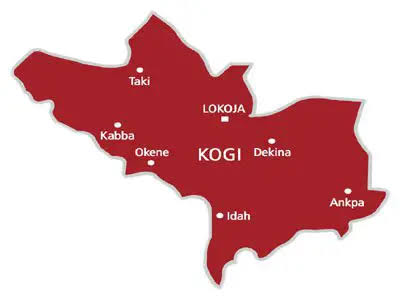
Kogi State, known as the Confluence State, is facing a growing educational crisis. Recent findings by the Academic Staff Union of Secondary Schools (ASUSS) reveal that public secondary schools in the state urgently need 2,871 additional teachers to meet the teaching demand across subjects.
This disclosure exposes the deep cracks in the state’s education system and the urgent need for a comprehensive recruitment plan to save Kogi’s public schools from decline.
The union warns that the shortage of teachers is already affecting the quality of education, students’ performance, and teacher morale, particularly in rural areas where learning conditions are dire.
ASUSS Speaks: “Kogi Needs 2,871 More Teachers Immediately”
The Kogi State chapter of ASUSS revealed that the 2,871 teacher gap is based on a state-wide assessment across secondary schools.
The union’s chairman emphasized that this shortage cuts across almost every Local Government Area (LGA), with the worst-affected subjects being Mathematics, English Language, Sciences, and Technical/Vocational Education.
He added that many schools currently rely on part-time instructors, NYSC members, and Parent-Teacher Association (PTA)-funded teachers to manage classes—an unsustainable solution to a deep-rooted problem.
“Our schools are grossly understaffed. Some secondary schools have only three to four teachers managing the entire school population,” the union lamented.
Understanding the Depth of the Problem
The figure of 2,871 teachers may sound abstract, but it paints a vivid picture of crisis. Here’s what it means for Kogi’s educational structure:
1. Overcrowded Classrooms
With thousands of teacher vacancies, student-to-teacher ratios have skyrocketed in many schools.
Some teachers handle up to 100 students per class, making personalized instruction nearly impossible.
2. Untaught Subjects
In numerous rural and semi-urban schools, core subjects like Physics, Chemistry, and English Literature are not being taught at all because there are no qualified teachers available.
3. Falling Academic Performance
WAEC and NECO results have shown declining performance from Kogi schools in recent years, and education experts attribute this to the severe shortage of qualified teachers.
4. Overworked Teachers
Existing teachers are overstretched, handling multiple subjects beyond their specialization.
This increases burnout and leads to poor classroom delivery and low morale.
Root Causes of the Teacher Shortage in Kogi State
1. Mass Retirement Without Replacement
Hundreds of teachers retired in recent years, but the state government has not replaced them proportionally. The gap continues to widen as more teachers approach retirement age.
2. Limited Recruitment Exercises
While the Kogi State Government has announced plans to recruit teachers in phases, implementation has been slow. Recruitment drives for 1,500 or 2,000 teachers barely scratch the surface of a deficit of nearly 3,000.
3. Poor Welfare and Incentives
Low pay, delayed promotions, and inadequate working conditions discourage talented graduates from joining the teaching profession in Kogi.
4. Rural Posting Challenges
Teachers often resist postings to remote rural areas due to poor infrastructure, lack of housing, and insecurity. As a result, rural schools suffer the most.
5. Inadequate Budgetary Allocation
The state’s annual education budget remains below the UNESCO-recommended 26% benchmark, leaving little room for large-scale recruitment, training, and retention programs.
ASUSS’s Call to the Kogi State Government
ASUSS has urged the Kogi State Government to prioritize mass teacher recruitment as part of its education policy reform.
The union’s recommendations include:
- Immediate recruitment of 2,871 teachers to fill the identified gap.
- Regular teacher training to improve competency, especially in STEM subjects.
- Implementation of teacher welfare schemes (housing, insurance, rural allowance).
- Transparent posting system to ensure equitable distribution of teachers across all LGAs.
- Modernization of classrooms with ICT integration to attract and retain skilled teachers.
The union emphasized that without urgent intervention, Kogi’s education system risks collapsing under the weight of neglect.
Kogi Government’s Response
The Kogi State Government, through the Ministry of Education, Science, and Technology, has acknowledged the shortage and pledged to take concrete steps.
Recent announcements indicate plans to recruit over 2,000 new teachers across subjects and deploy them strategically to critical schools.
Additionally, the government has hinted at leveraging National Youth Service Corps (NYSC) members with education backgrounds to temporarily bridge the gap while waiting for permanent hires.
“We are aware of the teacher deficit, and government is already making arrangements to address it comprehensively,” a ministry official stated.
The Impact on Students and Communities
- Decline in Academic Standards:
Students from public schools perform poorly in standardized examinations due to lack of adequate teaching. - Increased School Dropout Rates:
Poor learning outcomes discourage students, especially in rural communities, from continuing their education. - Dependence on Private Schools:
Families who can afford it migrate their children to private institutions, leading to a growing inequality in access to quality education. - Low Literacy Rates:
With fewer qualified teachers, literacy and numeracy levels drop significantly, especially among students in rural regions.
Comparative Analysis: Kogi vs Other States
Kogi is not alone. Several Nigerian states, including Benue, Taraba, Kaduna, and Niger, face similar staffing crises.
However, Kogi’s situation stands out due to:
- Its central location and large rural population.
- A high number of retired teachers with limited replacements.
- Heavy dependence on PTA and NYSC teachers as stopgap measures.
These factors combine to create an education system operating below optimal capacity.
Proposed Solutions: Bridging the Teacher Gap in Kogi
To restore balance and efficiency in the education system, experts propose the following:
1. Mass Recruitment and Retention Plan
The government should launch an emergency recruitment drive to fill the 2,871 vacancies, prioritizing STEM and rural schools.
2. Incentivize Teaching Profession
Improve salaries, provide rural allowances, and introduce career development programs to attract qualified graduates.
3. Partner with Private Sector and NGOs
Partnerships with education-focused organizations can support teacher training, ICT education, and mentorship programs.
4. Regular Training and Capacity Building
Invest in continuous professional development to keep teachers updated with modern teaching techniques.
5. Implement Transparent Monitoring
Establish an online teacher database to track distribution, subject specialization, and vacancies in real-time.
Why This Matters for Kogi’s Future
Education drives economic growth, innovation, and social stability.
If Kogi continues to operate with a massive teacher deficit, the ripple effects will extend beyond the classroom — affecting literacy rates, youth employment, and overall human capital development.
Bridging this gap is not just a policy issue; it is a moral and developmental imperative.
Conclusion: Time for Action, Not Promises
The ASUSS revelation that Kogi schools need 2,871 additional teachers should not be another headline forgotten in a week. It’s a wake-up call for policymakers, education stakeholders, and community leaders.
For Kogi to meet global education standards and produce skilled citizens for the future, it must prioritize teacher recruitment, training, and retention as a matter of urgency.
The next generation of Kogi’s leaders sits in today’s classrooms — and those classrooms need teachers now.
Call to Action
If you believe every child deserves quality education, share this article to raise awareness about the teacher shortage in Kogi State.
Follow our blog for more updates on education reform, governance, and public policy in Nigeria.