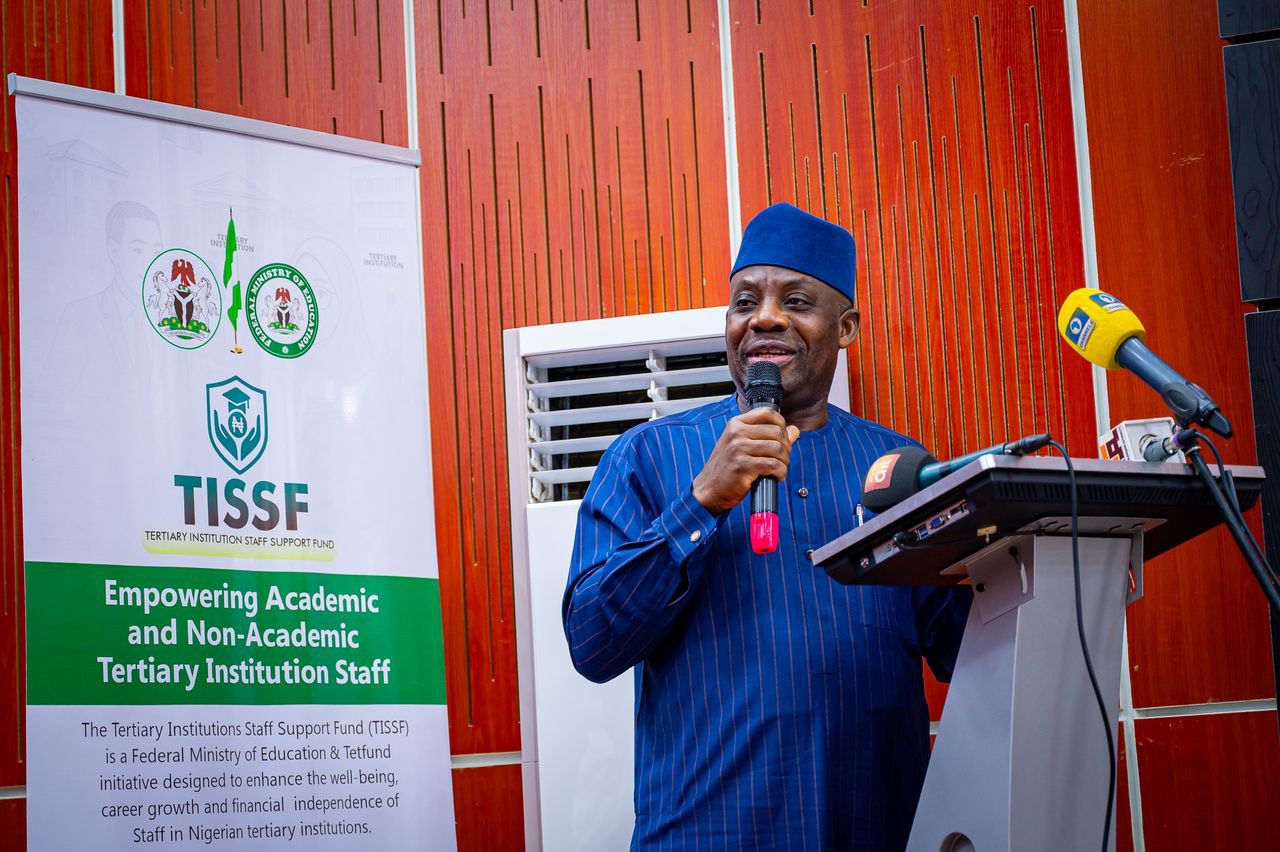
In a bold move that has reignited conversations across Nigeria’s education sector, the Federal Government has pledged to ensure that the Academic Staff Union of Universities (ASUU) and other university-based unions never embark on strike actions again. The assurance came from the Minister of Education, Dr. Tunji Alausa, who emphasized the government’s unwavering commitment to building a stable, efficient, and uninterrupted higher education system in Nigeria.
This declaration, made during a recent national event, aligns with President Bola Ahmed Tinubu’s “Renewed Hope” agenda — a policy blueprint aimed at transforming Nigeria’s educational landscape through sustainable reforms, enhanced funding, and institutional accountability.
FG’s Commitment to Ending University Strikes
Dr. Alausa noted with deep concern that ASUU has cumulatively spent over 54 months on strike since its inception — a record he described as unacceptable for any nation that seeks rapid human-capital development and economic advancement. He assured Nigerians that under the current administration, the Federal Government will take all necessary measures to ensure smooth and continuous academic activities in universities and other tertiary institutions.
According to the Minister, education remains the foundation of national development, and as such, frequent disruptions caused by industrial actions not only delay students’ progress but also erode the global reputation of Nigerian universities.
“We are determined to create an academic environment where strikes become a thing of the past. Our universities must function as centers of innovation and productivity, not arenas of conflict,” he stated.
Government Reforms to Strengthen Tertiary Education
To achieve this long-term goal, the Federal Government outlined several strategic initiatives and reforms already in progress. These include:
| Reform Initiative | Objective | Expected Impact |
|---|---|---|
| Student Loan Scheme | Provide accessible financial support to indigent students across public tertiary institutions. | Reduce financial pressure on families and promote inclusive education. |
| TETFund Repositioning | Strengthen research, infrastructure, and staff development in higher institutions. | Enhance learning facilities, improve staff welfare, and support innovation. |
| Proposed Education Research Fund | Encourage local research targeted at solving national problems. | Foster academic-driven solutions and global recognition for Nigerian scholars. |
| Strengthened University Autonomy | Empower universities to manage internal resources more efficiently. | Reduce dependence on federal subventions and improve institutional accountability. |
| Improved Union Engagement | Institutionalize proactive dialogue mechanisms between government and academic unions. | Prevent breakdowns in communication that often lead to strikes. |
Dr. Alausa reiterated that these reforms are designed to tackle the root causes of frequent industrial actions, including funding gaps, poor working conditions, and governance challenges in the university system.
A Focus on Human Capital Development
The Minister emphasized that the success of the government’s national development plan depends largely on a vibrant and uninterrupted education system. He described human capital as the “new oil” that will drive Nigeria’s socio-economic transformation in the coming years.
“We cannot achieve meaningful growth if our universities remain closed for months due to strikes. Our goal is to empower our youth with relevant skills, knowledge, and innovation capacity to compete globally,” he said.
He added that the administration is also reviewing the curriculum across universities to align academic programs with modern industry demands and global employment trends.
ASUU’s Strike Legacy and the Road Ahead
For decades, the recurring strikes by ASUU have disrupted academic calendars, delayed graduations, and discouraged both local and international collaborations. Between 1999 and 2022 alone, Nigerian students lost over three academic years cumulatively to prolonged strike actions.
The government’s latest assurance marks one of the most definitive promises in recent years aimed at resolving the persistent disputes between the academic union and federal authorities. While optimism remains high, stakeholders believe that consistent policy implementation and transparent funding are key to translating this promise into reality.
Education experts have also urged the government to institutionalize a permanent conflict-resolution mechanism that addresses ASUU’s grievances early — before they escalate into nationwide strikes.
Reactions from Stakeholders
Several stakeholders, including university administrators, students, and education analysts, have welcomed the government’s declaration. Many see it as a refreshing development after years of academic instability.
A university lecturer in Abuja described the government’s renewed focus as “a positive sign,” noting that with consistent dialogue and realistic policies, the age-long problem of strikes could finally be buried. Students, on the other hand, expressed cautious optimism, hoping that this time, the promises would be backed by tangible results and not political rhetoric.
Implications for Students and the Education Sector
If successfully implemented, this initiative could mark a turning point for Nigeria’s tertiary education system. The implications are far-reaching:
- Continuous Learning: Students will be able to complete their studies without the frustration of delayed sessions.
- Global Recognition: Nigerian universities may regain credibility in global rankings.
- Increased Enrollment: More students will be motivated to pursue higher education locally.
- Research and Innovation Growth: Stable academic environments encourage groundbreaking research and innovation.
- Economic Impact: Reduced academic disruptions will contribute to a more productive labor force and national development.
Challenges That May Hinder the Promise
Despite the optimism, experts warn that achieving this vision requires consistent commitment and political will. Some of the key challenges include:
- Funding Shortfalls: Without adequate financing, universities may struggle to maintain operations.
- Union Trust Deficit: Years of unfulfilled promises have made ASUU cautious about government pledges.
- Policy Implementation Delays: Bureaucratic bottlenecks often slow down execution of educational reforms.
- Corruption and Mismanagement: Misappropriation of education funds could undermine progress.
To counter these, analysts recommend the establishment of an Education Accountability Framework, which would ensure transparency in fund disbursement, monitoring, and evaluation.