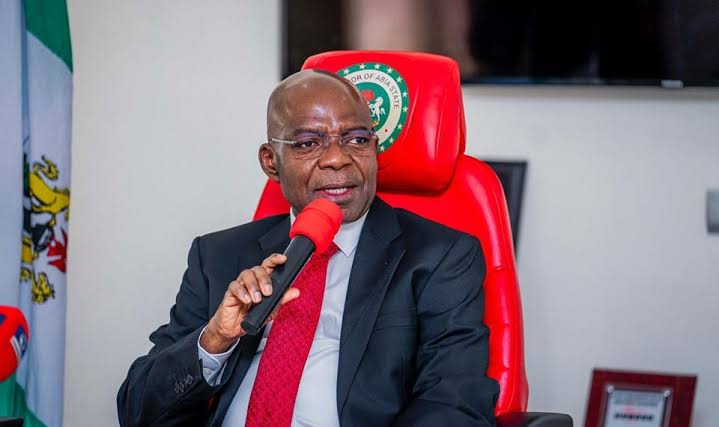
In a remarkable stride for educational development, the Abia State Government has announced an impressive over 100 percent increase in school enrolment for the 2025/2026 academic session. This historic milestone, revealed by the Commissioner for Information, Prince Okey Kanu, underscores the success of the government’s ongoing commitment to revamping the basic education sector through strategic reforms and the reintroduction of free education for public primary and junior secondary schools.
The revelation was made during a media briefing in Umuahia, where the Commissioner highlighted the transformation taking place across the state’s educational landscape. The surge in enrolment, according to him, is backed by recent data obtained from the Abia State Universal Basic Education Board (ASUBEB), which compiled figures from schools and local government education authorities.
Massive Turnaround in School Enrolment
Abia State’s enrolment growth is not just symbolic — it represents a fundamental shift in public confidence in the state’s education system. The over 100 percent rise indicates that thousands of new pupils and students who were previously out of school have now gained access to basic education.
According to the Commissioner, the government’s free education policy has been pivotal in encouraging parents to enrol their children in school without financial constraints. This renewed trust in public schools is a testament to the efforts of Governor Alex Otti’s administration in rebuilding the foundation of education across the state.
Key Reforms Driving the Growth
The unprecedented increase in enrolment did not occur by chance. It is the outcome of deliberate and well-coordinated reforms targeted at improving both access and quality in the education sector. Some of the major initiatives highlighted by the government include:
| Reform Initiative | Description and Impact |
|---|---|
| Free Education Policy | Full implementation of free education for all pupils in public primary and junior secondary schools, easing the financial burden on parents. |
| Teacher Recruitment Drive | Recruitment of qualified teachers to fill existing gaps in public schools, ensuring that increased enrolment is matched with adequate staffing. |
| Regular Payment of Salaries | Prompt and consistent payment of teachers’ salaries to motivate and retain skilled educators across the state. |
| Rural Teacher Incentives | Introduction of special allowances for teachers serving in hard-to-reach rural areas to address the challenge of teacher shortages. |
| Retirement Age Extension | Increase of teachers’ retirement age from 60 to 65 years to retain experienced educators in the system. |
| Infrastructure and Learning Environment | Ongoing renovation and equipping of classrooms to provide a more conducive atmosphere for learning. |
| Curriculum and Quality Upgrade | Introduction of new curricula and learning materials aligned with modern teaching standards. |
Government’s Commitment to Quality and Access
The Abia State Government has reiterated its determination to ensure that the quality of education matches the growing number of enrollees. The Information Commissioner emphasized that the government will continue to strengthen the system through teacher training, infrastructure upgrades, and efficient monitoring of learning outcomes.
Prince Okey Kanu further assured parents that the government is not merely pursuing numbers but is working toward an inclusive and qualitative educational experience. The objective, he noted, is to ensure that every child in Abia State — regardless of background or location — has equal access to quality education.
Public Reactions and Stakeholders’ Applause
The development has attracted widespread commendation from parents, educators, and education advocates who see the surge as a victory for the people of Abia. Many believe that the new policies have rekindled public trust in government schools, which had suffered years of neglect.
Teachers across the state have also expressed satisfaction with the current administration’s proactive approach, particularly the regular payment of salaries and improved working conditions. These, they say, have boosted morale and reduced absenteeism in schools.
Education observers have noted that the current momentum could position Abia State as one of the leading education hubs in Nigeria if the reforms are sustained.
Challenges and the Road Ahead
While the achievements are commendable, experts caution that sustaining a 100 percent enrolment rate requires robust planning and resource allocation. With thousands of new pupils flooding classrooms, the pressure on infrastructure, learning materials, and teacher-to-student ratios is expected to increase.
The government’s ability to maintain quality education amid growing enrolment will depend on:
- Continuous teacher recruitment and training programs.
- Expansion of classroom infrastructure.
- Regular monitoring of school performance and student outcomes.
- Strong collaboration between the Ministry of Education, ASUBEB, and local authorities.
By addressing these challenges proactively, Abia can ensure that the impressive statistics translate into lasting educational progress rather than temporary numerical gains.
Comparative Perspective: Learning from Abia’s Model
Abia State’s success offers valuable lessons for other states in Nigeria. The combination of free education, teacher welfare incentives, and policy consistency has produced tangible results in a short period. States struggling with out-of-school children could adopt similar models, ensuring that access to basic education remains a constitutional right rather than a privilege.
Moreover, the role of community participation and data-driven policymaking in Abia’s approach is worth emulating. The involvement of ASUBEB in tracking enrolment data ensures accountability and transparency in the education process.
Looking Forward: Sustaining the Momentum
The Abia State Government has pledged to consolidate on these achievements by deepening investments in the education sector. Plans are underway to expand digital learning resources, enhance teacher training facilities, and establish modern libraries across schools.
The Information Commissioner affirmed that the administration’s vision goes beyond enrolment figures — it aims to build a generation of knowledgeable, confident, and innovative students capable of contributing meaningfully to society.