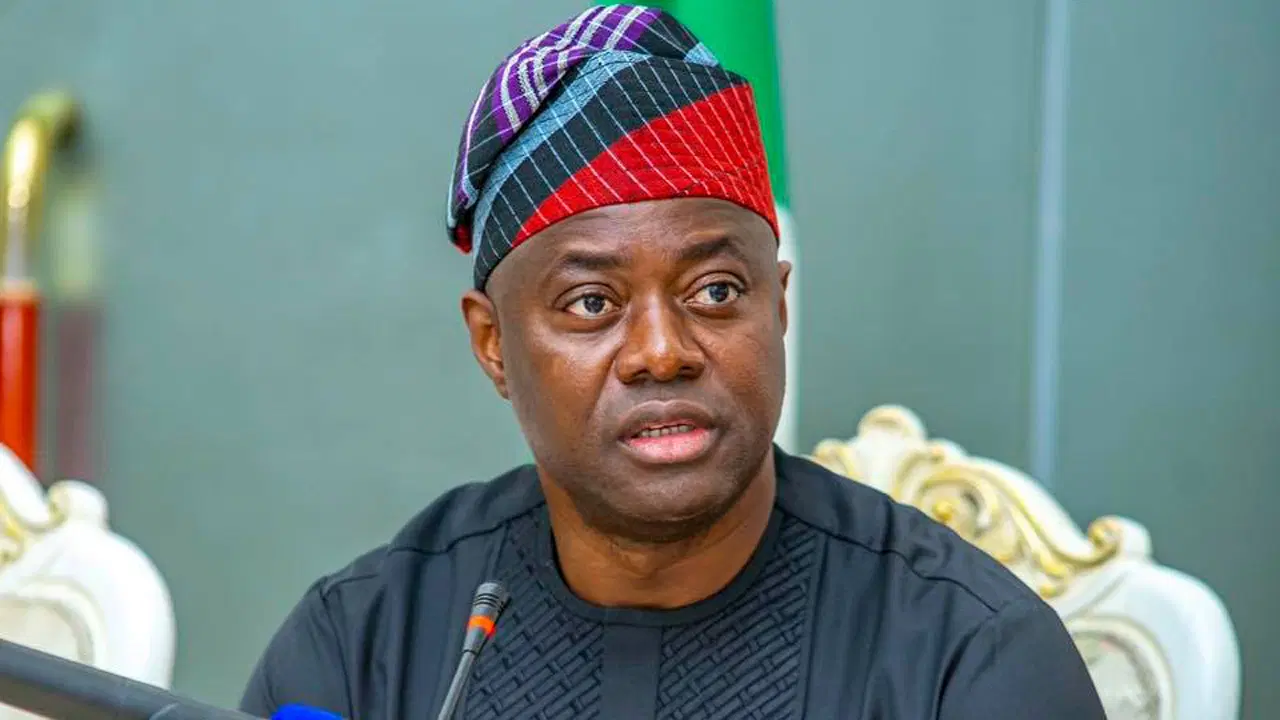
In a bold move that underscores his administration’s development ambitions, Governor Seyi Makinde of Oyo State on Monday, November 24, 2025, presented a whopping ₦891,985,074,480.79 budget estimate for the 2026 fiscal year. Tagged the “Budget of Economic Expansion,” the proposal is designed to build on the foundations laid in the 2025 budget — with a strong focus on productivity, infrastructure, and economic growth.
What’s New and Noteworthy in the 2026 Budget
Ambitious Scale and Bold Vision
- The near-₦892 billion proposal represents a significant leap from the 2025 budget, signaling confidence in revenue generation and development capacity.
- By branding it as a “Budget of Economic Expansion,” the government makes clear that its goals go beyond maintenance — it’s about scaling up, investing more deeply, and unlocking new growth vectors for Oyo State.
Building on 2025 Gains
- Makinde explicitly said the 2026 budget builds on the 2025 budget, leveraging prior investments and momentum to drive further development.
- In recent years, the administration has held broad stakeholder consultations across all seven geopolitical zones of the state, making the budgeting process more inclusive and rooted in citizen input.
- The Treasury Board sessions involving ministries, departments, and agencies were recently concluded, ensuring that the numbers presented reflect carefully vetted priorities.
Strong Commitment to Transparency and Accountability
- Oyo’s Ministry of Budget and Economic Planning has reaffirmed its dedication to transparency and responsible fund management in executing the 2026 budget.
- According to the Commissioner for Budget and Economic Planning, every naira allocated will be tracked and spent in line with approved projects.
- The Commissioner for Special Duties added that strict financial controls will govern implementation, with close oversight to prevent waste.
Strategic Pillars: Where the Money Is Expected to Go
While the detailed line-by-line breakdown of the 2026 budget has not yet been made public, Makinde’s framing and his past budgeting patterns provide some hints about priority areas:
- Infrastructure Development
- Given Makinde’s consistent emphasis on roads, public works, and feeder networks in previous budgets, it’s likely a sizeable portion will go into infrastructure.
- Such investments could catalyze commerce, ease transportation, and unlock underdeveloped regions of the state.
- Economic Productivity & Expansion
- The “economic expansion” tag suggests the governor may lean into sectors that boost revenue, job creation, and private-sector participation.
- This could include agriculture, manufacturing, SMEs, and technology-driven initiatives.
- Human Capital Investments
- Education and health are natural bets — improving schools, training, and healthcare infrastructure not only boosts quality of life but also long-term economic output.
- Previous budgets under Makinde have massively supported education, and this trend is likely to continue, perhaps even accelerate.
- Good Governance & Institutional Strengthening
- Transparency commitments imply investments in systems, monitoring mechanisms, and accountability frameworks.
- Strengthening institutions will be key to ensuring that budgeted resources translate into concrete, measurable impact.
Risks & Challenges to Watch
While the vision is ambitious, the road ahead is not without potential pitfalls:
- Revenue Uncertainty: To fund nearly ₦892 billion, the state must generate or mobilize significant revenue. Any shortfall could jeopardize planned projects.
- Implementation Capacity: A large budget only delivers value if it is implemented efficiently. Project delays, cost overruns, or bureaucratic bottlenecks could undermine impact.
- Inflation & Economic Pressures: Rising costs of materials, labor, and external economic pressures could eat into capital expenditure plans.
- Accountability Risks: Even with transparency pledges, the scale of spending warrants strong checks and community engagement to ensure funds reach intended sectors.