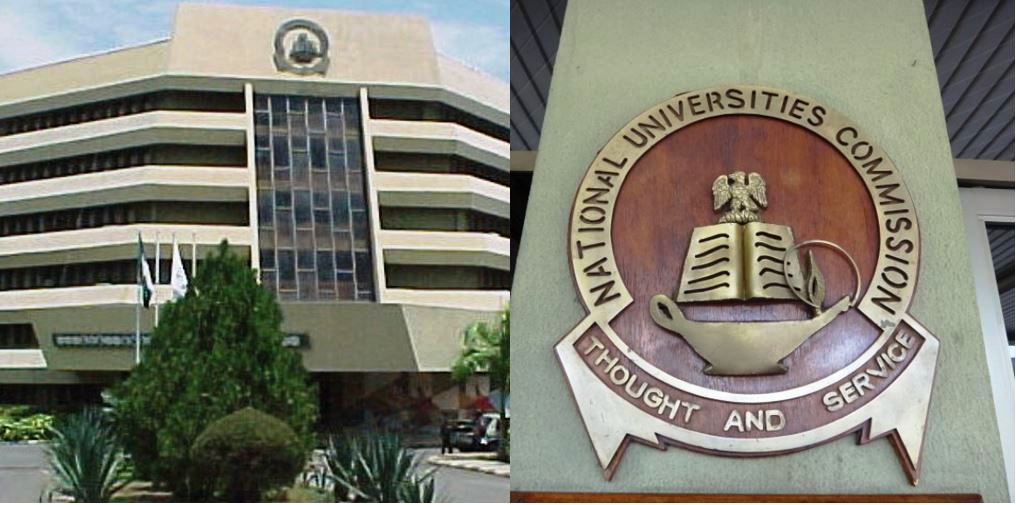
In a decisive move that signals one of the most far-reaching clean-up operations in Nigeria’s tertiary education sector, the National Universities Commission (NUC) has formally revealed that it has identified thirty-two illegal, unlicensed, or fraudulently operated universities and degree-awarding bodies scattered across the country and beyond. The Commission has vowed to begin a sweeping enforcement action aimed at shutting down the institutions, prosecuting promoters, and restoring confidence in the nation’s higher education system.
The announcement, delivered through the Office of the Executive Secretary, marks a significant escalation in NUC’s long-standing struggle against the proliferation of “degree mills”—entities that masquerade as universities while awarding certificates that have no academic, professional, or legal value. According to the Commission, the recent findings have exposed a system that has, over the years, allowed illegal institutions to thrive, preying on unsuspecting students, exploiting loopholes in regulation, and contributing to the silent erosion of the credibility of Nigerian degrees both locally and internationally.
NUC explained that the fresh discovery of the thirty-two institutions came after an extensive internal review, intelligence gathering, and verification process that spanned several weeks. The flagged institutions include local campuses that have neither approval nor accreditation to run degree programmes, professional bodies that unilaterally arrogated to themselves the power to award degrees, and several so-called “foreign universities” operating in Nigeria without recognition from their home countries. The Commission expressed particular concern that many of these entities boldly advertised doctorate degrees, professorship titles, and honorary awards—all without any legitimate academic structure or merit criteria.
The Commission noted that this crackdown has become unavoidable due to the rate at which unaccredited institutions have infiltrated public consciousness, exploiting the desperation of parents and students seeking alternatives in a competitive and often overstretched higher-education system. It observed that the activities of degree mills distort labour markets, compromise professional standards, cheapen legitimate academic qualifications, and encourage fraudulent practices in public and private sectors alike.
Speaking on the new enforcement campaign, the NUC leadership emphasized that the Commission is no longer prepared to tolerate the continued abuse of academic titles, particularly the misuse of honorary doctorates. It explained that universities in Nigeria—regardless of ownership structure—are now forbidden from awarding honorary doctorate degrees to serving public officials. This policy, the Commission maintained, is designed to curb the persistent trend of public office holders pursuing unmerited honorific titles or receiving fraudulent awards from institutions that operate outside academic norms.
The Commission also clarified that any individual who receives an honorary degree must publicly identify the award using only the approved honorary format, such as “Doctor of Literature (Honoris Causa)” or “D.Litt (h.c.)”. It warned that no recipient of such awards is permitted to use the generic “Dr.” prefix, as this misleadingly implies possession of an earned doctorate. According to the Commission, the misuse of such titles constitutes academic misrepresentation and may fall under criminal deception, especially when used to gain employment, political advantage, public recognition, or financial benefit.
As part of the upcoming crackdown, NUC disclosed that it has established a renewed collaboration framework with law enforcement agencies. This includes a joint monitoring arrangement with security institutions to track, raid, and close any illegal campus, office, or examination centre operated by the flagged institutions. The Commission also said it will work closely with the Ministry of Education, legal practitioners, international accreditation bodies, and professional associations to evaluate certificates issued by questionable institutions and invalidate them where necessary.
In addition to enforcement, the Commission emphasized the importance of public awareness. It appealed to parents, students, employers, and community leaders to be more vigilant and to cross-check the accreditation status of any university before seeking admission or employment verification. NUC warned that many victims of illegal institutions do not discover the truth until they attempt to apply for postgraduate studies, sit for professional examinations, or secure formal employment—only to discover their certificates are worthless.
Analysts believe the crackdown could also reignite long-standing conversations about the quality, accessibility, and capacity of Nigeria’s legitimate universities. Many argue that overcrowding in public universities and the rising cost of private education have pushed some prospective students toward illegal alternatives. Others contend that the persistent demand for honorary titles among political elites has inadvertently fueled the activities of diploma mills looking to profit from ego-driven recipients.
However, the NUC insists that enforcement must now be uncompromising. It maintained that no legitimate system can flourish where fraudulent institutions operate freely. It warned that legal action awaits anyone found promoting, funding, advertising, or participating in the activities of the thirty-two flagged entities. The Commission further stated that it will continue to update its official list of illegal universities as new discoveries emerge, stressing that this is not a one-time operation but the beginning of a sustained regulatory clean-up.
As the country prepares to witness the full weight of NUC’s enforcement machinery, many stakeholders are waiting to see whether this renewed determination will effectively dismantle the deeply entrenched network of illegal institutions. Students are urged to seek credible information before making academic decisions, employers are encouraged to adopt more rigorous verification procedures, and the public is advised to remain alert to suspicious academic claims.
In the end, the Commission’s message was clear: the era of fake universities and fraudulent degrees in Nigeria must come to a definitive end. If the crackdown succeeds, it could mark a turning point for higher education—strengthening institutional trust, restoring international confidence, and upholding the integrity of qualifications earned through genuine scholarship and merit.