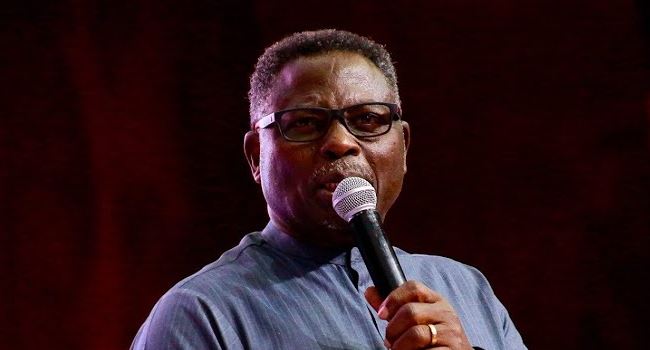
In a recent declaration, Pastor Ashimolowo urged authorities to enlist and train members of National Youth Service Corps (NYSC) to help combat growing insecurity across Nigeria. At the same time, he called for broad public support for Bola Ahmed Tinubu’s administration’s security‑revamp efforts.
According to him, the nation is at a critical security crossroads — and mobilising youth through NYSC, along with backing government efforts, could strengthen the fight against violence, kidnapping, and banditry.
Context: Why This Comes Now
In recent weeks, Nigeria has witnessed a sharp spike in violent attacks, kidnappings and insecurity across several states. The surge prompted the government to declare a nationwide security emergency — ordering massive recruitment into police and armed forces, and authorizing the use of NYSC camps as temporary police training depots.
Under this new security directive, both the police and army are to undergo expanded enlistment, with NYSC facilities playing a role in training capacity.
Pastor Ashimolowo’s call thus aligns with government steps — urging that youth service members be drawn in to boost human resources for security, and calling on citizens to support these measures.
What the Proposal Means — Strengths & Challenges
What’s Good About It
- Mobilising youth as security allies: With many young Nigerians already enrolled in NYSC, training willing corps members for auxiliary support could expand manpower — helpful in understaffed or high‑risk zones.
- Leverage existing infrastructure: Using NYSC camps and the existing NYSC framework could offer cost‑effective and relatively fast ramp‑up compared to building new training bases from scratch.
- Public solidarity & ownership: When community leaders call for support, it may help build public trust and buy‑in for nationwide security efforts — potentially improving cooperation between civilians and security agencies.
What Needs Careful Handling
- Training and oversight are critical: Corps members are not security professionals. Effective training, clear rules of engagement, and oversight would be essential to avoid misuse or human‑rights risks.
- Preserving neutrality and unity: NYSC is meant to foster national unity and youth mobilisation — using it for security could politicize it, potentially undermining trust among youths and communities.
- Not a substitute for systemic reform: While extra manpower may help, long‑term safety requires structural reforms: better policing, intelligence, social development, and addressing root causes of violence.
Why This Matters — For Youth, Security, and the Nation
- For young Nigerians: This could open new opportunities to contribute to national security, but also carries risks and responsibilities that demand transparency, training, and safeguards.
- For the government: It illustrates a willingness to think outside conventional security models — but also raises important questions about oversight, legitimacy, and long‑term strategy.
- For society: It reflects growing urgency over insecurity — showing that many see the crisis not just as a government issue, but a collective responsibility needing broad participation.