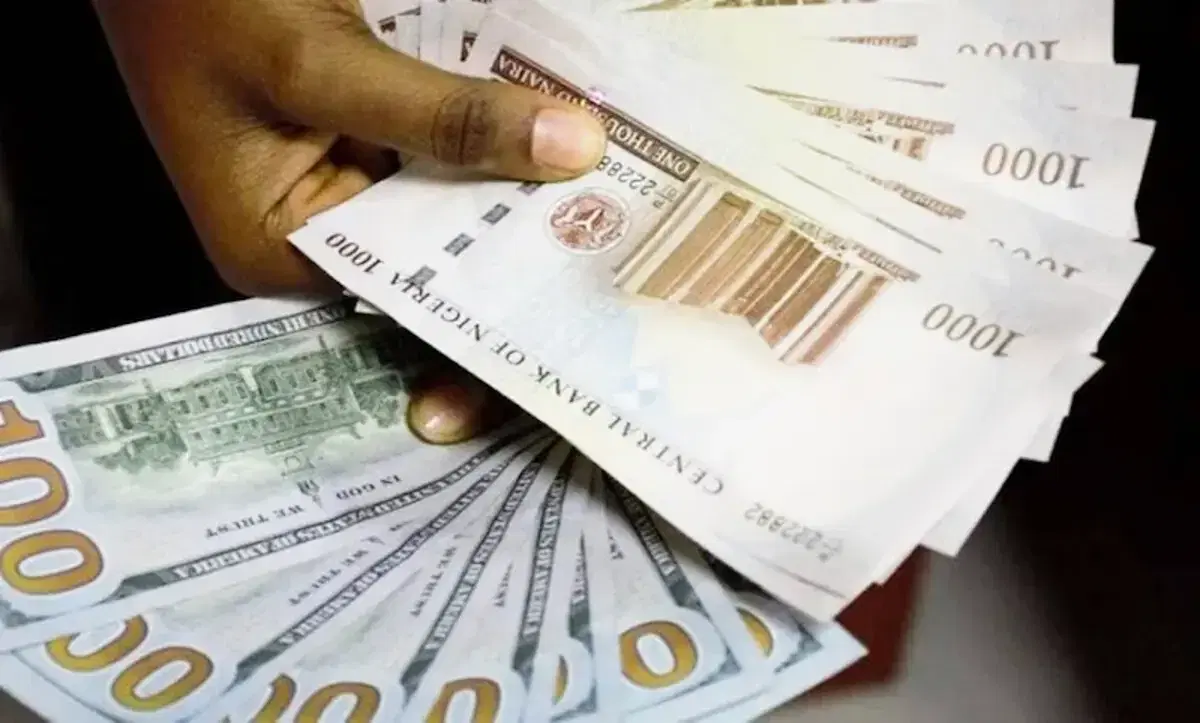
As of Tuesday December 2, 2025, the exchange rate between the United States Dollar (USD) and the Nigerian Naira (NGN) remains relatively stable — a relief to consumers, businesses, and individuals depending on foreign exchange. According to data from the Nigerian Foreign Exchange Market (NFEM), the Naira opened trading around ₦1,447.96 per US dollar, marking only a slight shift from recent sessions.
Official (NFEM) vs Parallel Market: Where Things Stand
- Official (NFEM) rate: ~₦1,447.96 per USD.
- Parallel/black-market pressure: While official rates remain stable, informal market rates continue to draw attention — previous days saw parallel-market quotes generally higher, reflecting persistent demand and market pressures.
What’s Driving the Stability
The narrow exchange-rate band reflects a few key dynamics:
- Liquidity and foreign exchange controls: Official channels like the NFEM appear to be managing supply and demand to maintain consistency.
- Market calm and reduced FX volatility: Over recent days, volatility has been modest, helping curb sudden swings in NGN value.
- Policy environment and regulatory influence: With regulatory oversight and macroeconomic policy spreading across exchange-rate windows, official rates remain more insulated from speculative pressure — though parallel markets continue to respond to real demand and currency-supply constraints.
What It Means for Nigerians — Businesses, Traders, Individuals
- Importers and businesses: Stable official exchange rates reduce uncertainty in costing and planning. For firms with obligations in USD, a stable NGN helps cushion against abrupt currency devaluations and supports more predictable budgeting.
- Consumers and remittance receivers: With a relatively stable official rate, those relying on formal remittances or official dollar-to-Naira conversions may find their purchases or transfers more predictable — at least through official channels.
- Travelers, students abroad, and forex-dependent individuals: If forced to rely on parallel-market rates, the difference between official and black-market rates remains relevant — meaning caution and due diligence remain wise when sourcing foreign exchange.
But Risk And Divergence Remain
Despite the current calm:
- Parallel-market rates continue to fluctuate, often significantly higher than official rates — a sign that demand and supply pressures remain outside formal windows.
- Businesses or individuals who can only access foreign exchange outside NFEM may still face elevated costs.
- Any sudden macroeconomic shocks, global currency swings, or local FX-liquidity issues could destabilize the Naira again — underscoring the importance of contingency planning.