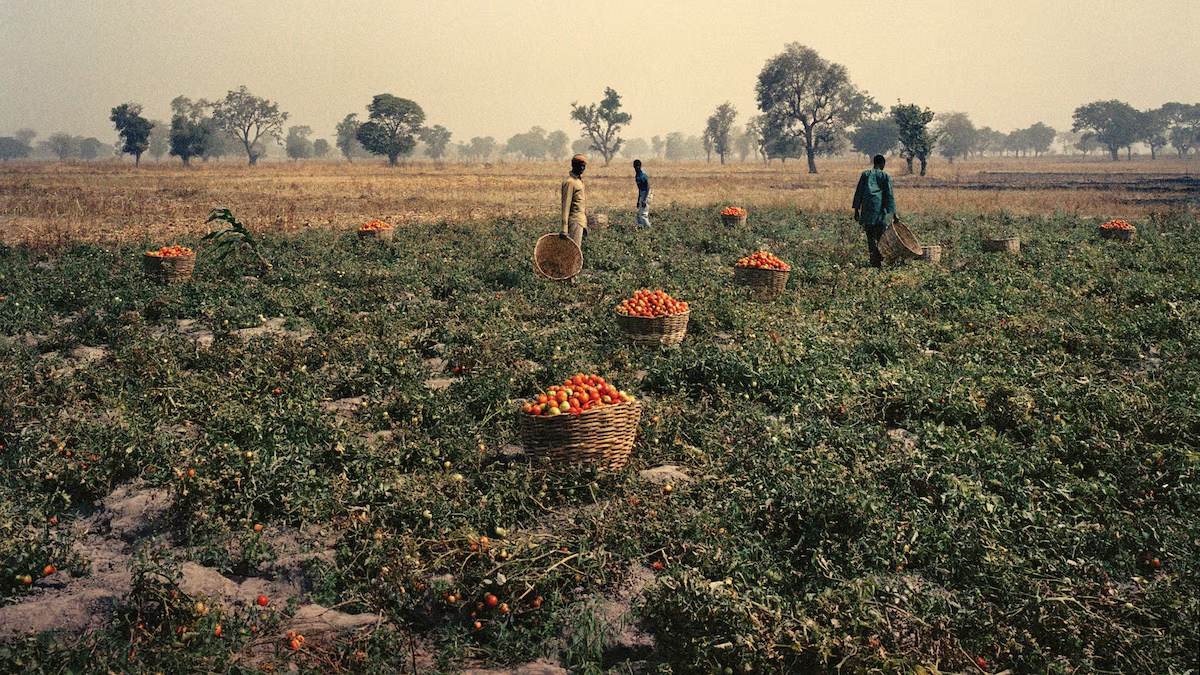
Nigeria is losing an estimated US$ 9–10 billion every year to post-harvest waste — a staggering drain on the economy and a sharp blow to food security and farmers’ livelihoods. This warning comes from Davidorlah Nigeria Limited, via its CEO Segun Alabi, during a media briefing in Abuja.
Alabi explains that between 30 % and 50 % of Nigeria’s agricultural output — especially perishables like fruits, vegetables, and grains — never makes it to the market because of spoilage, rot, and lack of processing.
With such losses, what should have translated into food on tables, export revenue, or farmer income simply gets wasted — and the scale is too large to ignore.
What’s Causing the Waste
The reasons behind such massive post-harvest losses are multiple and deeply rooted:
- Poor harvesting practices — Crops are often not harvested in optimal condition or handled properly.
- Inadequate storage and processing infrastructure — Nigeria lacks sufficient cold-chain storage, silos, and processing hubs to preserve perishable produce.
- Weak transportation and logistics — Many rural roads are in bad shape; produce can spoil en route from farm to market.
- Low awareness/training among farmers — Many smallholder farmers lack access to knowledge about proper post-harvest handling, sorting, preservation, and storage practices.
- Climatic and environmental pressures — Heat, humidity, erratic rainfall, flooding, and other environmental stresses accelerate spoilage, especially for perishables.
Because of these overlapping issues, what begins as a promising harvest too often ends in waste.
Why This Matters — Far Beyond the Farm
Food Security & Nutrition
When up to half of produce never reaches consumers, availability shrinks — leaving households, especially poorer ones, vulnerable to shortages, high prices, and malnutrition. This undermines efforts to ensure stable, affordable food supply across the country.
Farmers’ Livelihoods & Rural Poverty
For many smallholder farmers, what they grow never translates into income or saleable goods. That wasted labour and resources often means lost livelihoods, debt, and disincentive to invest in future farming.
National Economy & Export Potential
If produce isn’t preserved and marketed, Nigeria loses potential revenue — both from domestic sales and exports. The wasted value could otherwise contribute to GDP, foreign exchange earnings, and industrial growth.
Lost Employment & Industry Development
Reduced output limits downstream value-chain development: processing, packaging, storage, transport — all potential sources of jobs and entrepreneurship — remain under-developed.
Environmental & Resource Waste
Land, water, labour used to grow crops that rot never deliver value; this is inefficiency at scale. Also, decomposing organic waste contributes to greenhouse-gas emissions, while overexploitation of land continues to rise to compensate wasted output.
What Could Be Done — Pathways to Turn Waste into Wealth
The crisis also presents a huge opportunity — turning post-harvest waste into value with targeted investments and intelligent policy. Key interventions proposed by experts and agritech actors include:
- Invest in modern storage and cold-chain infrastructure — cold rooms, silos, refrigerated transport, and decentralized processing hubs to preserve perishables.
- Improve rural logistics and transport networks — better roads and efficient transport to ensure produce reaches market before spoiling.
- Train and sensitize farmers on proper harvesting & post-harvest handling — know-how in sorting, handling, drying, storage to minimize spoilage at source.
- Promote decentralized and low-cost preservation technologies — solar dryers, cold rooms powered by renewable energy, community-level warehouses for smallholder aggregations.
- Foster supportive government policy and public-private partnerships — enabling investment in storage, processing, export facilities, financing for agritech infrastructure, especially targeting smallholder / rural farmers.
- Value-addition & waste-to-wealth initiatives — turn what would have been waste into compost, animal feed, bio-fertilizer, bio-energy, processed foods or exported value-added goods.
If implemented seriously and at scale, these measures could transform Nigeria’s agricultural sector: from subsistence-level farming to a modern, efficient, export-ready food economy.