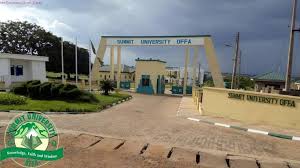
A wave of hope and achievement swept through the campus of Summit University as the institution proudly held its 5th and 6th Combined Convocation. A total of 319 students earned their degrees, marking a significant milestone for the private university. Among these graduates, 20 distinguished themselves by attaining First Class honors — a strong testament to academic excellence within the student body.
Beyond the First Class honors, a majority of the graduates performed admirably: many achieved Second Class Upper qualifications, while others received Second Class Lower and Third Class degrees. The overall outcome paints a picture of a student population committed to serious academic work — and an institution that supports and cultivates that commitment.
Academic Integrity Reinforced: Accreditation & Quality Assurance
Underlying this achievement is a crucial foundation: earlier in the year, Summit University received full accreditation for six of its core programmes — including fields such as Microbiology, Biochemistry, Computer Science, Accounting, Business Administration, and Political Science. This accreditation reflects that the university meets — and maintains — national standards for curriculum, faculty, infrastructure, and instructional quality.
Because of this solid accreditation, the First Class results from the recent convocation do not simply reflect favorable grading, but rather a real academic rigor. It shows that when students work hard and the institution provides an enabling learning environment, high-level academic performance is very possible, even in a private university.
Why This Matters: Implications for Students, Parents, and the Broader Community
For Prospective Students & Their Families
- Credible and recognized education: Graduating from an accredited institution ensures that degrees are legitimate and respected — whether for employment, further study, or professional certification.
- Attainable excellence: Seeing peers graduate with First Class honors demonstrates that top academic performance is achievable. This can motivate students to aim high.
- Viable alternative to overcrowded public universities: With growing demand for tertiary education, credible private universities like Summit offer real opportunities for quality education.
For Private Higher Education in Nigeria
- Boosting confidence in private institutions: Strong results from a relatively young private university help dispel myths that quality education is exclusive to older or public institutions.
- Encouraging healthy competition: As private institutions strengthen their credentials and outcomes, they push the broader higher-education sector to raise and maintain standards — which benefits all students.
- Expanding access to tertiary education: With reliable private options, more students can gain access to university education, easing pressure on public universities and widening opportunities across the country.
Looking Ahead: What This Means for the Future
With a recent track record of accredited programmes and demonstrable academic success, Summit University appears well-positioned for growth. More students may be attracted to its programmes, and the institution can expand its offerings and improve infrastructure. Over time, the university’s growing reputation could make it a serious competitor among private institutions nationwide.
Parents, students, and educational stakeholders may increasingly view Summit — and institutions like it — as strong alternatives for quality higher education. As the demand for university education continues to rise, success stories of this sort become vital in shaping Nigeria’s educational landscape.