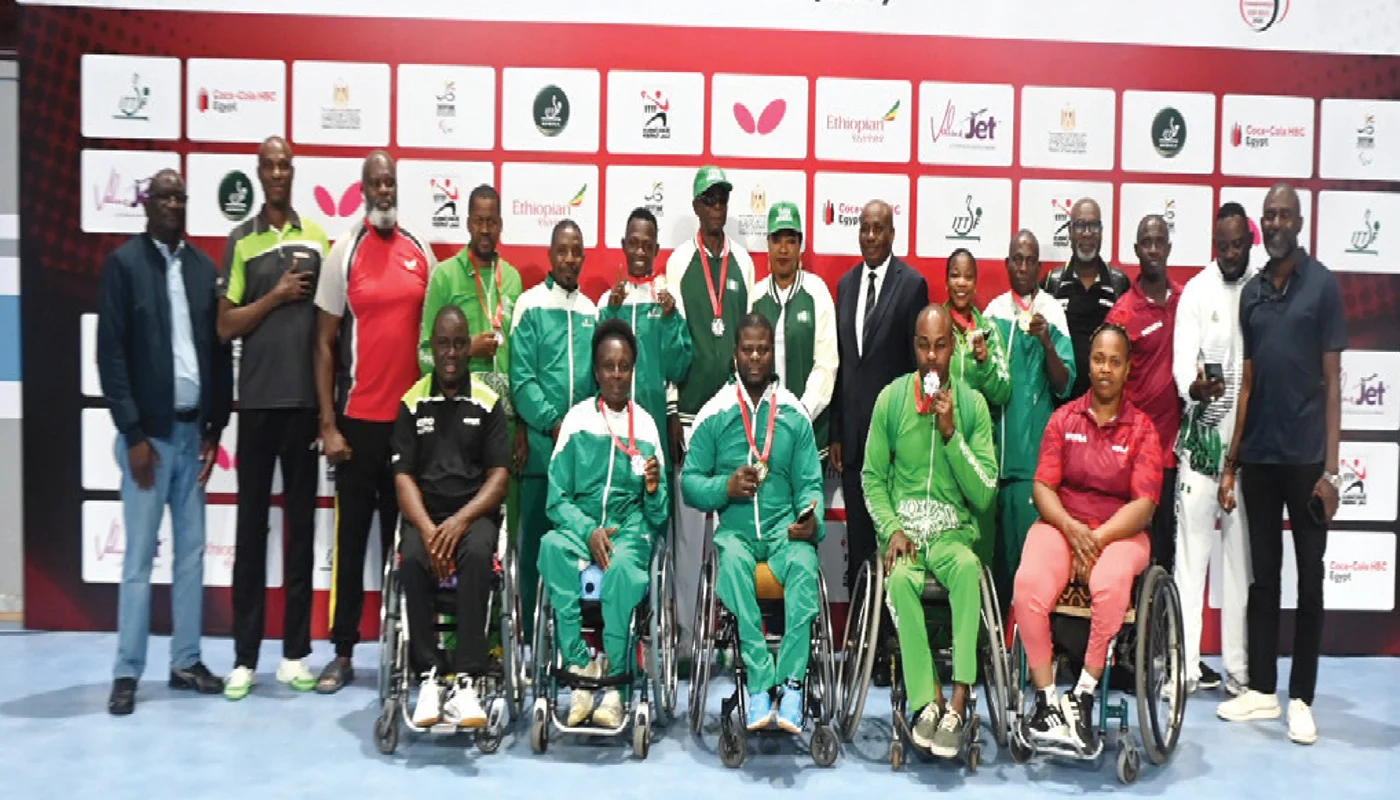
The 2025 edition of the inaugural West Africa Para Games has come to a close — and what a spectacle it was. Hosted in the ancient city of Abeokuta, Ogun State, the Games saw para-athletes from across West Africa converge for six days of fierce competition, inspiring stories, and unforgettable triumphs. For the host nation Team Nigeria, it was nothing short of a historic coronation: a total domination of the medal table that sent a message about Nigeria’s supremacy in para sports within the sub-region.
A Celebration of Resilience, Unity & Sporting Excellence
From opening ceremony to final whistle, Abeokuta transformed into the heart of West Africa’s para-sports community. Over 400 para-athletes — from amputee footballers, wheelchair athletes, powerlifters to para-volleyballers — competed across multiple disciplines, showcasing talent, determination and sportsmanship.
What the Games accomplished went beyond medals. It was a statement: inclusion matters. For many participants, it was more than sport — it was about representation, visibility, and a chance for para-athletes to shine on a regional stage. Hosts and organizers harnessed the spotlight to renew national and state-level commitment to para-sports.
Abeokuta didn’t just host the Games — it celebrated bravery, unity, and possibility.
Team Nigeria’s Historic Dominance — By the Numbers
The performance of Team Nigeria was nothing short of dominating:
| Rank | Country | Gold | Silver | Bronze |
|---|---|---|---|---|
| 1 | Nigeria | 59 | 39 | 31 |
| 2 | Benin Republic | 4 | 4 | 14 |
| 3 | Ghana | 3 | 15 | 21 |
| 4 | Cameroon | 1 | 1 | 2 |
| 5 | Côte d’Ivoire | 1 | 0 | 0 |
With 59 gold medals, Nigeria didn’t just win — they obliterated the competition. The sheer scale of the haul underscores both the breadth (many disciplines) and depth (high-level performance) of Nigeria’s para-sports talent.
The final gold of the Games was clinched by Nigeria’s amputee football team, who defeated Liberia 1–0 in a dramatic closing-ceremony final.
Discipline-by-Discipline Highlights
Amputee Football — A Thunderous Start and a Golden Finish
The opening match of the Games saw Nigeria’s amputee football team thrash the Benin Republic Amputee Football Team 11–0 — five goals in the first half, six more after break. From there, Nigeria rolled, and eventually reached the final where they edged Liberia Amputee Football Team 1–0 to claim gold.
That opening 11–0 thrashing was a bold statement: home, dominant, and determined.
Para-Volleyball — Precision, Power & Straight-Set Victory
On the volleyball court, Nigeria’s para-volleyball team asserted full control. After beginning their campaign with a clean 3–0 win against Niger Republic, they sealed the title with a convincing 3–0 straight-sets victory over Ghana Para‑Volleyball Team in the final — set scores were decisive: 25–10, 25–6, 25–16.
The performance cemented Nigeria’s standing as the region’s leading para-volleyball nation. According to the head of their federation, this win is a testament to consistent investment and growing expertise in the sport.
Para Powerlifting — Strength, Skill and Medal Sweep
In para-powerlifting, Nigeria swept the podium. Across multiple weight categories, Nigerian lifters claimed 10 of the 15 medals on offer: four gold, four silver, and two bronze. Gold winners included athletes such as Ibrahim Dauda (men’s 59kg), Kayode Blessing (men’s 65kg), and female lifters Esther Oyema & Mark Onyinyechi, demonstrating Nigeria’s strength in both male and female categories.
Other countries did get on the board — Côte d’Ivoire landed a gold in male heavyweight and Ghana added a silver and two bronzes — but Nigeria’s dominance was clear.
Para Badminton, Athletics, Armwrestling, Wheelchair Sports — Consistent Depth
Beyond the headline events, Nigeria also performed impressively across other sports. In para-badminton alone, Nigeria secured several gold medals across men’s standing and wheelchair categories, mixed doubles, and more.
Meanwhile, other countries contributed standout moments — for instance, Team Ghana collected medals in armwrestling and athletics, underlining that the Games were not just about winners, but also opportunities for emerging para athletes across the region.
These performances collectively illustrate that while Nigeria led the charge, the spirit of competition, solidarity, and progress was alive across many nations.
What This Success Means for Para Sports in West Africa
The impact of the Games goes well beyond the final medal tally. First, it marked the birth of a regional para-sports movement — where athletes with disabilities from across West Africa can compete, be celebrated, and push the envelope in sports. For many, the Games will serve as a launching pad for further continental and global competitions.
Government and sports authorities responded with optimism. National Sports Commission of Nigeria (NSC) leadership lauded the athletes as “true heroes of African sports,” and reaffirmed commitment to hosting more such events in future.
For Nigeria, the message is clear: para-sports is no longer fringe — it’s central. The success at Abeokuta will likely galvanize further investment in infrastructure, training, and support for para athletes. For other West African countries, the Games represented exposure, experience, and a reason to double down on building their para-sports programs.
In sum, the first West Africa Para Games didn’t just crown champions — it ignited a movement.