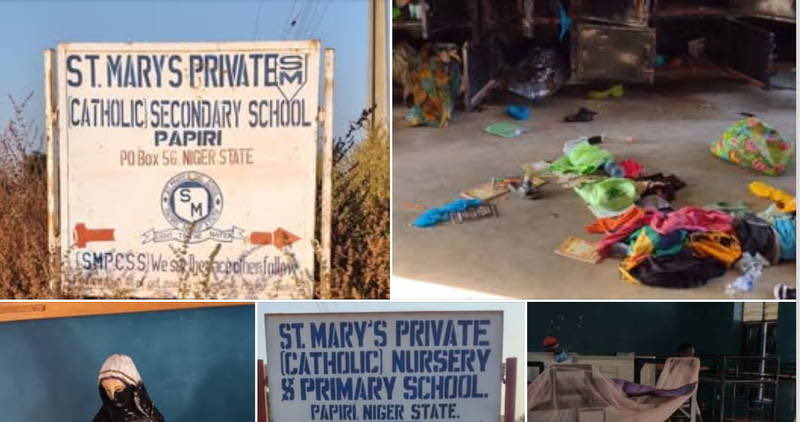
Nigeria has recorded a critical breakthrough in one of its most harrowing school-kidnapping episodes in recent memory. The Federal Government has successfully secured the release of 100 pupils abducted from St. Mary’s Private Catholic Primary and Secondary School in Papiri, Agwara Local Government Area of Niger State. The rescue has offered a glimmer of hope to distraught families, communities, and a nation on edge — even as many abductees remain unaccounted for.
The tragic ordeal began in the early hours of November 21, when a group of armed assailants on numerous motorbikes launched a coordinated raid on the hostel dormitories at St. Mary’s. Reports indicate the attackers struck around 2:00 a.m., while most of the students were asleep. The result was almost unimaginable: 315 people — including 303 students and 12 teachers or school staff — were violently seized and driven away under the cover of darkness.
In the chaos that followed the raid, a fraction of the captives managed to claw their way back to safety. About 50 students fled their captors during the night, navigating rough terrain until they reached safe zones, from where they alerted authorities. Their brave escape provided critical, early information which would later inform search efforts.
After nearly two weeks of intense pressure on security agencies, the breakthrough came. On Sunday, government sources announced that 100 of the abducted pupils had been freed. The circumstances behind their release remain under wraps: no official account has confirmed whether it was the product of negotiations, a tactical rescue, ransom payment, or collaboration with local actors. What is clear, however, is that once freed they were promptly transported to a secure location for medical evaluation, psychological support, and debriefing. Many reportedly emerged from captivity traumatized, dehydrated, and exhausted — a grim testament to the ordeal they endured in forest hideouts over weeks.
The government’s relief, however, is tempered by growing concern. Even with this significant rescue, approximately 165 individuals — predominantly students, but including the 12 staff members — remain in captivity. Their current location, health condition, and the identity of their captors remain unknown. Security agencies and local volunteers have since escalated a multi-state search operation. This expanded effort now covers forest corridors stretching through Niger, Kebbi, and parts of Kwara State, combining aerial surveillance with ground patrols and mobilization of local hunters familiar with the terrain.
The Niger State government, responding to the crisis’ scale and severity, ordered the temporary closure of schools in vulnerable areas pending an assessment of security measures. Simultaneously, the Federal Government reportedly suspended all foreign engagements to redirect national focus and resources toward resolving the crisis. Meanwhile, church leaders, parents, and education stakeholders have expressed cautious relief over the partial rescue, but their gratitude is laced with anguish: the reality of students and staff still held captive casts a long, persistent shadow.
Beyond the immediate tragedy, the abduction and partial release have renewed national conversations about patterns of insecurity, the vulnerability of boarding schools — especially in remote communities — and the systemic failures that allow such incidents to recur. Many analysts point to the fact that institutions once considered safe havens for learning have increasingly become targets for ransom-seeking armed groups. The stakes, observers warn, are no longer limited to the lives of individual students: they threaten the very foundation of education security across high-risk regions.
For now, all eyes remain on ongoing rescue efforts. The government vows to pursue every credible lead until every child and teacher is returned to their families. On the ground, families hold vigil, communities pray, and a nation braces for what may yet unfold.
This story is still evolving. As more information becomes available — about the conditions of the freed children, the fate of those still missing, and the strategies being deployed to prevent future abductions — the national conversation will likely intensify around accountability, protection, and the urgent need to safeguard Nigeria’s children.