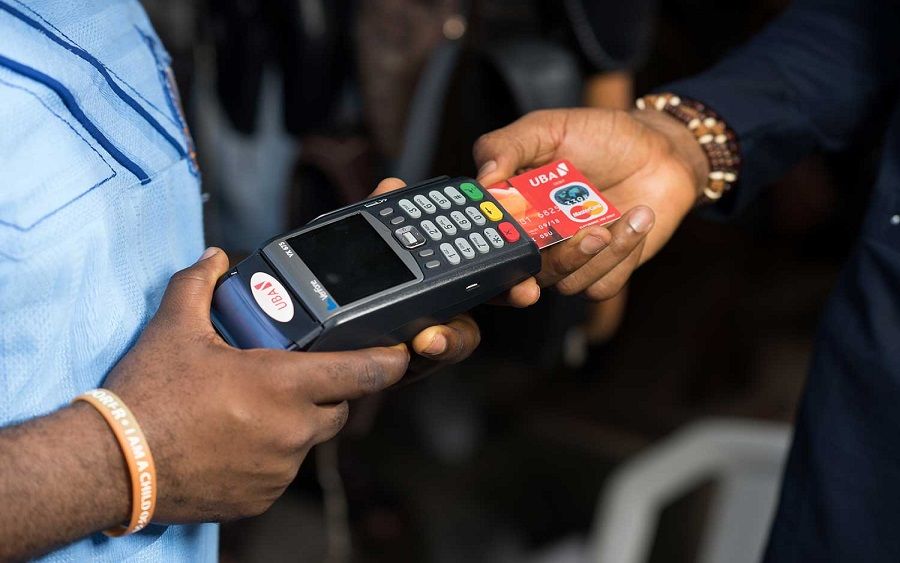
The Office of the Accountant-General of the Federation (OAGF) has formally banned all physical cash payments at every revenue-collecting point of the federal government — meaning all Ministries, Departments and Agencies (MDAs) and federal government-owned enterprises (FGOEs) must stop accepting cash immediately.
To replace cash, the government has mandated installation of electronic payment devices — primarily Point-of-Sale (POS) terminals — at all MDA collection points. Every such office must deploy functional POS terminals or other approved e-payment devices within 45 days.
Moreover, agencies are instructed to display clear signs such as “NO PHYSICAL CASH RECEIPT” or “NO CASH PAYMENT” at all revenue desks to make it unmistakable.
In addition, the policy prohibits the use of unapproved payment portals or third-party payment platforms, especially those that silently deduct commissions or fees before remitting revenue to government coffers. All official collections must now go directly into the official Treasury Single Account (TSA) or relevant sub-accounts, without deductions at source.
Finally, beginning January 1, 2026, the government will roll out a standardised digital receipt system — the Federal Treasury e-Receipt (FTeR), generated through a new unified digital infrastructure platform called the Revenue Optimisation (RevOp) Platform. From that date, FTeR will be the only legally valid proof of any payment to federal MDAs.
Why the Government Says It Did This: Goals & Expected Gains
The new policy is part of a sweeping reform to the way the federal government collects revenue — aimed at plugging long-standing leakages, increasing accountability and transparency, and curbing corruption.
Officials say physical cash collections have undermined the integrity of earlier e-payment systems (like TSA, GIFMIS) and facilitated under-remittance, diversion, or pilfering of funds. The cashless mandate is intended to ensure that every naira paid to the government is traceable, properly recorded, and remitted in full.
By outlawing unauthorised deductions, commissions or convenience-fees at the point of payment, the policy aims to recover revenue that previously slipped through unofficial channels.
The RevOp platform — by unifying billing, reconciliation, and tracking across TSA, GIFMIS, central bank infrastructure and approved banks/payment providers — promises real-time visibility into government revenues. This, in theory, reduces human discretion, improves audit trails, and strengthens fiscal discipline.
Overall, this is being pitched as one of the most significant financial-administration overhauls in recent decades — a decisive move toward modernising Nigeria’s public finance architecture.
What It Means for You — Citizens, Businesses, and Everyday Nigerians
If you pay any kind of federal government fees — for licenses, permits, regulatory fees, services, fines, etc. — expect no more cash payments at federal offices as soon as they implement the new rule. Payments will need to be via POS or other approved e-payment channels.
You should also expect to receive a digital receipt (FTeR) once the system is live — and that will be the only valid proof of payment recognized by the government. Paper-based or handwritten receipts will soon become obsolete.
For citizens in remote or rural areas (or generally areas with poor banking/internet infrastructure), there could be growing pains. If POS terminals are not available or malfunctioning, you might face delays or difficulties.
For businesses — especially those that frequently interact with MDAs — this could be a boon: more transparent payment processes, clearer accountability, reduced risk of unofficial fees or leakages, and a formal record of payments.
Overall, once fully implemented, this policy could help restore some public trust — and curb long-reported revenue leakages and under-remittance.
Potential Challenges & What to Watch Out For
Transition may be bumpy. Deploying POS terminals across hundreds of federal offices — including in remote, rural, or hard-to-reach areas — is a large logistical exercise. Technical glitches, connectivity issues, power outages, or delay in equipment roll-out could disrupt service delivery or frustrate payers.
Limited access to banking, smartphones, or stable internet remains a concern in many parts of Nigeria; this could exclude or disadvantage people who rely heavily on cash — especially older persons, low-income earners, or those in underserved areas.
There’s also a risk that before full compliance, some offices may still attempt to collect cash or issue unofficial receipts — meaning payers need to be vigilant, demand POS payment and insist on the digital receipt once available.
Finally, the success of the reforms depends heavily on enforcement — and on consistent implementation across all MDAs. If some agencies drag their feet or flout the rules, the intended gains (transparency, accountability, revenue recovery) could be undermined.
What’s Next & What to Expect
- The 45-day window for MDAs to install POS terminals starts now — so many offices may begin rolling out e-payment options before early 2026.
- From January 1, 2026, the digital receipt (FTeR) becomes mandatory — paper receipts will no longer be legally valid for federal payments.
- The backend integration through the RevOp platform is expected to gradually unify revenue-collection, reconciliation, and auditing systems across all MDAs — including linking to TSA, GIFMIS, banking infrastructure, and approved payment service providers.
- Citizens and businesses should prepare to embrace digital payment: ensure they have access to bank accounts, POS-compatible cards or other approved e-payment tools.