In the early hours of Sunday, December 7, 2025, a group of mutinous soldiers in the Republic of Benin declared a coup, seizing key sites — including the state television station and a military base — and claiming to have overthrown the government. The group, calling itself the Military Committee for Refoundation (CMR) and reportedly led by Pascal Tigri, announced suspension of the constitution and dissolution of state institutions.
But those who expected a swift change of power were wrong. The legitimate government responded. Loyalist forces acted quickly, regaining control of the TV station and key military installations.
At the same time, from neighboring Nigeria, a major intervention was underway. On request from Benin’s government, the Nigerian Armed Forces deployed fighter jets and ground troops to help suppress the coup. The airstrikes ― coordinated with Beninese forces ― struck mutineers and their strongholds, ultimately preventing the coup plotters from regrouping.
By late Sunday, government forces announced the coup had been foiled. Security was reestablished across Cotonou, and several suspected plotters were arrested.
Why Nigeria and ECOWAS Stepped In: Defence of Democracy and Regional Stability
The intervention was not spontaneous. According to official statements, Benin’s government issued a formal request for help — including for air and ground support — to repel the coup and protect constitutional order.
For Nigeria, led by Bola Ahmed Tinubu, the decision carried deep regional significance. The swift deployment aimed not just to save a friendly neighbour, but to reinforce democracy in a region battered by coups over recent years. Tinubu praised the armed forces for acting “within the ambit of the ECOWAS Protocol on Democracy and Good Governance,” and described their actions as stabilising a neighbouring country and defending shared democratic values.
Beyond ideology, there were strategic and security considerations. The northern regions of Benin have faced repeated jihadist attacks — instability next door could easily spill over into Nigeria. A coup could have exacerbated an already fragile security environment. Supporting Benin’s government was viewed by many as necessary to contain broader regional threats.
When the dust settled, the regional bloc followed through: ECOWAS ordered deployment of its standby force — with personnel from Nigeria, Ghana, Ivory Coast and Sierra Leone — to help preserve constitutional order in Benin and prevent further unrest.
Voices of Support: ECOWAS Lawmakers and Nigerian Leadership Speak Out
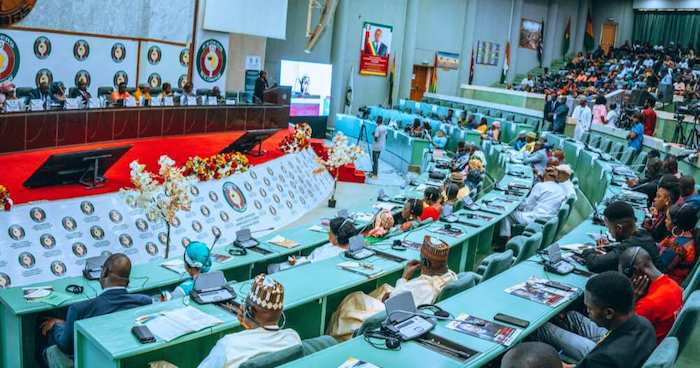
Among those applauding Nigeria’s intervention was Barau Jibrin, deputy president of ECOWAS Parliament. He commended President Tinubu for promptly acceding to Benin’s request, calling the military response essential to defend democracy and prevent a return to military rule. For him, the episode reaffirmed ECOWAS’s commitment to democratic governance across the region.
A broader coalition of civil society and political stakeholders in Nigeria echoed the sentiment. The Nigeria Governors’ Forum (NGF) — among others — argued that a successful coup in Benin would have had dire consequences for Nigeria, especially given shared borders, common security threats, and the migrant and trade flows linking the two countries. The intervention, they insisted, was a necessary step to protect both Benin’s democracy and Nigeria’s national security interests.