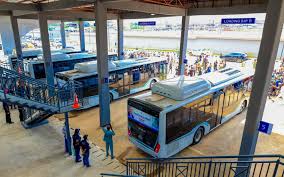
The government of Enugu has just announced that it will restrict the operation of tricycles (keke), yellow buses and minibuses on five major roads across the city — a major move to make way for a new Bus Rapid Transit (BRT) system.
According to the state’s Enugu State Government and the Commissioner for Transport, Dr. Obi Ozor, the change is part of a broader vision under Governor Peter Mbah to turn Enugu into a “modern, multimodal and globally competitive city.”
Which Roads Are Affected
The ban will cover major corridors — some of the busiest in the city — thereby making them dedicated BRT routes. The affected routes include:
- Okpara Avenue → Abakaliki Road → New-Haven Junction → Naira Triangle → Emene Airport
- Ogui Road → Chime Avenue → Naira Triangle
- New-Haven Junction → Bisala Road → Rangers Avenue → WAEC → Nkpokiti → Zik’s Avenue
- Ogui Road → Presidential Road → WAEC → Nkpokiti
- The entire Agbani Road stretch
On these routes, only the BRT buses (and taxis) will be allowed. Tricycles, yellow buses and minibuses — previously common on many of these roads — will be restricted.
Why the Move: Government’s Rationale
- Traffic flow & safety: The Commissioner argued that tricycles and minibuses were never designed for high-speed highways, and their presence on busy city roads disrupts traffic and poses safety risks.
- Modern transport system: The BRT rollout is positioned as a shift to a more organized, efficient and modern urban transport system.
- Transit hierarchy vision: According to the plan: BRT buses will serve major roads (primary routes), yellow buses will handle secondary routes, and tricycles will be relegated to “last-mile” connectivity — helping passengers reach their final destinations from bus terminals or stops.
- New infrastructure support: As part of the transformation, the government claims to have procured 200 CNG-powered BRT buses, and plans for thousands of electric taxis to be assembled locally.
- Improved commuter experience: The coming BRT buses are reportedly equipped with comfort and safety features like padded seats, air-conditioning, WiFi, dedicated lanes and central monitoring.
Pushback & Concerns from Transport Operators
Not everyone is on board. There is mounting resistance from the transport community:
- Over 40,000 commercial drivers (keke, minibuses and yellow-bus operators) have warned that the restrictions and the upcoming reforms risk plunging their families — and more broadly, hundreds of thousands of households — into poverty.
- Many see the plan as an “outright ban without alternatives,” arguing that unless the government provides effective replacement jobs or means, huge numbers of people whose livelihoods depend on informal transport will suffer.
- Tricycle operators, in particular, have stressed that while they are not against improvements, they need proper support, such as access to taxis or other opportunities if their services are banned on main roads.
What the BRT System Plans Look Like
- The government says it has procured 200 CNG-powered BRT buses, intended to run on dedicated lanes on the major roads listed.
- Also planned are 4,000 electric taxis, to be assembled locally (at ANAMMCO, Enugu), with first 1,000 taxis expected to roll out in a few months.
- The administration has reportedly built 84 new bus shelters across the city — designed to support the network and ensure commuter convenience.
- The new system is intended to be more regulated, more comfortable and safer for riders — part of a broader ambition to modernize transport in Enugu.