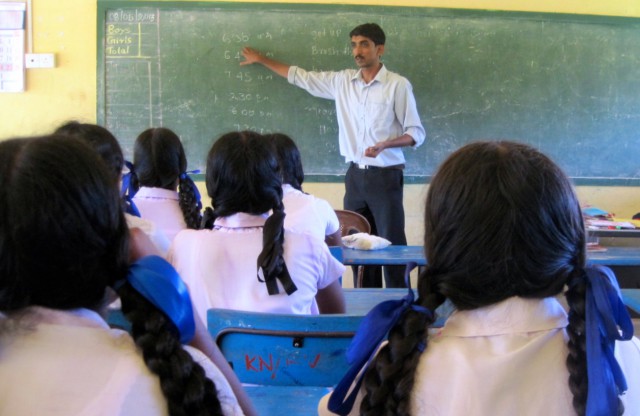
Sri Lanka’s public education system is confronting a pronounced teacher shortage that has left thousands of schools operating with critically low staff levels, government data shows.
According to figures released by the Department of Census and Statistics, 3,126 schools — including one national school — are functioning with fewer than ten teachers each. An additional 4,263 institutions report between ten and twenty‑five teachers, a staffing shortfall that education analysts say risks undermining classroom quality and student outcomes. The data also highlight severe disparities in school sizes, with 1,576 schools serving fewer than fifty students while 36 schools enrol more than 4,000 learners. Overall, nearly 3.82 million students are enrolled in state‑run schools across the island.
Responding to the growing gap between student population and teaching capacity, Prime Minister Dr. Harini Amarasuriya addressed Parliament in October 2025, underscoring the scale of the vacancies and the government’s efforts to mitigate the crisis. “There are currently 36,178 teacher vacancies across provincial and national schools,” she said, noting that recruitment has been underway since July 2024 and that 353 graduates have been selected to join the Teaching Service. “We will submit requests to the Recruitment Review Committee to expedite filling the remaining vacancies,” Dr. Amarasuriya added, emphasizing the need to accelerate the onboarding of qualified teachers.
Government officials and education stakeholders have framed the recruitment drive as essential to safeguarding education quality, particularly in rural and underserved areas where staffing gaps are most acute. The invitation for graduate applications extends to those able to teach in Sinhala, Tamil, and English mediums and covers both national and provincial schools.
Despite official reassurances, critics note that the vacancy numbers — which education sources previously estimated could approach 40,000 positions nationwide — reflect long‑standing structural challenges in workforce planning, recruitment delays, and uneven distribution of teaching resources.
Opposition figures and observers have urged more comprehensive policy measures to attract and retain teachers, especially in core subjects such as mathematics, science, and English, which tend to be hardest hit by shortages. Some union representatives have tied staffing concerns to broader issues of working conditions and compensation, arguing that improved incentives are necessary to make teaching careers more sustainable.
Education analysts warn that without swift and sustained action, the country’s education system may struggle to deliver consistent instructional quality, particularly at a time when Sri Lanka seeks to enhance national competitiveness and student achievement. The shortage underscores the tension between school enrolment levels and available human resources — a challenge that government officials have acknowledged but say they are committed to addressing through ongoing recruitment and policy reforms.
While the government’s current focus remains on filling existing vacancies, critics suggest that a parallel strategy to strengthen teacher training, incentive structures, and retention policies will be critical to preventing future shortfalls and ensuring that all children have access to qualified educators.