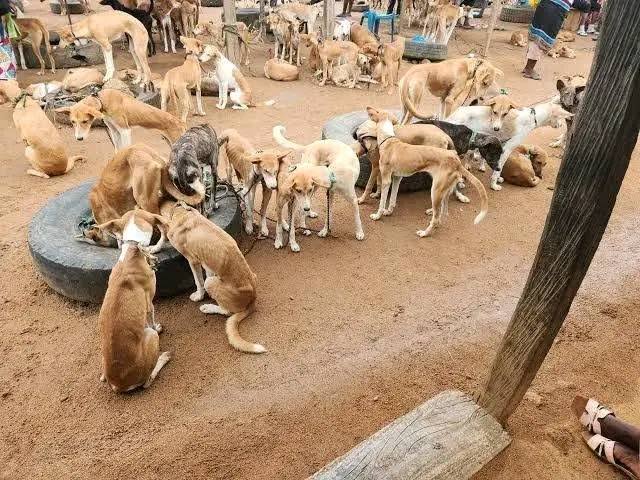
Nigeria has been ranked as the leading consumer of dog meat in Africa and the third‑highest in the world, according to a 2026 global report on cultural food practices and animal consumption trends. The ranking places the country behind South Korea and Vietnam, with only those nations consuming more dog meat overall than Nigeria.
The Dog Friendly Country Index 2026 highlights Nigeria’s position alongside China and Vietnam as one of the world’s primary consumers of dog meat, a distinction that has attracted widespread attention and debate. While China remains the largest consumer with tens of millions of dogs reportedly slaughtered annually, and Vietnam follows with several million, the latest data now cite Nigeria as the third‑highest consumer worldwide and the highest on the African continent.
In Nigeria, dog meat — locally referred to in some regions as “404” — is consumed in both rural and urban settings, particularly in parts of the South‑South and South‑East. Enthusiasts of the dish often cite its flavour, cultural significance, and perceived nutritional or health benefits as reasons for its popularity. Major markets for dog meat exist in states such as Plateau, Cross River, Akwa Ibom, Benue, and Ondo, where traders source dogs from various areas to satisfy demand.
Despite its prevalence in parts of the country, the practice is not uniform nationwide. In many northern states and Muslim‑majority regions, dog meat consumption remains culturally taboo and is largely avoided.
The report’s findings have reignited discussions within Nigeria and internationally about the cultural, ethical, and public‑health implications of dog meat consumption. While advocates emphasise tradition and personal choice, critics and animal‑welfare activists call for clearer regulations and greater awareness of animal treatment.
Public‑health experts have also raised concerns about risks associated with the dog meat trade, including the potential for rabies transmission, particularly when animals are sourced from unregulated environments. Nigeria continues to grapple with rabies as a public‑health challenge, and interactions between humans and potentially infected dogs remain an ongoing concern for health authorities.
As this ranking circulates in media outlets and social media, responses from the public have been mixed, with some questioning the methodology of international consumption studies and others underscoring the need for greater animal‑welfare protections.