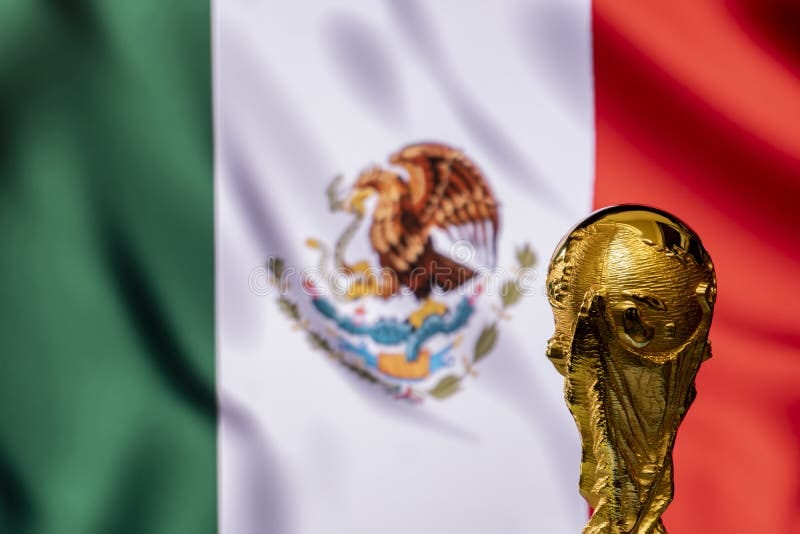
Tension is rising across parts of Mexico following a dramatic military operation that reportedly led to the death of one of the country’s most feared cartel leaders, sparking violent reprisals and igniting online calls for the cancellation of 2026 World Cup matches scheduled to be hosted in the country.
According to multiple international reports, Mexican armed forces carried out a high-level security operation in Jalisco state that resulted in the death of Nemesio Oseguera Cervantes, widely known as “El Mencho,” the longtime leader of the Jalisco New Generation Cartel. The CJNG has for years been regarded as one of the most powerful and violent criminal organizations in Mexico, with operations spanning drug trafficking, arms smuggling, extortion and transnational organized crime. The United States government had previously placed a multi-million-dollar bounty on Oseguera Cervantes, reflecting his prominence on international most-wanted lists.
Security sources indicate that the operation took place in a mountainous area near Tapalpa, Jalisco, where Mexican military forces reportedly engaged cartel operatives in a firefight. Authorities later confirmed that the cartel leader sustained critical injuries during the clash and died while being transported for medical attention. Several other suspected cartel members were also killed, and weapons and tactical equipment were seized at the scene. While Mexican authorities have described the operation as a major breakthrough in the country’s fight against organized crime, the aftermath has been anything but calm.
Within hours of the announcement, coordinated retaliatory violence erupted across multiple states. Armed groups believed to be aligned with the CJNG set vehicles ablaze, blocked major highways and attacked public infrastructure in what security analysts describe as “narcobloqueos” — a tactic designed to paralyze movement and overwhelm security responses. Thick smoke from burning trucks and cars was seen rising over key transport corridors in Jalisco, Guanajuato, Michoacán and neighboring regions. Businesses were forced to close abruptly, public transportation was disrupted, and schools in some affected areas suspended activities for safety reasons.
Local authorities in Jalisco declared a high security alert as federal reinforcements were deployed to stabilize strategic zones, including Guadalajara — one of Mexico’s largest cities and a confirmed host venue for the 2026 FIFA World Cup. International observers have noted that Guadalajara’s inclusion as a host city has placed additional global scrutiny on the security situation, particularly as images of burning vehicles and armed confrontations circulated widely on social media.
Foreign governments responded swiftly. The United States issued shelter-in-place advisories for its citizens in several affected states, while other diplomatic missions urged nationals to avoid non-essential travel in volatile areas. Some airlines temporarily suspended or adjusted flights into parts of western Mexico at the peak of the unrest. Although the violence has been concentrated in specific regions rather than nationwide, the scale and speed of the retaliatory actions have raised fresh questions about security preparedness ahead of major international events.
The unrest has already had tangible consequences for sports within Mexico. Domestic football fixtures in and around Guadalajara were postponed due to security concerns, underscoring the immediate impact on public gatherings. However, despite viral online claims and mounting social media pressure, there has been no official decision by FIFA to cancel, relocate or suspend Mexico’s role in the 2026 tournament. Mexico remains a confirmed co-host alongside the United States and Canada, with matches scheduled in Guadalajara, Mexico City and Monterrey.
Security experts caution that the killing of a cartel leader, while symbolically significant, often creates a volatile power vacuum. In Mexico’s complex criminal landscape, such events can trigger short-term instability as factions compete for control. Analysts warn that splinter groups or rival organizations may attempt to exploit the disruption, potentially prolonging tensions rather than immediately reducing violence. At the same time, Mexican authorities have emphasized that decisive operations against organized crime are necessary to weaken cartel command structures over the long term.
For now, there is no formal indication that World Cup preparations have been halted. Infrastructure projects tied to the tournament reportedly continue, and government officials insist that security frameworks for the global competition remain intact. Nonetheless, the timing of the violence has intensified debate both within Mexico and internationally about safety assurances for players, fans and officials.
As the situation evolves, the central question remains whether the recent unrest represents a temporary surge in retaliation or the beginning of a broader destabilization. With global attention already focused on Mexico’s role in hosting one of the world’s largest sporting events, authorities face mounting pressure to demonstrate control, reassure international partners and prevent further escalation.
While online calls to cancel Mexico’s 2026 World Cup matches continue to circulate, no governing body has acted on those demands. The coming weeks will likely prove critical in determining whether the crisis subsides or deepens — and whether Mexico can restore confidence ahead of a tournament expected to draw millions of visitors from around the world.