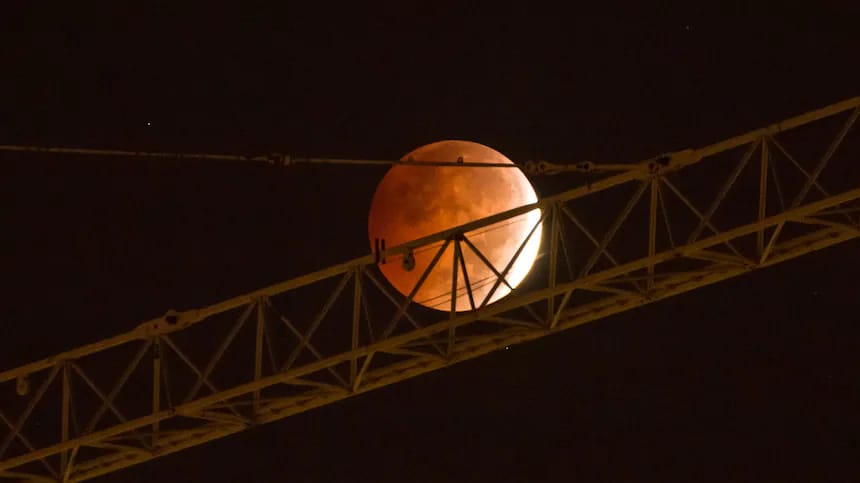
A total lunar eclipse, commonly referred to as a “Blood Moon”, is scheduled to occur on Tuesday, March 3, 2026. This celestial event, the only total lunar eclipse of the year, will be visible in various parts of the world, giving stargazers a rare opportunity to witness Earth’s shadow completely engulf the Moon.
During a total lunar eclipse, the Earth passes directly between the Sun and the Moon, casting its shadow over the lunar surface. The Moon often takes on a reddish or coppery glow during totality, a phenomenon caused by sunlight bending through Earth’s atmosphere and filtering out shorter blue wavelengths, leaving red light to illuminate the Moon.
Timing of the Eclipse
The eclipse will unfold in several phases:
- Penumbral Eclipse Begins: 08:44 UTC
- Partial Eclipse Begins: 09:50 UTC
- Totality Begins: 11:04 UTC
- Greatest Eclipse: 11:33 UTC
- Totality Ends: 12:02 UTC
- Partial Eclipse Ends: 13:17 UTC
- Penumbral Eclipse Ends: 14:22 UTC
The totality phase, when the Moon is fully in Earth’s shadow, will last approximately 58 minutes, while the entire eclipse — including penumbral and partial phases — will span more than five and a half hours.
Visibility Across the Globe
A total lunar eclipse can be seen from anywhere the Moon is above the horizon, making it far more accessible than solar eclipses. For this event:
- Eastern Asia, Australia, New Zealand, and the Pacific regions will have prime viewing conditions during evening hours.
- Western North America will witness the eclipse in the early morning before sunrise.
- Parts of Central and South America will also see significant phases.
Unfortunately, for Africa and Europe, the Moon will mostly be below the horizon during totality. In Nigeria, including Lagos, observers may only catch the penumbral or partial phases around moonrise, depending on local conditions.
How to Watch
Unlike solar eclipses, lunar eclipses are completely safe to view with the naked eye. Using binoculars or a small telescope can enhance details, but no protective eyewear is necessary. Weather conditions, such as cloud cover, will affect visibility, so skywatchers are advised to check forecasts ahead of time.
Fun Fact: The Worm Moon
The March full moon is traditionally known as the “Worm Moon”, signaling early signs of spring as the ground begins to thaw and earthworms reappear. With the eclipse coinciding with this full moon, astronomers and enthusiasts often call it a “Blood Worm Moon.”
Looking Ahead
This total lunar eclipse will be the last such event until New Year’s Eve 2028–2029, making it a unique opportunity for enthusiasts and casual observers alike. Whether viewed in full or partially, the March 3 eclipse is a reminder of the dynamic and interconnected motions of the Earth, Sun, and Moon.
Skywatchers are encouraged to plan ahead, find clear vantage points, and experience the rare beauty of a Moon bathed in red.