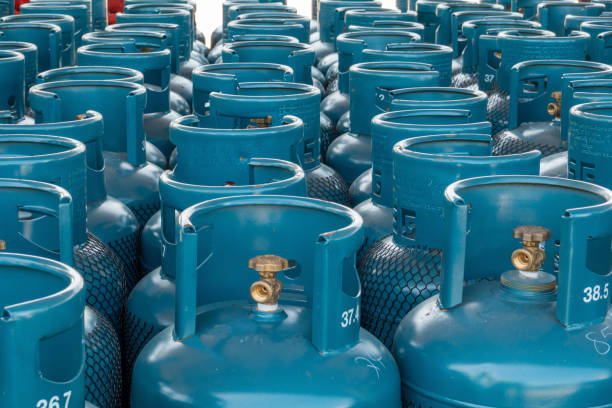
Cooking gas prices have begun climbing again across Nigeria after depot owners increased the price of Liquefied Petroleum Gas (LPG) by an average of about ₦100 per kilogram, a development linked to the recent surge in global crude oil prices following coordinated military strikes by the United States and Israel on Iran.
Energy market operators say the price adjustment at major gas depots has already started affecting retail markets across several cities, with consumers expected to see higher refill costs in the coming days as distributors and retailers adjust their pricing to reflect the new depot rates.
Industry sources revealed that many depots raised their loading prices after global crude benchmarks surged amid fears of supply disruptions in the Middle East. The escalation involving the United States, Israel, and Iran has triggered anxiety across global energy markets, pushing oil prices upward and creating ripple effects across petroleum products, including LPG.
Liquefied Petroleum Gas, widely used for household cooking in Nigeria, is partly influenced by international pricing dynamics even though a significant portion of the country’s supply is now produced domestically. Marketers say the increase in crude oil prices raises the cost of LPG production, shipping, and replacement supplies, forcing depot operators to adjust their prices.
Market checks in major cities such as Lagos, Abuja, Port Harcourt, and Kano indicate that many retailers are already preparing to raise their refill prices. Before the latest adjustment, cooking gas was selling between about ₦1,200 and ₦1,400 per kilogram in many urban areas, depending on location and retailer margins. With the new depot increase, analysts expect retail prices to climb further in the coming weeks.
A gas marketer in Lagos explained that depot prices serve as the foundation for retail pricing across the supply chain. According to him, once depot loading costs increase, transporters, wholesalers, and retailers inevitably adjust their prices to cover the additional costs.
He noted that the Nigerian LPG market remains vulnerable to international shocks because pricing is still influenced by global crude and gas benchmarks. Even when products are sourced locally, marketers typically price based on replacement cost, which is tied to international market trends.
Energy analysts say the current increase reflects broader concerns about global energy supply disruptions following the intensifying conflict in the Middle East. The region accounts for a significant portion of global oil and gas production, and any escalation that threatens supply routes—particularly the strategic Strait of Hormuz—can send prices sharply higher worldwide.
Beyond global factors, structural challenges within Nigeria’s domestic LPG distribution network also contribute to price volatility. Logistics costs, transportation challenges, storage limitations, and fluctuations in supply from production facilities often amplify price movements when global markets become unstable.
In recent years, Nigeria has increased its domestic LPG production through natural gas processing plants and offshore facilities, reducing reliance on imports. However, industry stakeholders say the country still lacks sufficient storage infrastructure and distribution networks to fully stabilise prices nationwide.
Consumer groups have warned that another rise in cooking gas prices could worsen the cost-of-living pressures already facing many Nigerian households. Over the past two years, the cost of LPG has climbed significantly, making it increasingly difficult for low-income families to maintain clean cooking fuel.
Public health advocates also fear that sustained price increases may push many households back to firewood and charcoal, fuels associated with indoor air pollution and environmental degradation.
Energy market observers say the trajectory of LPG prices in Nigeria will largely depend on how the geopolitical crisis unfolds and whether global oil prices continue rising. If tensions in the Middle East escalate further and crude prices climb higher, analysts believe the cost of petroleum products—including cooking gas—could remain elevated for some time.
For now, marketers across the country say consumers should prepare for higher cooking gas refill prices as the impact of the latest depot increase spreads through Nigeria’s retail energy market.