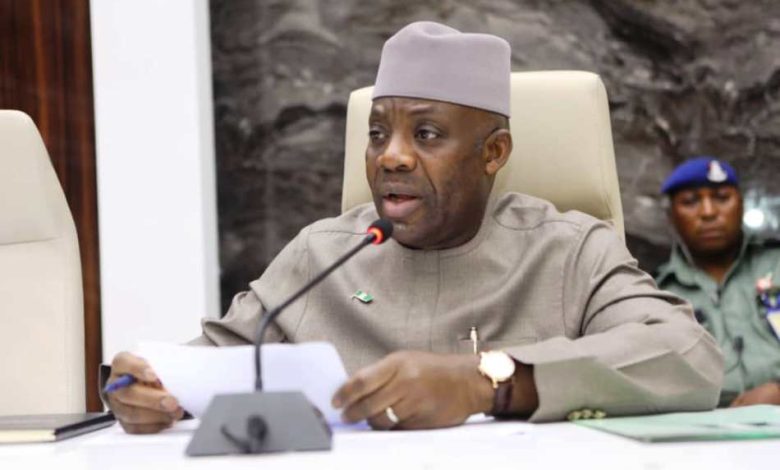
The Federal Government has approved a total of ₦48 billion, allocating ₦4 billion each to 12 universities across Nigeria to upgrade engineering workshops, laboratories, and related infrastructure in a major intervention aimed at strengthening practical education and boosting graduate employability.
The announcement was made on Monday during the inauguration of the Implementation Committee for the Special High-Impact Intervention Project of the Tertiary Education Trust Fund in Abuja.
Minister of Education, Tunji Alausa, described the intervention as a strategic move under the Renewed Hope Agenda of President Bola Ahmed Tinubu to reposition Nigerian universities as centres of innovation and practical problem-solving.
Delivering his address at the inauguration, Alausa said:
“The intervention will rehabilitate and equip modern workshops and laboratories with cutting-edge, industry-relevant facilities to bridge the gap between theory and practical competence.”
He stressed that the initiative goes beyond infrastructure development and is fundamentally about producing graduates capable of competing globally.
“Our goal is clear: to produce job-ready, innovation-driven, globally competitive graduates.”
According to him, the High-Impact Intervention Project represents a deliberate effort to align tertiary engineering education with industry realities.
“The High-Impact Intervention Project is a strategic initiative aimed at upgrading laboratories, workshops, and research facilities, positioning our institutions as hubs of innovation and practical problem-solving.”
However, the minister cautioned that funding alone would not guarantee results, emphasising accountability and strict oversight.
“Funding alone does not guarantee results. Success depends on effective implementation, strict adherence to standards, transparency, and accountability, which is why this committee is both necessary and timely.”
Charging the newly inaugurated committee, he added:
“Your mandate is clear: monitor project execution, ensure compliance with approved specifications and timelines, evaluate outcomes, identify challenges, and provide objective reports to guide policy decisions. You are entrusted with safeguarding public investment and ensuring value for money. Every facility delivered under this intervention must reflect quality, sustainability, and relevance to national needs.”
Alausa further disclosed that an additional ₦20 billion has been earmarked in the 2026 TETFund guidelines to extend similar upgrades to more universities beyond the initial 12 beneficiaries.
Universities Benefiting from the ₦4 Billion Allocation
The selected institutions span the six geopolitical zones and include specialised technology universities as well as conventional universities with strong engineering and applied science faculties. They include:
- Federal University of Technology, Minna
- Federal University of Technology, Akure
- Federal University of Technology, Babura
- Federal University of Technology, Ikot-Abasi
- Federal University of Technology, Owerri
- Nigerian Army University, Biu
- African Aviation and Aerospace University
- Shehu Shagari University of Education, Sokoto
- Enugu State University of Science and Technology
- University of Ilesa
Officials confirmed that the selection reflects geographical balance and institutional capacity to execute large-scale engineering upgrades.
TETFund and Stakeholder Reactions
Executive Secretary of TETFund, Sonny Echono, commended the President and National Assembly for prioritising engineering education and assured that the funds would be prudently managed.
“I have no doubt that this committee made up of eminent Nigerians, professionals and technocrats in their own rights will help us in identifying the needs, specify what needs to be done, monitoring the process of implementing these programs and ensuring that the funds allocated for this purpose are prudently and judiciously utilised.”
Echono noted that the intervention marks a significant step in transforming Nigeria’s tertiary education system and restoring global competitiveness.
Chairman of the Implementation Committee and President of the Nigerian Society of Engineers, Ali Rabiu, also pledged commitment on behalf of the committee.
“The committee accepts this responsibility and will contribute meaningfully to the success of the initiative.”
He described the assignment as both an honour and a national duty to ensure that the engineering upgrade programme delivers measurable impact.