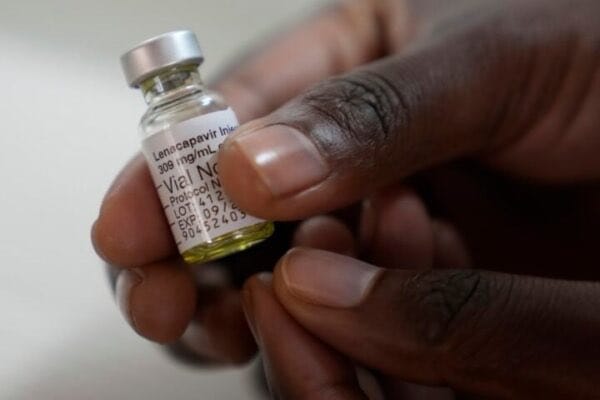
Nigeria is set to receive a groundbreaking long-acting HIV prevention drug, Lenacapavir, by March 2026, in what health authorities describe as a major milestone in the country’s fight against new HIV infections.
The development was confirmed by the National Agency for the Control of AIDS (NACA), which disclosed that preparations for the introduction of the injectable medication are already at an advanced stage. According to the agency, the drug will be deployed as part of Nigeria’s expanding Pre-Exposure Prophylaxis (PrEP) programme, offering a more convenient and highly effective prevention option for people at substantial risk of HIV infection.
Lenacapavir, developed by Gilead Sciences, is a long-acting injectable medication administered just twice a year. Unlike daily oral PrEP regimens that require strict adherence, the six-month dosing schedule is expected to significantly improve compliance and expand uptake, particularly among populations that struggle with daily medication routines.
NACA stated that the introduction of Lenacapavir aligns with Nigeria’s broader strategy to accelerate progress toward HIV epidemic control by 2030. Health experts have long identified adherence to daily oral PrEP as a major barrier to effective prevention, and the availability of a biannual injectable is expected to address this gap.
Regulatory Clearance and State Readiness
The agency confirmed that the drug has received approval from the National Agency for Food and Drug Administration and Control (NAFDAC), clearing the way for importation and national distribution once consignments arrive.
Ahead of the March 2026 delivery timeline, NACA has conducted readiness and landscape assessments in 10 priority states identified based on HIV burden and service capacity. These states include Akwa Ibom, Anambra, Benue, Cross River, Ebonyi, the Federal Capital Territory, Gombe, Kano, Kwara and Lagos.
In addition, a National Training of Trainers programme has been completed in Abuja, with cascade training already underway for healthcare providers in the selected states. The objective is to ensure that clinicians, pharmacists and community health workers are adequately prepared to administer the injectable and provide proper counselling services.
Information, Education and Communication materials have also been developed to guide community engagement, reduce stigma, and promote awareness ahead of the rollout.
Why Lenacapavir Matters for Nigeria
Nigeria remains one of the countries with a significant HIV burden globally. Current estimates indicate that approximately 1.9 million Nigerians are living with HIV, with adult prevalence hovering around 1.3 percent among people aged 15 to 49. Women and adolescent girls continue to face disproportionate risk in several regions.
Public health analysts believe the introduction of Lenacapavir could mark a turning point in prevention efforts. Clinical trials conducted internationally have shown that long-acting injectable PrEP options demonstrate extremely high levels of efficacy when administered as directed.
The twice-yearly injection model reduces the stigma sometimes associated with daily pill-taking and removes the risk of missed doses, both of which have historically undermined prevention outcomes.
Health stakeholders say that if scaled effectively, the new drug could significantly reduce new infections, particularly among key populations and in high-prevalence states.
Part of a Broader National Strategy
The rollout of Lenacapavir forms part of Nigeria’s comprehensive HIV response framework, which includes expanded testing services, treatment scale-up, viral load suppression initiatives and prevention campaigns. The Federal Government has repeatedly reiterated its commitment to achieving epidemic control targets in line with global HIV response benchmarks.
With regulatory approval secured, state-level preparedness underway, and healthcare workers already receiving training, authorities say Nigeria is positioning itself to integrate the injectable prevention drug into existing HIV services immediately upon arrival in March 2026.