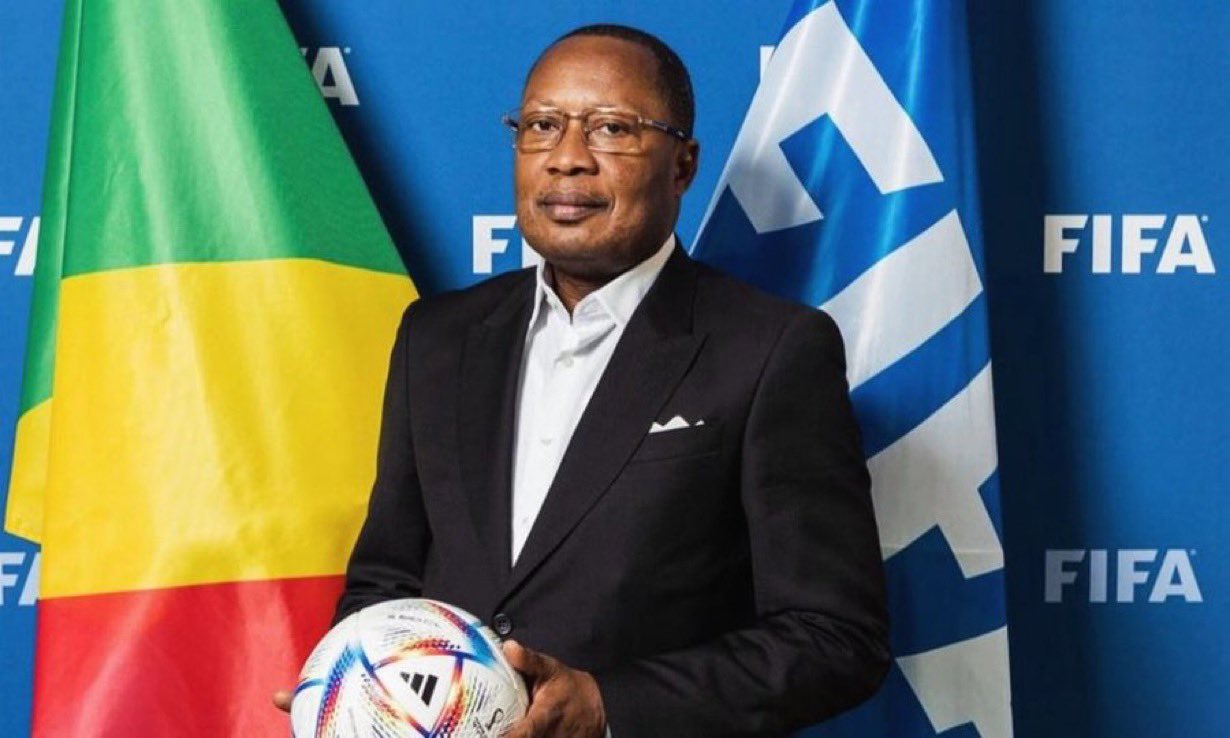
A major corruption scandal has rocked African football after a court sentenced former football administrator Blaise Mayolas to life imprisonment for embezzling funds meant for football development in the country.
Mayolas, who previously headed the Congo Football Federation (FECOFOOT), was found guilty of diverting over $1.3 million provided by FIFA for football development programmes in Brazzaville, Republic of the Congo.
The funds were originally allocated to support several key areas of football development, including club football, women’s football, and the construction of training infrastructure. However, investigations revealed that the money never reached its intended targets.
Money Meant for Women’s Football Never Reached the Team
One of the most shocking discoveries in the investigation involved funding allocated for the country’s women’s national football team.
According to investigators, $500,000 earmarked to support the women’s team was completely diverted. Reports indicate that not a single dollar reached the players or the programme, leaving the team without the resources meant to improve training, welfare, and competitive development.
The revelation sparked outrage among football stakeholders and fans, who questioned how such funds could disappear without benefiting the athletes they were meant to support.
Training Centre Project Abandoned After Funds Vanished
Another large portion of the funds — about $800,000 — was intended for the construction of a national training centre in Brazzaville and the upgrade of several football facilities across the country.
Instead, the project reportedly stalled after only partial work was done.
Eight years after the funds were approved, the construction site remains unfinished, abandoned, and largely in ruins, becoming a symbol of the corruption allegations surrounding the former federation leadership.
Investigators concluded that most of the infrastructure funds were siphoned away before the projects could be completed.
Club Football Also Affected
The investigation also uncovered irregularities in funds meant for domestic football clubs.
Roughly $1 million allocated to support club football was allegedly diverted. In reality, all clubs combined reportedly received just $21,000 in total, a fraction of the money that was originally approved.
Many clubs struggled financially during this period, raising questions about how the development funds were managed.
How the Money Was Allegedly Diverted
Financial investigators revealed that the funds were routed through a shell account, which was used to conceal the movement of money away from official football development programmes.
Authorities say the scheme allowed the funds to be quietly diverted without immediately triggering oversight alarms.
The investigation eventually uncovered financial records and other evidence that traced the missing funds back to accounts linked to Mayolas and individuals close to him.
Family Members and Officials Also Sentenced
The scandal did not involve Mayolas alone.
According to court rulings, his wife, his son, and several football federation officials were also implicated in the financial scheme. Multiple individuals connected to the case received extended prison sentences for their roles in facilitating or benefiting from the diversion of funds.
Initial Denial and Claims of Political Framing
Before investigators presented detailed financial evidence, Mayolas repeatedly denied the allegations.
He argued that he was being framed and insisted that the investigation was politically motivated. He also claimed that the Congolese government had no authority to investigate financial dealings connected to FIFA, arguing that the funds were part of international football programmes.
However, prosecutors dismissed those claims after presenting documentation, financial trails, and other evidence linking the diverted funds to the accounts used in the scheme.
A Scandal That Raises Questions About Football Governance
The case has sparked widespread discussion about accountability and transparency in football administration across Africa.
Development funds provided by FIFA are intended to improve facilities, strengthen domestic leagues, and support national teams. When those funds are diverted, the long-term development of the sport can suffer.
In this case, programmes meant to support women’s football, improve infrastructure, and assist clubs were left underfunded while the money meant for them disappeared.
The life sentence handed to the former football federation president now stands as one of the most severe corruption punishments involving football administration in the region.