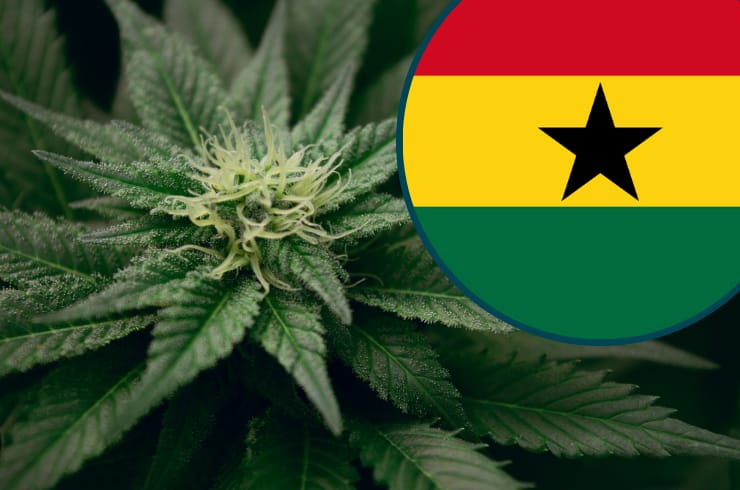
The Government of Ghana has officially opened the door to a regulated cannabis industry, legalising the cultivation of cannabis strictly for industrial and medicinal purposes and inviting qualified investors and organisations to apply for licences to participate in the emerging sector.
The initiative is being implemented by the Narcotics Control Commission (NACOC), the country’s primary regulatory body responsible for narcotics control. Officials confirmed that the commission has begun accepting applications for licences covering the controlled cultivation, processing, research, and commercial use of cannabis plants with very low levels of tetrahydrocannabinol (THC), the psychoactive substance found in marijuana.
Authorities say the move is part of a broader strategy to develop a highly regulated cannabis industry focused on pharmaceuticals, industrial manufacturing, and agricultural exports, while maintaining strict restrictions against recreational marijuana use.
The policy framework enabling the new industry is backed by the Narcotics Control Commission (Amendment) Act, 2023 (Act 1100), which provides the legal foundation for cannabis cultivation under strict government supervision.
Under the new regulations, only cannabis varieties containing no more than 0.3 percent THC will be permitted. These varieties are commonly referred to as industrial hemp, a type of cannabis that does not produce intoxicating effects and is widely used globally for a variety of industrial and medical applications.
Industrial hemp can be processed into numerous commercial products, including textiles, paper, cosmetics, biodegradable plastics, construction materials, and pharmaceutical ingredients, making it an increasingly valuable crop in the global agricultural economy.
Government officials say the licensing regime will cover several operational categories across the cannabis value chain. These include cultivation, breeding, processing, research and development, laboratory testing, storage, transportation, import and export, distribution, and marketing of approved cannabis-derived products.
Applicants seeking licences will be required to meet stringent regulatory conditions before approval is granted. These conditions include maintaining strong security systems for cultivation sites, implementing product traceability systems, complying with international pharmaceutical standards, and demonstrating the technical capacity to manage cannabis production within the legal framework.
According to the country’s Interior Minister, Mubarak Mohammed Muntaka, the government’s decision to legalise cannabis farming for industrial and medicinal purposes should not be interpreted as full legalisation of marijuana.
He emphasised that recreational use of cannabis remains illegal in Ghana, and that the possession, sale, or cultivation of cannabis outside the licensed system will continue to attract severe criminal penalties under the country’s narcotics laws.
Officials say the newly launched cannabis licensing programme is expected to attract both local entrepreneurs and international investors looking to enter the rapidly expanding global medicinal cannabis market.
Economic analysts believe the development could position Ghana as one of Africa’s emerging hubs for regulated cannabis production, particularly as global demand for medical cannabis and industrial hemp continues to grow.
Industry projections suggest that Ghana’s cannabis sector could potentially generate hundreds of millions of dollars in annual revenue if the industry develops successfully. The government is also hopeful that the initiative will create new employment opportunities in agriculture, pharmaceutical manufacturing, research, and export logistics.
The decision places Ghana among a growing number of African countries exploring the economic potential of regulated cannabis markets. Several countries across the continent have already introduced similar policies allowing cannabis cultivation for medicinal and industrial use, while maintaining strict bans on recreational consumption.
Authorities have also warned prospective investors and applicants to deal directly with the Narcotics Control Commission, cautioning that fraudulent individuals or organisations claiming to facilitate cannabis licences may attempt to exploit public interest in the new industry.