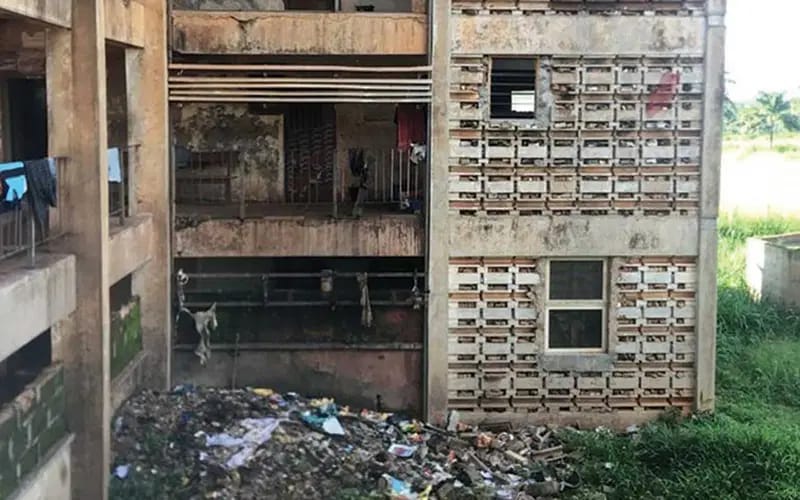
A growing wave of frustration is sweeping across Nigerian universities as students and parents decry the worsening accommodation crisis on campuses nationwide. From Lagos to Ilorin, Port Harcourt to Nsukka, the struggle for affordable and decent student housing has reached a breaking point. Reports indicate that skyrocketing hostel rents, severe shortages of on-campus accommodation, and exploitation by private landlords have left thousands of undergraduates stranded, worried, and desperate for a place to stay.
Shortage of On-Campus Hostel Spaces
At the heart of the crisis lies the glaring inadequacy of on-campus hostel facilities across most tertiary institutions in Nigeria. Many universities are battling a massive mismatch between the number of available bed spaces and the surging student population.
For instance, the University of Lagos (UNILAG), which boasts a student population of over 40,000, reportedly has less than 8,000 available bed spaces — barely enough to cater for a fifth of its students. This situation is mirrored across several public universities, where limited infrastructure and underfunded housing projects have created a bottleneck in the accommodation system.
As a result, thousands of students are left to fend for themselves in the often unpredictable and expensive private rental market. Even the few lucky students who manage to secure school hostels are forced to endure overcrowded rooms, poor ventilation, and deteriorating facilities.
Soaring Costs of Off-Campus Accommodation
For those who cannot secure school hostels, the alternative — off-campus accommodation — has become a nightmare of its own. Across major university towns, the cost of renting a room has soared to record levels, far beyond what most students or their parents can afford.
In Lagos, particularly around UNILAG and Yaba College of Technology, private hostel owners are now charging as high as ₦400,000 per annum for a single bed space in shared rooms that often accommodate three or more students. More exclusive rooms, such as single or self-contained apartments, range from ₦950,000 to ₦1.2 million per academic session — prices that rival those in the city’s prime residential areas.
The situation is not much different in other parts of the country. In Ilorin, Ibadan, and Port Harcourt, students are forced to pay between ₦250,000 and ₦600,000 annually for basic rooms without adequate water or power supply. This nationwide trend has intensified financial pressure on parents who are already grappling with the rising cost of living, transportation, and tuition fees.
Parents and Students Cry Out in Frustration
The human side of the crisis is deeply emotional. Many parents have voiced their pain and frustration, lamenting how the skyrocketing cost of student housing is draining their finances. Some parents travel from distant states to help their children search for affordable hostels, only to encounter exorbitant prices, poor infrastructure, and unregulated agents who take advantage of their desperation.
Students are equally distraught. While some have resorted to sharing rooms with multiple occupants, others are forced to squat temporarily with friends or live far from campus, enduring daily transportation stress and security risks. In many cases, female students are particularly vulnerable to exploitation by landlords or caretakers who demand inappropriate favors in exchange for accommodation.
According to testimonies gathered from different campuses, several undergraduates have been forced to defer their admission or temporarily withdraw due to their inability to secure suitable housing.
Unregulated Housing Market and Inequality in Access
Another troubling dimension to the accommodation crisis is the growing inequality in access to university housing. Fresh students are often given priority in hostel allocation, leaving returning students with very limited chances. In some universities, the scramble for limited bed spaces has given rise to unethical practices, where hostel slots are resold or “reallocated” at inflated prices by middlemen and corrupt insiders.
This unregulated system has not only worsened the exploitation of students but also created a black market where accommodation becomes a privilege for the few who can afford it, rather than a basic need accessible to all.
Impact on Learning and Student Welfare
The accommodation crisis goes beyond financial strain; it also affects students’ academic performance and overall well-being. Many students who live off-campus face long commutes, traffic delays, and safety concerns, which reduce their study time and concentration. Others struggle with inadequate rest and exposure to unsafe environments.
In some cases, students living in congested off-campus areas have been victims of theft, harassment, and poor sanitary conditions, all of which contribute to academic fatigue and mental distress. This has prompted calls from student unions and parents for urgent government intervention to address what is fast becoming a national emergency in the education sector.
Stakeholders Demand Government and Institutional Action
Amid the growing tension, stakeholders across the education sector — including student leaders, parent associations, and housing experts — are calling for immediate and long-term solutions. The National Parents Teachers Association of Nigeria (NAPTAN) has called on both the federal and state governments to prioritize the construction of affordable hostels through public-private partnerships (PPP).
According to NAPTAN officials, the PPP model presents a sustainable way to bridge the accommodation gap in universities, provided that agreements ensure affordability, transparency, and quality. They also urged the government to introduce rent control policies in student-dominated areas to curb the exploitation of students by private landlords.
Student unions across major universities are also pushing for stricter regulation of hostel allocations, transparency in online booking systems, and the rehabilitation of dilapidated on-campus hostels.
Experts Advocate Sustainable Housing Policies
Education and housing experts have warned that unless urgent steps are taken, the student housing deficit in Nigeria could worsen as university enrollment continues to rise annually. They recommend that universities establish dedicated housing departments to oversee hostel development, maintenance, and fair allocation processes.
Experts also advise that the federal and state governments partner with reputable real estate developers to design long-term, low-cost hostel projects powered by renewable energy sources and sustainable materials. This would not only improve students’ living standards but also reduce the environmental footprint of university campuses.
Conclusion
The ongoing accommodation crisis in Nigerian universities reflects a deeper infrastructural and policy failure that threatens the quality of higher education in the country. For many students, finding a safe, affordable place to live has become a greater challenge than gaining admission itself.
As parents continue to cry out and students endure the strain, it is clear that urgent action is required. Sustainable housing policies, responsible governance, and genuine investment in student welfare must become top priorities for both government and university authorities. Until then, the cries of stranded students and worried parents will continue to echo across Nigerian campuses, painting a grim picture of the nation’s educational landscape.