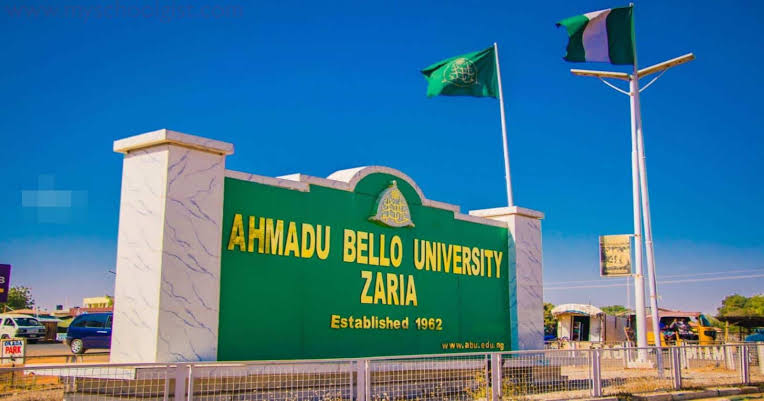
Ahmadu Bello University (ABU), Zaria, one of Nigeria’s most respected higher institutions of learning, has firmly denied recent allegations suggesting that the university was secretly involved in a nuclear weapons project. The management of the institution described the circulating claims as baseless, fabricated, and entirely misleading, calling on the public to disregard them in their entirety.
The allegation emerged following a viral artificial intelligence (AI)-generated video shared on social media, which falsely accused ABU of having conducted covert uranium enrichment activities in the 1980s. The video also claimed that the university sourced sensitive centrifuge materials through the infamous A.Q. Khan network in Pakistan — the same network once associated with nuclear proliferation.
In a strongly worded statement released by the university’s Director of Public Affairs, Malam Auwalu Umar, ABU clarified that the claims were completely untrue and lacked any factual foundation. He emphasized that the institution’s nuclear research efforts have always been peaceful, transparent, and regulated under international supervision.
University Refutes Allegations of Uranium Enrichment and Weapons Development
According to ABU’s statement, the viral allegations are not only false but also impossible, considering the historical timeline of events at the institution. Umar explained that during the period referenced in the claims — the 1980s — most of the scientists at the Centre for Energy Research and Training (CERT) were still undergoing academic and technical training abroad.
He pointed out that it was therefore inconceivable that the university could have been involved in uranium enrichment or any activity related to weapons-grade nuclear material at that time.
“In the 1980s, our staff at the Centre for Energy Research and Training were still being trained overseas. It is illogical and factually wrong to suggest that ABU was engaged in any nuclear weapons project during that period,” Umar stated.
The university further stressed that it has never had any connection or dealings with the A.Q. Khan network or any group associated with the illegal transfer of nuclear technology. ABU also reaffirmed that it has never acquired, received, or experimented with centrifuge equipment or any material that could be linked to nuclear weapons development.
Nigeria’s Nuclear Reactor Timeline Contradicts the False Claims
In addition to its internal defense, ABU highlighted verifiable facts that contradict the false narrative. The institution reminded the public that Nigeria’s first nuclear reactor — the Nigerian Research Reactor-1 (NIRR-1) — was not established until 1996, more than a decade after the alleged period of uranium enrichment mentioned in the viral video.
Furthermore, the NIRR-1 reactor, which is located within the Ahmadu Bello University campus at the Centre for Energy Research and Training, was developed under the strict supervision and technical cooperation of the International Atomic Energy Agency (IAEA). The reactor was formally commissioned in 2004, following years of collaboration between Nigerian scientists and the international nuclear community.
This timeline, the university noted, completely invalidates the claim that any hidden nuclear weapons project existed within ABU in the 1980s or any period thereafter.
ABU Reaffirms Commitment to Peaceful Nuclear Research
Reiterating its long-standing position, Ahmadu Bello University reaffirmed that all its nuclear research and training programs are strictly for peaceful purposes. The university maintains an active commitment to Nigeria’s obligations under the Nuclear Non-Proliferation Treaty (NPT) and the African Nuclear-Weapon-Free Zone Treaty, popularly known as the Pelindaba Treaty.
The institution has consistently used its research facilities for scientific innovation, medical isotope production, radiation safety studies, and educational purposes — all of which contribute to Nigeria’s development in line with global standards of peaceful nuclear technology use.
Malam Auwalu Umar emphasized that ABU’s collaboration with international bodies such as the IAEA further demonstrates the transparency and legitimacy of its nuclear-related activities.
“Ahmadu Bello University has always adhered to global standards and international laws guiding the peaceful use of nuclear science and technology. Our work is purely academic and developmental, not military,” Umar explained.
Public Urged to Disregard the Misleading AI-Generated Video
The university also warned the public to be cautious about misinformation spread through AI-generated videos and deepfake content, noting that such falsehoods can easily mislead unsuspecting audiences and tarnish the reputation of credible institutions.
ABU described the viral clip as a deliberate attempt to misinform the public and undermine Nigeria’s image in the global scientific community. The institution urged individuals and media outlets to always verify information from credible sources before sharing or publishing it.
“This is an era of advanced digital manipulation. People must learn to question suspicious claims and verify information through reliable channels before believing or disseminating it,” the university advised.
Broader Context: Safeguarding Nigeria’s Scientific Reputation
Observers have noted that false claims of nuclear weapons development can have serious national and international implications. Such disinformation not only damages institutional credibility but can also cast unwarranted suspicion on Nigeria’s peaceful nuclear ambitions.
Nigeria has maintained a consistent record of compliance with international non-proliferation treaties and has repeatedly affirmed its opposition to nuclear weapons development. The country’s focus, as reiterated by both the government and academic institutions like ABU, remains on using nuclear energy for research, health, agriculture, and power generation.
Experts in the nuclear field believe that the prompt response by ABU helps reinforce Nigeria’s reputation as a responsible member of the international scientific community.