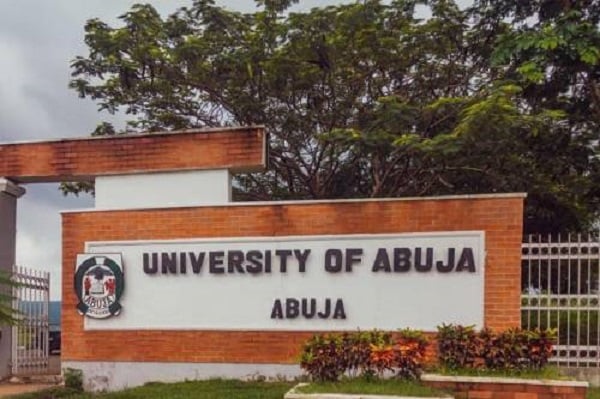
The Vice-Chancellor of the University of Abuja (UniAbuja), Professor Hakeem Fawehinmi, along with the Dean of Students’ Affairs, Professor Simon Malang Kawe, and other senior officials, are reportedly under scrutiny over allegations of mismanagement of multibillion-naira loans from the Nigerian Education Loan Fund (NELFUND) intended for indigent students.
The controversy arose after students claimed that funds already disbursed to the university for payment of their tuition fees were not promptly released to them, forcing many to pay out-of-pocket. Sources allege that the university management placed these funds in interest-yielding bank accounts, causing unnecessary delays.
Scale of the Funds and Disbursement
Since its inception in May 2024, NELFUND has disbursed over ₦107 billion to 265 tertiary institutions nationwide. UniAbuja has received a total of ₦768 million across three academic sessions. Specifically, on January 29, 2026, NELFUND released ₦256,142,500 to the university for 2,245 students approved under the 2025/2026 cycle. These funds were meant for direct institutional payment of student fees.
Despite the receipt of these funds, the university reportedly issued a memo on February 7, 2026, instructing students to pay their fees first and then apply for reimbursement — a directive that triggered widespread dissatisfaction and threats of student protests. A follow-up memo on February 8, 2026, clarified that affected students would be allowed to sit examinations pending receipt of their loan payments.
Student Reactions
Students expressed outrage over the management’s handling of the loans, describing it as unfair and contrary to the purpose of NELFUND. Some threatened protests set to begin on February 9, 2026, prompting the university to quickly assure that examinations would proceed without hindrance for those affected.
University and NELFUND Responses
Professor Fawehinmi denied any misappropriation of funds, stating that delays were administrative and that there was no intent to divert the loans. A university spokesperson added that some students may have failed to follow the correct reimbursement procedures.
Conversely, NELFUND officials confirmed that UniAbuja had not reported or refunded any excess disbursements, highlighting concerns about accountability and transparency in the administration of federal student loans.
Federal Oversight
While the Economic and Financial Crimes Commission (EFCC) has reportedly begun preliminary inquiries into the matter, no official comment has been issued. The case raises broader questions about the management of federal student loan schemes and the mechanisms ensuring that funds reach their intended beneficiaries.
UniAbuja currently has 20,856 undergraduates, including distance learning and Institute of Education students, many of whom are directly affected by the delayed disbursement of funds.
The situation underscores the critical need for universities to uphold transparency and integrity in handling student financial support programs, particularly those funded by federal agencies.