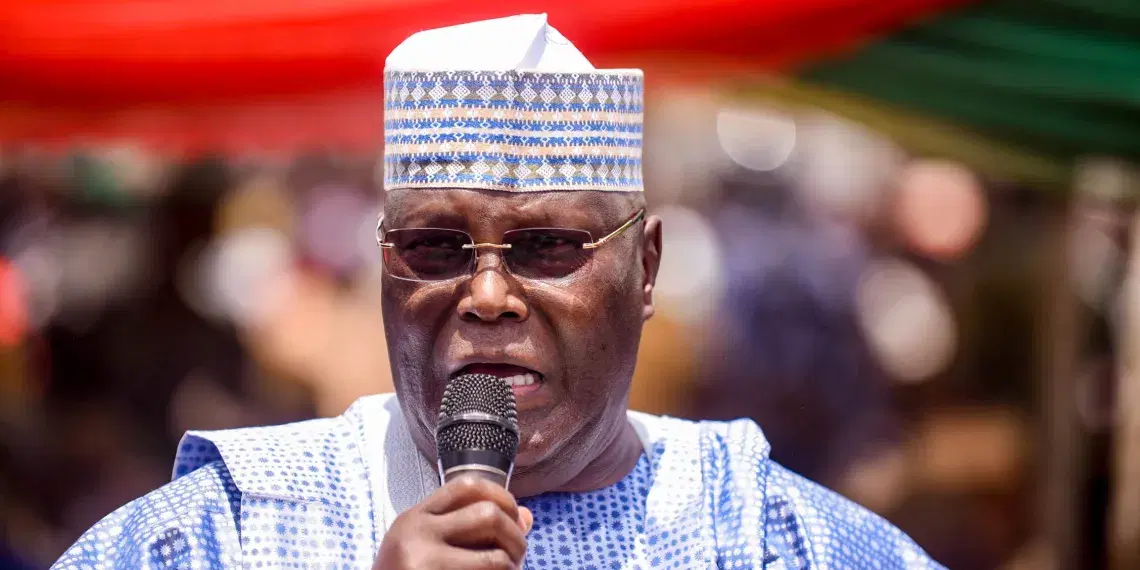
Former Vice President Atiku Abubakar has issued a chilling wake-up call: in the face of escalating mass abductions across Nigeria, the federal government must declare a state of emergency on insecurity—and act with the urgency the crisis demands. His call comes amid fresh outrage over a spate of kidnappings that have plagued schools and religious centers, fueling anxiety among families and renewed debates about the country’s ability to secure its most vulnerable citizens.
A Tipping Point in Nigeria’s Insecurity Crisis
The latest incident that ignited Atiku’s appeal occurred at St. Mary’s Primary and Secondary School in Papiri, Niger State, where heavily armed gunmen reportedly invaded the campus early one morning, arriving on more than 60 motorcycles and a van. Students and staff were taken, and the grim event has become the latest in a series of mass abductions targeting educational institutions.
Barely a week before, 25 schoolgirls were abducted from the Government Girls’ Comprehensive Secondary School in Maga, Kebbi State, during a nighttime raid in which the vice-principal, Hassan Makuku, was tragically killed.
Not far behind in severity, worshippers from a church in Kwara State were also abducted during an attack that left three dead — another stark reminder of how insecurity is bleeding into every corner of civilian life.
Atiku’s Urgent Message: Declare Emergency, Not Just Sympathy
In response, Atiku publicly deplored the recurring violence, describing the kidnappings as “heartbreaking” and lamenting that more decisive government action has been long overdue.
He argues that simply issuing condemnations is no longer enough. Instead, he insists that a formal state of emergency is necessary to fundamentally recalibrate Nigeria’s security architecture, deploying more resources, intensifying intelligence-led operations, and protecting communities that have become soft targets.
Atiku framed the demand not just as political rhetoric, but as a moral imperative: “How many more lives must be shattered before decisive action is taken?” he asked, warning that Nigeria “cannot continue on this path.”
Root Causes Under the Spotlight
Atiku has long pointed to deeper systemic issues fueling the crisis. He has consistently emphasized that poverty, hunger, and weak governance are not just background conditions — they are active accelerants for banditry and kidnapping.
He also criticizes the current security strategy under President Tinubu’s administration, arguing that past efforts haven’t been matched by strong institutional reform or the sustained deployment of security personnel where they’re needed most.
Response from the Federal Government and Security Agencies
The Nigerian government has not remained silent. In the wake of the Kebbi abduction, President Bola Tinubu deployed Vice President Kashim Shettima to Kebbi State to console families and oversee rescue operations.
At the same time, military leadership has vowed to intensify efforts. The Chief of Army Staff has ordered continued day-and-night operations, urging troops to leverage intelligence and collaborate closely with local vigilantes and hunters who know the terrain best.
What a State of Emergency Could Mean — and the Risks
If declared, a state of emergency could allow the government to:
- Deploy additional military and paramilitary forces to the worst-affected regions
- Prioritize and fast-track intelligence operations to dismantle kidnapping networks
- Reallocate budget and resources to reinforce school security, possibly revisiting the Safe Schools framework
- Intensify coordination between community-based security actors, like local vigilantes, with formal security agencies
However, Atiku’s proposal is not without controversy. A state of emergency carries risks, including:
- Concentration of power that may sideline civil liberties
- The possibility of misuse if not accompanied by transparent oversight
- Potential for symbolic action rather than structural reform
Why Atiku’s Call Resonates Deeply
Atiku’s demand strikes a chord for several reasons:
- Moral urgency: The repeated attacks on children and places of worship test the patience of citizens who feel increasingly unsafe.
- Political accountability: By calling for a structural emergency, Atiku forces the government to demonstrate more than rhetorical regret.
- Long-term vision: He links the immediate violence to broader socio-economic challenges like poverty, suggesting that addressing these root causes is as important as tactical security moves.
- A rallying point: His statement could galvanize public pressure and civil society to demand more from the government — not just reactionary rescues, but preventive strategies.