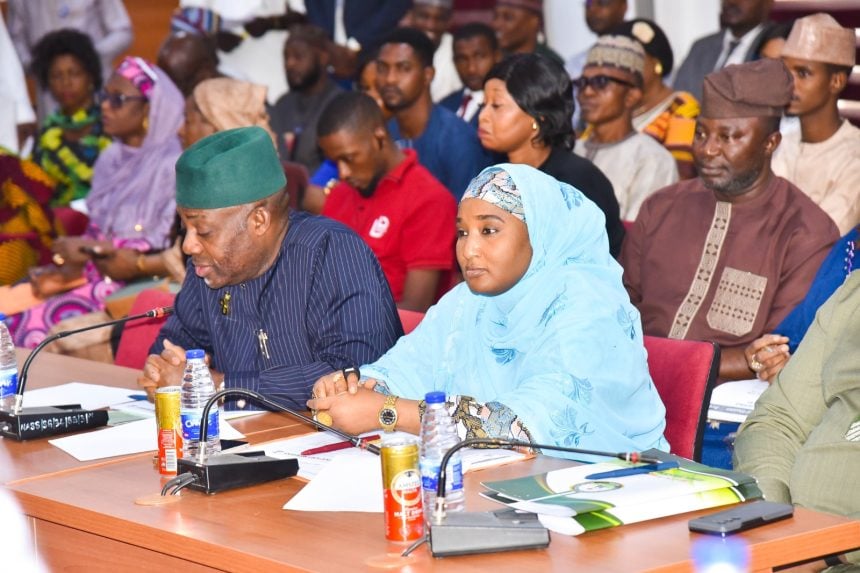
In a decisive move to strengthen Nigeria’s healthcare education system, President Bola Ahmed Tinubu has approved a landmark ₦110 billion intervention fund to support 18 selected universities across the country for the expansion and improvement of medical training facilities.
The announcement was made during the 40th convocation ceremony of the University of Ilorin (UNILORIN), where the President was represented by the Vice-Chancellor of the Federal University of Technology, Akure (FUTA), Prof. Temidayo Oladiji. The intervention, according to the Presidency, is part of a broader agenda to revitalize medical education and produce more skilled healthcare professionals to serve the nation’s growing population.
Federal Government’s ₦110 Billion Intervention: A Bold Step Toward Strengthening Medical Education
The ₦110 billion allocation marks one of the largest direct federal interventions in medical education in recent years. The initiative aims to enhance teaching hospitals, medical laboratories, simulation centers, and other critical infrastructure that support the training of doctors, nurses, pharmacists, and other health professionals.
President Tinubu emphasized that the initiative is part of his administration’s strategic vision to raise the standard of healthcare delivery in Nigeria through improved training and research. He noted that investing in medical education would help the country address the chronic shortage of qualified health practitioners and reduce the outflow of Nigerian professionals seeking opportunities abroad.
Universities to Benefit from the Intervention
Although the government has not released the full list of the 18 universities, the University of Ilorin (UNILORIN) has been publicly identified as one of the beneficiaries. Each selected university is expected to receive a substantial portion of the ₦110 billion fund, depending on its medical program needs and infrastructural gaps.
The intervention will reportedly be coordinated through relevant agencies, ensuring transparency, proper monitoring, and measurable impact across all benefitting institutions.
UNILORIN to Host a National Digital Innovation Hub
In addition to being one of the beneficiaries of the ₦110 billion medical training fund, UNILORIN was also announced as a host institution for a National Digital Innovation Hub, to be established under the supervision of the National Universities Commission (NUC).
This development is part of a national plan to promote digital learning, innovation, and entrepreneurship among Nigerian students. The innovation hub is expected to serve as a center for technology incubation, research collaboration, and startup development, equipping students with 21st-century digital skills that complement traditional education.
President Tinubu’s Message to Nigerian Universities
During his address, President Tinubu reaffirmed his administration’s commitment to ensuring that education remains a key driver of national development. He stressed that the federal government is shifting its focus from merely expanding the number of universities to strengthening the quality of existing institutions.
According to him, “Our priority is not to multiply institutions, but to consolidate and improve the quality of existing ones. The ₦110 billion intervention is designed to address critical infrastructure gaps and ensure our universities can compete globally.”
The President commended the management and staff of UNILORIN for their consistent academic excellence and discipline, noting that the institution has maintained a leading position in the country’s higher education system.
Why This Development Matters
This intervention comes at a crucial time when Nigeria faces a significant brain drain in the healthcare sector. Thousands of doctors, nurses, and pharmacists continue to migrate abroad each year due to poor infrastructure, limited opportunities, and challenging working conditions.
By upgrading medical training facilities, the federal government hopes to increase the number of well-trained healthcare professionals who can remain and serve within the country.
The intervention will also:
- Improve teaching and research infrastructure in medical schools.
- Enhance practical training through modern laboratories and equipment.
- Boost Nigeria’s healthcare manpower development.
- Encourage research and innovation in health sciences.
- Create new opportunities for academic collaborations and medical technology development.
This initiative aligns with the government’s broader policy of revitalizing education, science, and technology as engines of national progress.
Impact on Students and Future Medical Professionals
For students currently enrolled in medical and health-related programs, this is a major boost. Improved facilities mean access to better laboratories, advanced training equipment, and more competent faculty support.
Prospective students seeking admission into these benefitting institutions can expect an enhanced learning experience, with improved medical training infrastructure, digital resources, and clinical exposure.
Additionally, with the introduction of the National Digital Innovation Hub, Nigerian undergraduates across various fields will have opportunities to develop tech-based healthcare solutions, promoting innovation in telemedicine, digital diagnostics, and biomedical engineering.
A Strategic Investment in Nigeria’s Health Future
Experts have lauded the ₦110 billion intervention as a strategic investment in Nigeria’s future health security. Medical professionals and education stakeholders argue that expanding training capacity is the most sustainable way to strengthen the nation’s healthcare system from within.
By empowering universities to train more competent doctors and allied health workers, the government aims to reduce dependency on foreign-trained professionals while retaining local talent.
This policy also complements the administration’s larger economic reforms, which seek to attract investment into critical sectors like healthcare, technology, and education.
Looking Ahead
The implementation of the ₦110 billion medical training intervention is expected to commence soon, with clear timelines for project execution and facility upgrades. Stakeholders anticipate that, once completed, Nigeria’s tertiary medical institutions will be better positioned to meet global standards in medical education and research.
This move also reinforces President Tinubu’s promise to reposition Nigeria’s education sector for excellence and innovation. By investing heavily in both health and technology, the government is laying the groundwork for a future-ready generation of Nigerian graduates who can compete globally and contribute meaningfully to national development.