The Federal Government has allocated ₦966.9 billion to federal universities in the proposed ₦2.4 trillion 2026 education budget, positioning the university system as the single largest beneficiary in what officials describe as a renewed attempt to stabilise and modernise Nigeria’s higher education sector.
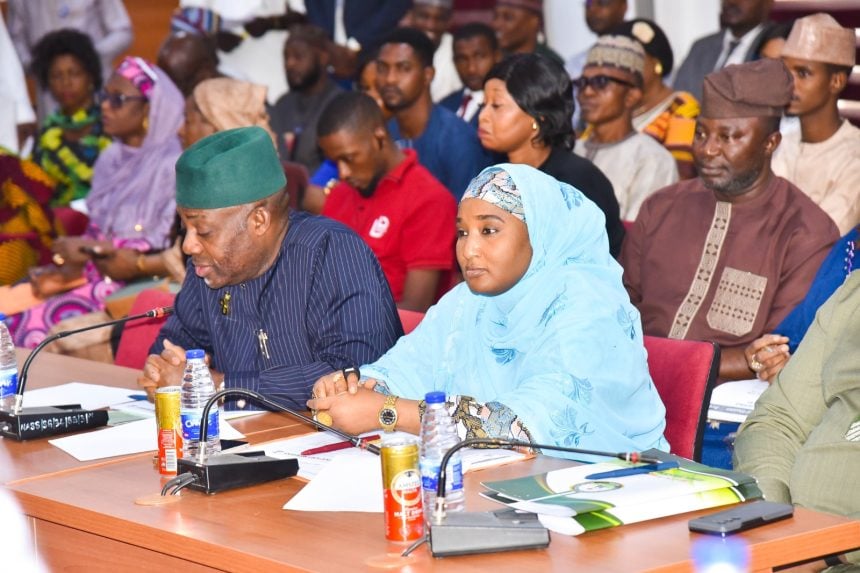
The allocation was disclosed by the Minister of Education, Maruf Tunji Alausa, during the defence of the ministry’s 2026 budget estimates before the Joint Committees on Education of the National Assembly. The minister outlined the financial framework as part of a broader reform agenda aimed at addressing infrastructure decay, strengthening research output, expanding access, and resolving long-standing operational bottlenecks within federal institutions.
Out of the ₦2.4 trillion total education envelope, universities are to receive ₦966.9 billion, a figure that significantly surpasses allocations to other tertiary categories. Polytechnics and colleges of education are projected to receive ₦382 billion collectively, while education parastatals are allocated ₦633.3 billion. The headquarters of the Federal Ministry of Education is set to receive ₦257.9 billion for administrative and operational functions, while Federal Unity Colleges are earmarked ₦155 billion. Additionally, ₦10.3 billion has been set aside for Nigeria’s international educational obligations, including statutory contributions to bodies such as UNESCO.
Government officials say the emphasis on universities reflects their strategic role in national development, innovation, and workforce preparation. The 2026 proposal is expected to cover personnel costs, overheads, and capital projects, including lecture theatre expansions, laboratory upgrades, hostel construction, digital infrastructure enhancement, and ongoing works across multiple campuses.
During the budget defence session, the minister acknowledged that capital project implementation in the preceding fiscal year experienced constraints, largely due to funding releases and procedural delays. However, he maintained that personnel and overhead obligations were largely met, helping to stabilise academic calendars in many federal institutions. He assured lawmakers that stronger monitoring mechanisms would be introduced in 2026 to ensure that capital allocations translate into visible and measurable outcomes.
Beyond infrastructure, the ministry signalled a parallel focus on human capital development within the system. Concerns over staffing gaps, particularly in science, technology, engineering, and mathematics (STEM) disciplines, were highlighted as critical challenges. The ministry indicated that recruitment approvals and retention strategies would form part of the 2026 reform framework to reduce academic workload pressure and improve instructional quality.
Another major pillar of the proposed budget is the expansion of Technical and Vocational Education and Training (TVET), with the government projecting that millions of young Nigerians could benefit from skills acquisition initiatives aimed at improving employability. While universities remain the largest recipients, policymakers argue that strengthening technical institutions is essential to reducing graduate unemployment and aligning training with labour market realities.
The substantial allocation to tertiary institutions comes amid ongoing debates about education financing in Nigeria, where stakeholders have repeatedly called for increased budgetary commitment to meet global benchmarks. Education advocates have often referenced the need for sustained funding to address dilapidated facilities, industrial disputes, research underfunding, and limited digital capacity across campuses.
Lawmakers at the budget session emphasised their constitutional oversight responsibility, insisting that allocation size alone would not be sufficient without strict accountability in disbursement and execution. Members of the committees requested detailed breakdowns of capital projects, timelines, and performance indicators to ensure funds achieve intended objectives.