FG education project board, ₦20bn approval threshold, Ministerial Project Approval Board, education transparency in Nigeria, Bola Tinubu reforms, Federal Ministry of Education, PPP in education, Nigeria education news, infrastructure development, transparency in governance, education sector reform 2025, education project approval, FEC approval limit, FG education initiatives 2025.
Introduction: Nigeria’s Education Sector Enters a New Era of Transparency
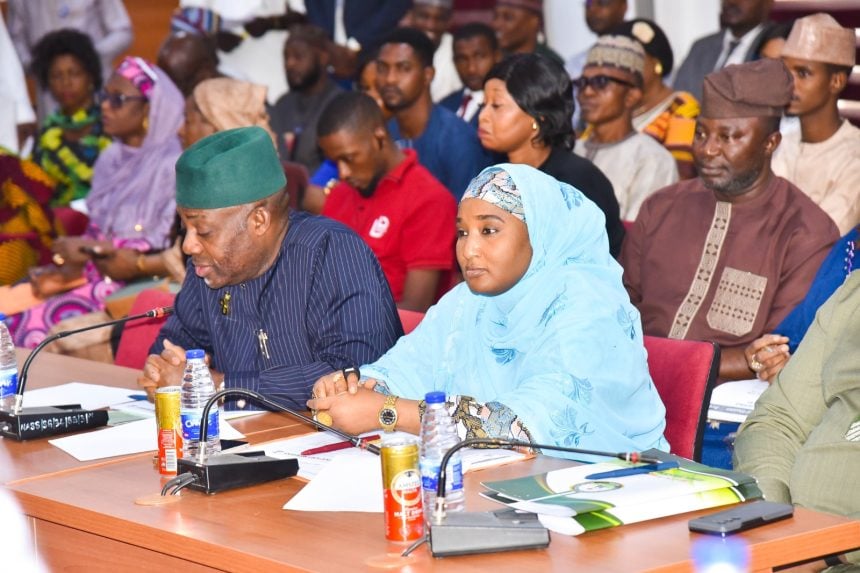
In a bold and strategic move to improve efficiency and transparency in Nigeria’s education sector, the Federal Government (FG) has inaugurated a new Ministerial Project Approval Board (MPAB) under the Federal Ministry of Education.
This initiative sets a new ₦20 billion approval threshold, giving the Ministry and its parastatals the power to approve education-related projects below this limit, while projects above ₦20 billion will still require Federal Executive Council (FEC) approval.
According to BusinessDay Nigeria, this reform aligns with President Bola Ahmed Tinubu’s “Renewed Hope Agenda,” aimed at promoting good governance, transparency, and accountability in all sectors, particularly education — a critical pillar for national growth and sustainable development.
What the ₦20 Billion Approval Threshold Means for Nigeria’s Education System
Under the new system, the Ministerial Project Approval Board (MPAB) will handle all project approvals up to ₦20 billion. This means that infrastructure projects — such as classroom construction, laboratory upgrades, hostels, ICT centers, and learning facilities — can now be approved faster at the ministerial level, without waiting for FEC deliberations.
This decentralization of authority aims to:
- Speed up project delivery timelines,
- Reduce bureaucratic bottlenecks,
- Promote accountability and transparency, and
- Encourage more private-sector partnerships (PPPs) in the education sector.
The reform is also expected to attract investment from local and international stakeholders who are willing to collaborate on Public-Private Partnership (PPP) projects in Nigeria’s educational institutions.
Why the FG Introduced the Ministerial Project Approval Board (MPAB)
The inauguration of the Ministerial Project Approval Board follows years of complaints about slow project approvals and delays that have crippled progress in the education sector.
Previously, almost every major project — regardless of cost — had to be tabled before the Federal Executive Council (FEC) for consideration. This created a massive backlog and slowed down urgent projects.
The MPAB is therefore designed to:
- Speed up decision-making by allowing the Education Ministry to approve medium-scale projects independently.
- Ensure transparency in project approvals through a structured and accountable board system.
- Align education infrastructure projects with national development goals.
- Enhance monitoring and evaluation (M&E) to guarantee value for money and eliminate ghost projects.
PPP Projects and Private Sector Collaboration: The First Pilot Case
To demonstrate the potential of this policy, the Federal Government introduced a Public-Private Partnership (PPP) project for facility development at Federal Government College, Kano.
This project is being positioned as the first pilot initiative under the MPAB framework — a case study to test transparency, speed, and efficiency.
The project represents a new model for educational infrastructure delivery, where private investors can collaborate with government institutions to build or upgrade facilities, manage them effectively, and ensure sustainability.
This PPP pilot is expected to serve as a blueprint for replication in other federal schools and universities across Nigeria.
FG’s ₦20 Billion Approval Limit: A Step Toward Transparency and Efficiency
The decision to set a ₦20 billion approval limit is a deliberate effort to boost transparency and fiscal responsibility.
Here’s why it matters:
| Key Impact Area | Expected Outcome |
|---|---|
| Transparency | All projects will go through a standardized review by the MPAB, ensuring clear documentation and public accountability. |
| Efficiency | Project approvals can now take weeks, not months, reducing bureaucracy. |
| Fiscal Control | Ensures proper checks and balances for projects exceeding ₦20 billion, preventing abuse. |
| Sectoral Focus | Allows the Ministry to prioritize education infrastructure and student-centered programs. |
This new policy builds trust among education stakeholders and reinforces FG’s commitment to open governance, anti-corruption, and performance-based administration.
Ministerial Project Approval Board (MPAB): Composition and Mandate
The MPAB will be composed of experts from the Federal Ministry of Education, its agencies, and relevant professional bodies.
Their core responsibilities include:
- Reviewing all education project proposals under ₦20 billion,
- Ensuring alignment with budgetary provisions,
- Conducting value-for-money assessments,
- Monitoring implementation to ensure compliance with standards, and
- Reporting periodically to the Federal Executive Council (FEC) and National Assembly.
The new system introduces structured oversight, ensuring every kobo spent on education infrastructure yields measurable benefits.
How This Policy Will Transform Nigeria’s Education Infrastructure
The establishment of the MPAB and ₦20 billion threshold has the potential to revolutionize Nigeria’s education sector.
Here’s what stakeholders and students can expect:
1. Faster Project Delivery
Bureaucratic delays will be reduced, enabling quick approvals and faster implementation of infrastructure projects across schools, colleges, and universities.
2. Enhanced Learning Environment
Students will benefit from improved classrooms, modern laboratories, better ICT facilities, and conducive hostels.
3. Boost in Private Sector Confidence
By making the system more transparent and predictable, investors will feel more confident engaging in PPP projects in the education sector.
4. Improved Accountability
The MPAB’s oversight will help reduce project inflation, ghost contracts, and misuse of public funds.
5. Decentralized Efficiency
Empowering the Education Ministry to approve medium-scale projects ensures efficiency without compromising national control.
Challenges and Risks Ahead
While the policy is visionary, it faces several implementation challenges that the FG must address to ensure success:
- Capacity Gaps: The Ministry must train staff to handle complex financial and technical appraisals.
- Transparency Risks: If not properly managed, decentralization could lead to corruption at ministerial levels.
- Monitoring Limitations: Weak follow-up systems may lead to substandard projects.
- Political Interference: Appointments and project selection must remain merit-based.
- PPP Regulation: The government must provide legal protection for private investors and enforce project contracts strictly.
Addressing these challenges will be key to sustaining public trust and ensuring the reform truly benefits the education sector.
Experts React: Stakeholders Commend FG’s Initiative
Education experts, economists, and public sector analysts have commended the Federal Government for the move, describing it as a “bold step toward efficient governance.”
According to stakeholders:
- It will reduce red tape in project execution,
- Encourage innovation in infrastructure development, and
- Empower the Ministry of Education to act swiftly and independently while maintaining accountability.
They also stressed the importance of transparency mechanisms, such as publishing project approvals, timelines, and contractors’ details online for public scrutiny.
The Bigger Picture: Education, Governance, and National Development
This policy is part of Nigeria’s broader effort to achieve Sustainable Development Goal (SDG) 4 — quality education for all.
A well-structured education system supported by efficient infrastructure is crucial for:
- Economic growth,
- Human capital development,
- Job creation, and
- Global competitiveness.
By improving transparency and cutting down approval delays, the government is indirectly boosting educational productivity and public confidence in governance.
Conclusion: A Step Toward Renewed Hope in Nigeria’s Education Sector
The inauguration of the Ministerial Project Approval Board (MPAB) and the establishment of a ₦20 billion project approval threshold represent a significant turning point in Nigeria’s education governance.
If properly implemented, this reform will:
- Fast-track project delivery,
- Attract private investment,
- Improve infrastructure quality, and
- Strengthen accountability.
This move aligns with President Bola Tinubu’s Renewed Hope Agenda, showcasing the administration’s determination to build a transparent, efficient, and innovative education system that meets global standards.
The success of this reform will depend on continuous monitoring, public transparency, and political will — ensuring that every naira spent delivers real value to Nigerian students and the nation at large.
The Federal Government of Nigeria has inaugurated a new Ministerial Project Approval Board (MPAB) under the Ministry of Education, setting a ₦20 billion approval threshold to boost transparency, efficiency, and accountability in education infrastructure development. Learn how this reform will transform Nigeria’s education sector.