For over a decade, Nigeria’s higher education system has been trapped in a cycle of disputes between the Federal Government (FG) and the Academic Staff Union of Universities (ASUU). These clashes—rooted in unpaid allowances, wage arrears, and unmet agreements—have frequently led to prolonged strikes, forcing universities to shut their doors and students to endure wasted academic years.
In a significant development, the Federal Government has reaffirmed its commitment to resolving the 16-year-old stalemate with ASUU and has promised to ensure that universities across the country remain open without further interruptions. This announcement comes as a beacon of hope for students, parents, and lecturers who have long borne the brunt of recurring crises.
Background: The Long-Standing FG-ASUU Dispute
The dispute between ASUU and the FG dates back to 2009, when both parties signed an agreement that included:
- Improved funding for universities
- Earned Academic Allowances (EAA) for lecturers
- Upgraded facilities and infrastructure in public universities
- Better welfare packages and wage structures
Unfortunately, successive governments struggled to fully implement these agreements. Instead, partial compliance, delayed payments, and shifting priorities kept reigniting tensions. As a result, Nigeria’s university system has suffered multiple strikes in 2010, 2013, 2017, 2020, 2022, and beyond, cumulatively shutting schools for years and undermining the nation’s education system.
FG’s Latest Assurance
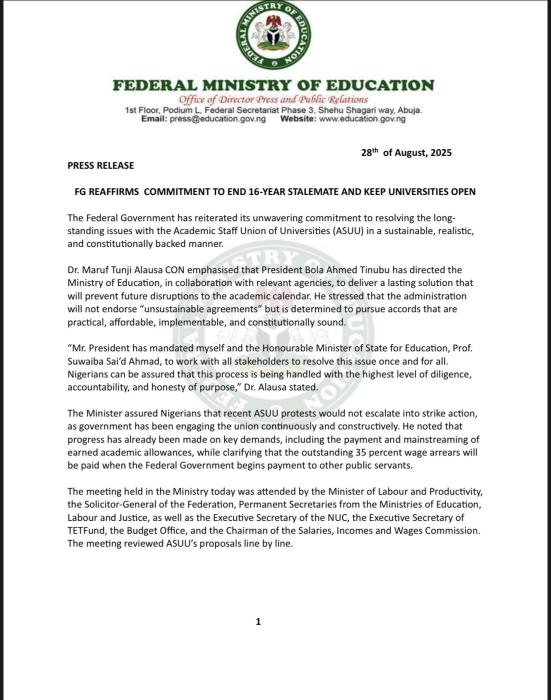
According to a statement from the Ministry of Education, signed by the Director of Press and Public Relations, Boriowo Folasade, President Bola Ahmed Tinubu has directed the ministry and relevant agencies to work closely with ASUU to find practical, affordable, and constitutionally compliant solutions to their demands.
Key highlights of this commitment include:
- Sustainable Agreements Only
- The government emphasized that it would not sign agreements that are unrealistic or unsustainable. This signals a shift from past practices where promises were made but often left unfulfilled due to budgetary constraints.
- Progress on Earned Allowances
- FG announced that significant progress has been made in the mainstreaming and payment of earned allowances to lecturers—a long-standing demand from ASUU.
- Pending Wage Arrears
- However, the issue of the 35% wage arrears remains unresolved. The government clarified that these arrears will be addressed once it commences the payment of outstanding wages to other categories of public servants.
Why This Matters for Students and Universities
If fully implemented, the FG’s renewed approach could mark the beginning of long-term stability in Nigerian universities. Here’s why:
- Stable Academic Calendar: Students may finally complete their courses without interruptions that stretch a 4-year program into 6 or more years.
- Improved University Funding: Addressing earned allowances and implementing reforms could enhance staff morale and overall academic productivity.
- Reduced Brain Drain: Many Nigerian lecturers leave for better-paying jobs abroad. Resolving welfare issues could reduce this exodus and improve knowledge retention.
- Restored Trust: A transparent and sustainable agreement may rebuild trust between the FG, ASUU, and the Nigerian public.
Challenges That Still Remain
While the government’s assurances are promising, challenges persist:
- Implementation Gap: Nigeria has a history of signing agreements without following through. Ensuring accountability will be crucial.
- Funding Constraints: The economy is under pressure, and balancing competing priorities like infrastructure, security, and education may affect timely disbursements.
- ASUU’s Stance: The union has often been skeptical of government promises. How ASUU responds to this latest commitment will shape future developments.
Lessons for the Future
This 16-year saga offers important lessons:
- Dialogue over Confrontation: Both FG and ASUU must prioritize dialogue and compromise over strike actions, which often harm students the most.
- Institutional Autonomy: Granting universities greater financial and administrative autonomy could reduce dependence on government allocations.
- Accountability in Governance: Regular updates, transparent financial records, and citizen engagement can prevent misunderstandings and mistrust.