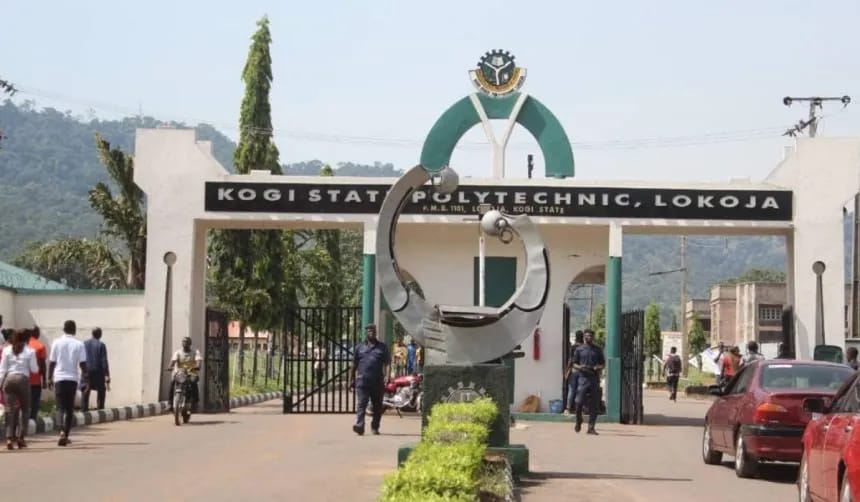
The management of Kogi State Polytechnic, Lokoja, has uncovered a large-scale document falsification and certificate forgery syndicate operating within and around the institution. This shocking revelation has sent ripples across Nigeria’s higher education community, exposing how deeply some fraudulent practices have infiltrated academic systems over the years.
According to official reports, the forgery network involved individuals who specialized in manipulating academic records, producing fake admission letters, result slips, and certificates for unsuspecting or complicit persons. The syndicate, which has been operating stealthily, was recently exposed following a detailed internal investigation launched by the institution’s management.
How the Syndicate Operated
The forgery syndicate was reportedly well-organized, with members positioned both inside and outside the campus. These individuals allegedly conspired to alter student records, manipulate examination outcomes, and even fabricate entire academic histories for people who never attended the institution.
Preliminary findings indicated that forged documents were being used to secure admissions, transfer credits, and even obtain employment opportunities. The operation was so elaborate that some forged certificates carried authentic-looking signatures and institutional seals, making detection difficult without thorough verification.
The syndicate’s exposure came after months of discreet monitoring by the institution’s security and administrative units, following suspicions over inconsistencies in certain students’ documentation and transcript requests.
Management’s Swift Action and Commitment to Integrity
Reacting to the development, the Rector of Kogi State Polytechnic, Dr. Salisu Ogbo Usman, expressed deep concern over the scale of the fraud, describing it as “a serious assault on academic integrity and the institution’s reputation.”
He disclosed that the management, since his assumption of office, had been working tirelessly to reform the system, sanitize record-keeping processes, and introduce stricter administrative protocols. The Rector emphasized that those involved in the fraudulent network would face the full weight of the law, noting that the Polytechnic would not tolerate any act that undermines its credibility.
He further stated that internal measures have been introduced to prevent similar incidents, including the deployment of advanced verification systems, a centralized student data management platform, and digitalized certification processes.
A Continuing Battle Against Examination and Certificate Fraud
This is not the first time Kogi State Polytechnic has confronted academic fraud. In previous years, the institution recorded cases of examination malpractice, result manipulation, and cult-related activities, which the current management has been systematically addressing.
Since 2020, several arrests have been made in connection with examination fraud, while dozens of students were expelled for offenses ranging from result tampering to certificate forgery. The institution has also worked closely with security agencies to identify and prosecute those behind illegal “magic centers” that help students cheat during examinations.
The Rector highlighted that the Polytechnic’s transformation agenda has drastically reduced cultism, examination malpractice, and other unethical practices. He credited this success to increased surveillance, staff accountability, and moral reorientation among students.
Security Tightened Across Departments
In light of the latest discovery, the Polytechnic’s management has introduced tighter internal controls. Departmental heads and administrative officers have been directed to conduct thorough document verifications before approving any academic or administrative request.
The institution has also begun revalidating all academic records, ensuring that only legitimate students and graduates are recognized. This verification exercise is expected to expose any additional forged or altered documents that may have escaped earlier scrutiny.
Furthermore, new security features are being embedded in certificates, transcripts, and identification cards, including QR codes and holographic stamps to make forgery nearly impossible.
Reactions From the Academic Community
The revelation has drawn mixed reactions from students, alumni, and stakeholders across Nigeria’s education sector. Many have commended the Polytechnic’s management for taking bold steps to restore integrity, while others have called for a nationwide review of verification systems across tertiary institutions.
Education analysts warn that such syndicates may be operating in other institutions, urging government agencies, particularly the National Board for Technical Education (NBTE) and the Ministry of Education, to strengthen monitoring mechanisms.
They also stressed the importance of digitizing records and improving inter-institutional collaboration to prevent the circulation of fake academic credentials within Nigeria’s education and employment systems.
A Call for Collective Responsibility
While Kogi Polytechnic continues its internal reforms, the Rector emphasized that maintaining academic credibility is a shared responsibility between management, staff, students, and external stakeholders.
He urged students to uphold honesty and academic discipline, warning that shortcuts to success often lead to disgrace and permanent damage to one’s career. He also reassured the public that the Polytechnic remains committed to producing graduates of integrity who can compete globally.
Dr. Usman reiterated his administration’s zero-tolerance policy toward fraud and malpractice, adding that the Polytechnic would continue working with law enforcement to track down and prosecute all culprits, no matter how highly placed.