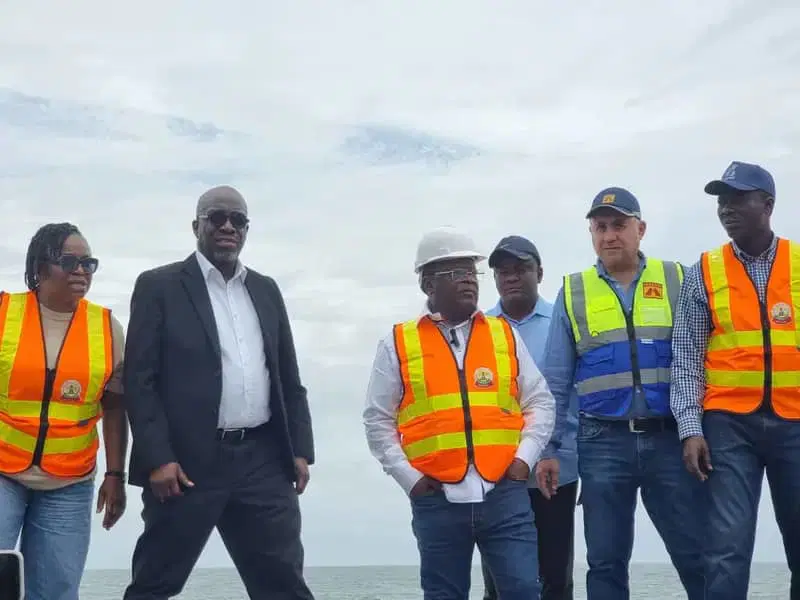
In a landmark announcement, the Federal Government of Nigeria has confirmed that the first section—approximately 47 km—of the Lagos–Calabar Coastal Highway will be opened to motorists between December 12 and 17, 2025. This is a major milestone for the ambitious 700 km infrastructure project that promises to reshape the nation’s transportation network and economic landscape. Though work will continue even after opening, the move marks a watershed moment in Nigeria’s drive toward coastal integration and economic development.
What’s Actually Opening in December
- Section One: This stretch of nearly 47.5 km begins from Victoria Island in Lagos, running through the Lekki-Ajah corridor.
- Opening Window: December 12–17 has been earmarked for public use of this section, according to the Minister of Works.
- Continued Construction: Even after the opening, works aren’t stopping — the government plans a formal full commissioning of Section One by April 2026, alongside about half of Section Two (excluding the bridges, which are still being completed).
Engineering, Design & Technical Features
This isn’t just any highway — it’s being built to very high engineering standards:
- The road is six lanes (dual carriageway), designed for durability and capacity.
- It features reinforced concrete pavement, chosen for its long lifespan compared to typical asphalt roads.
- Because it traverses challenging coastal terrain, parts of the route required deep excavation, with some pits up to 20 meters deep. These are being refilled in stages to ensure safety and stability.
- The design also includes shoreline protection, concrete retaining walls, solar-powered street lighting, and landscaping — all aimed at engineering resilience and environmental sensitivity.
- There will also be CCTV infrastructure, suggesting a modern highway with safety and security in mind.
Financing & Economic Stakes
- The highway is being built under an Engineering, Procurement, Construction + Financing (EPC+F) model, with the contractor bearing significant financial and construction risk.
- A major portion of the funding comes from international loans. Investor confidence appears strong — part of the foreign loan component was oversubscribed.
- Tolling is being planned. The government expects to start levying tolls on this opened section from December, aiming for a 10-year return on investment.
- The cost is not cheap: the Minister of Works has revealed that the average cost is about ₦7.5 billion per kilometer, a figure that accounts for the complex coastal engineering, reinforcement, lighting, and landscaping.
- However, the Minister argues that this cost is competitive: comparable or even less than some inherited roads, especially when considering the quality and the infrastructure features included.
Socio-Economic Impact: Why This Road Matters
1. Reduced Travel Time & Cost
Drivers along the Lekki–Ajah corridor could see major reductions in both travel time and expenses. For many, this new coastal route may offer a more efficient alternative to heavily congested inland roads.
2. Economic Corridor Creation
Beyond just a road, this highway is designed as an economic corridor. With modern infrastructure and connectivity, it has the potential to unlock trade, encourage industrial development, and stimulate tourism across the nine coastal states it traverses.
3. Job Creation & Local Capacity Building
In an encouraging move, the government has announced an engineering mentorship program set to begin in January. Civil and electrical engineers, designers, and technicians will be trained on legacy projects like this highway. Post-training, participants will be supported to acquire essential equipment — a push toward building Nigeria’s local engineering capacity.
4. Long-Term Returns & Carbon Benefits
With solar lighting and potentially greener transport links, the highway may generate carbon credit advantages. These environmental features could add value beyond mere transport, contributing to sustainable development goals.
Challenges & Criticisms
While the news is broadly positive, several concerns and criticisms linger:
- High Cost Scrutiny: Even though officials defend the ₦7.5 billion per km figure, critics remain skeptical. Some argue the expense is too steep or question the breakdown.
- Environmental and Resettlement Issues: Given the coastal terrain, the project has had to address environmental impact, subsoil settlement, and compensation for displaced property owners.
- Maintenance and Security: Building is one thing; sustaining the highway over decades is another. Questions remain about maintenance funding, potential vandalism, and the long-term upkeep of lighting and CCTV systems.
- Phased Delivery: Only parts of the highway will be usable immediately and full commissioning will take more time. This may frustrate some who expected immediate, full-scale benefits.