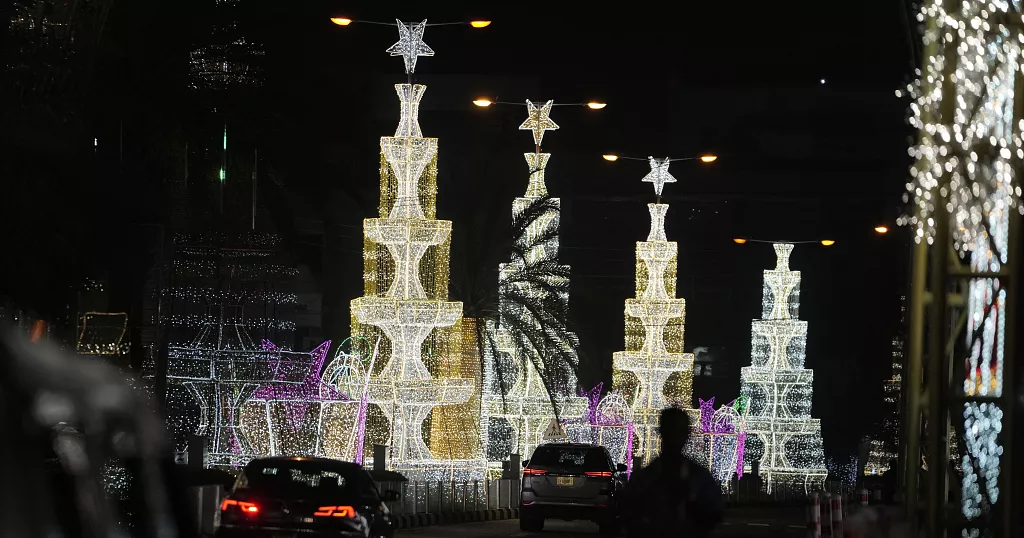
Lagos residents are set to experience a truly unique festive spectacle as the state prepares to unveil its first-ever 30-foot Christmas tree crafted entirely from locally made fabric. The initiative blends culture, creativity, and celebration, offering a refreshing twist to traditional Christmas decorations while proudly showcasing Nigerian craftsmanship.
The extraordinary Christmas installation is expected to become a major attraction this holiday season, drawing families, tourists, creatives, and culture enthusiasts eager to witness a fusion of festive cheer and indigenous artistry.
A Celebration of Culture Through Festive Design
Unlike conventional Christmas trees made from plastic, metal, or imported materials, this towering tree stands out for its use of locally produced fabrics, carefully arranged to form a visually striking and culturally symbolic masterpiece.
Designers involved in the project say the concept was inspired by the desire to celebrate Christmas in a way that reflects Nigerian identity. By using homegrown textiles, the project elevates local craftsmanship while redefining how festive decorations can tell cultural stories.
Each section of the tree reportedly incorporates different textures, colors, and fabric patterns, creating a vibrant blend that reflects the diversity and creativity of Nigerian fashion and textile traditions.
Supporting Local Artisans and the Creative Economy
Beyond its visual appeal, the fabric Christmas tree carries strong economic and social significance. The project has provided opportunities for local designers, tailors, textile producers, and creative professionals, reinforcing the importance of supporting indigenous industries.
Stakeholders say the initiative aligns with broader efforts to promote locally made products and encourage pride in Nigerian creativity. By choosing local fabric over imported materials, the project highlights how festive celebrations can also serve as platforms for economic empowerment.
Creative industry observers believe this could inspire similar projects across the country, especially during major cultural and seasonal events.
A New Landmark for the Festive Season
The 30-foot fabric Christmas tree is expected to become one of Lagos’ most talked-about holiday attractions. Residents and visitors alike are already expressing excitement, with many anticipating photo opportunities, family outings, and social media moments centered around the installation.
City officials note that festive displays like this help boost tourism, create shared community experiences, and enhance the holiday atmosphere across the metropolis. The tree is expected to light up its surroundings, combining traditional Christmas symbolism with African artistic expression.
Blending Tradition, Innovation, and Sustainability
The use of fabric also reflects a growing interest in sustainable and creative alternatives to conventional decorations. By repurposing and showcasing textiles, the project sends a subtle message about innovation, reuse, and environmentally conscious design.
Cultural commentators describe the tree as a bold example of how global celebrations like Christmas can be adapted to local contexts without losing their meaning. The result is a festive symbol that feels both familiar and proudly Nigerian.
Public Excitement and Anticipation
As news of the project spreads, Lagosians have taken to social platforms to express excitement and curiosity. Many see the fabric Christmas tree as a refreshing departure from the norm and a strong statement about embracing local identity during global celebrations.
Families are already planning visits, while creatives view the installation as a source of inspiration and a reminder of the limitless possibilities within Nigeria’s design and fashion space.
Redefining Christmas in Lagos
With the unveiling of its first 30-foot Christmas tree made from local fabric, Lagos is once again reinforcing its reputation as a city of innovation, culture, and bold ideas. The festive installation goes beyond decoration, serving as a celebration of creativity, community, and cultural pride.
As the Christmas season approaches, this remarkable tree stands as a symbol of how tradition and modern Nigerian identity can come together to create something truly unforgettable.