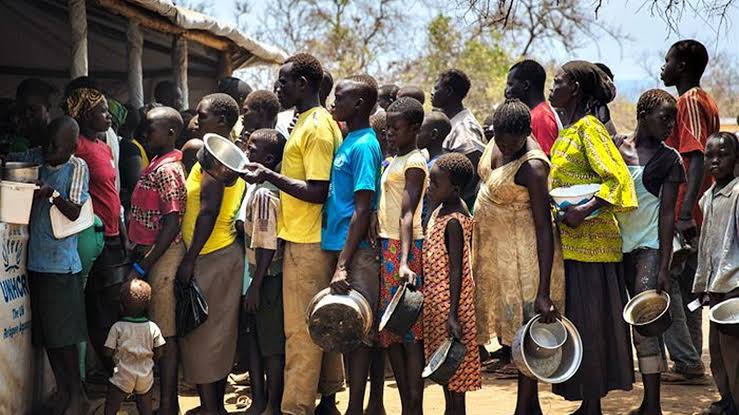
Nigeria is on the brink of an unprecedented humanitarian catastrophe as the United Nations, through the World Food Programme (WFP), warns that up to 35 million Nigerians could face severe hunger in 2026. This projection represents the highest level of food insecurity ever recorded in the country.
Even more alarming, in the conflict-ravaged northeast, particularly Borno State, at least 15,000 vulnerable people are expected to slip into “catastrophic hunger,” a Phase 5 condition comparable to famine.
The UN’s projection is not speculative — it is based on escalating violence, collapsing food assistance, economic strain, and worsening displacement patterns that have rapidly deteriorated conditions over the past year.
Why Hunger Is Rising: The Explosive Mix Fueling the Crisis
Intensifying Armed Violence
Militant attacks, insurgency, and banditry have surged across northern Nigeria, leaving farming communities devastated. Many farmers cannot access their lands, livestock has been stolen or killed, and thousands of families have fled their homes.
Recent months have witnessed:
- Large-scale attacks on villages
- Mass abductions of schoolchildren
- Expansion of extremist groups into new territories
These persistent threats have crippled agricultural production, destroyed livelihoods, and disrupted local markets.
Collapse of Food Assistance Programmes
Due to severe global funding shortages, the World Food Programme has significantly cut back food and nutrition support. By mid-2025, the organisation had already halted aid to more than a million people in the northeast because its food pipeline had run dry.
As a result:
- Nutrition centres have closed
- Over 300,000 children have lost access to therapeutic feeding
- Malnutrition rates are rising in multiple northern states
Without new funding, WFP warns it cannot sustain any large-scale support in 2026.
Economic Hardship and Inflation
Food prices remain at record highs. With inflation pushing basic staples beyond the reach of ordinary families, even the urban population is increasingly vulnerable.
In rural communities dependent on farming and small-scale trade, the situation is worse. Households already weakened by conflict now face the double burden of poverty and food scarcity.
Climate and Environmental Stress
Flooding, irregular rainfall, and prolonged dry spells have all affected crop planting cycles. Farmers who manage to plant despite insecurity often face climate-driven crop losses.
This combination of conflict and climate shocks is devastating agricultural output at a time when food production should be scaling up.
Who Will Suffer the Most?
Northern Nigeria
States such as Borno, Yobe, Adamawa, Zamfara, Sokoto, and Katsina face the highest risk. Many communities depend almost entirely on humanitarian aid, which is now dwindling dangerously.
Children and Women
Pregnant women, breastfeeding mothers, infants, and children under five are at the highest risk of severe malnutrition. The shutdown of nutritional support centres places them in immediate danger.
Internally Displaced Persons (IDPs)
Millions of Nigerians living in camps or temporary shelters have lost land, livestock, and stable income. Without aid, they face the most direct path to starvation.
The Wider Implications: More Than Just Hunger
The UN warns that this crisis could trigger:
- Mass displacement, as families flee hunger and insecurity
- Increased recruitment by extremist groups, exploiting desperation
- Higher crime rates and social unrest
- Deepening poverty, trapping communities in long-term instability
If food systems collapse on this scale, Nigeria could face its most severe humanitarian crisis in decades, affecting not only rural communities but also urban centres and the broader economy.