The recent disclosure by NNPC Ltd. of a staggering ₦5.4 trillion profit after tax for the 2024 financial year has sparked widespread acclaim among energy analysts, civil-society watchdogs, and industry stakeholders. For the first time in decades, the company’s earnings firmly place Nigeria’s national oil firm in the spotlight — not for underperformance or systemic losses — but for robust profitability, operational transparency, and a clear reform-driven trajectory.
A Record-Breaking Financial Year
According to the company’s audited financials, NNPC Ltd. achieved a revenue of ₦45.1 trillion in 2024, representing a remarkable year-on-year growth of 88%.
Profit after tax (PAT) soared to ₦5.4 trillion, up sharply from previous years — a clear indicator that strategic reforms and favorable economic conditions have begun to yield tangible financial outcomes.
Earnings per share were also impressive: NNPC declared dividends totaling ₦4.3 trillion, with earnings per share (EPS) pegged at ₦27.07.
The profitability surge marks a major turnaround, especially considering NNPC’s prior history of under-performance, losses, and repeated struggles to cover operating costs.
What Drove the Profit Surge?
Multiple factors contributed to this stellar performance:
- Currency Reforms & Forex Gains: The foreign exchange reforms, including the floating of the naira, substantially increased the value of NNPC’s dollar-linked assets and operations — bolstering revenue when converted to local currency.
- Operational Efficiency & Cost Discipline: The company reportedly achieved between 15–20% reduction in overall costs, reflecting tighter financial controls and elimination of wasteful spending.
- Downstream Market Reforms & Asset Optimization: Broader reforms across Nigeria’s oil and gas sector — including downstream restructuring — improved margins and operational stability.
- Strategic Portfolio & Diversified Revenue Streams: Expansion in NNPC’s retail outlets, optimized gas and oil operations, and an increasing focus on infrastructure projects strengthened its ability to generate consistent income across multiple business lines.
This combination of internal discipline, favorable macroeconomic policy, and structural reforms appears to have triggered what many are calling a “new dawn” for NNPC.
Reform Vindicated: Civil Society and Observers Respond
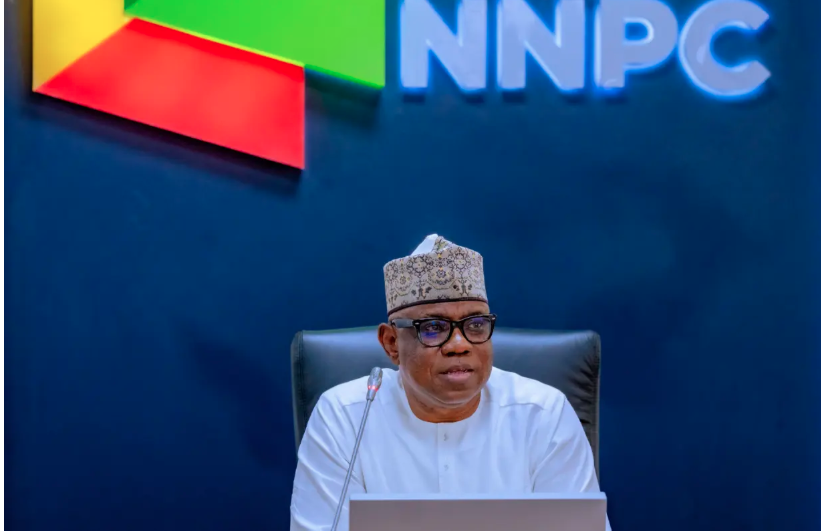
In response to these results, the Centre for Energy Accountability and Reform (CEAR) hailed the profit announcement as “proof that reforms are finally working.” The group singled out the leadership of Bashir Bayo Ojulari, NNPC’s Group Chief Executive Officer, as instrumental to the turnaround.
CEAR’s endorsement reflects a broader sentiment among industry watchers: that the profit isn’t a fluke, but evidence of sustained institutional change, financial discipline, and commitment to transparency and efficiency. The 2024 performance, they argue, sets a strong precedent for future accountability, responsible governance, and long-term value creation for Nigeria.
What’s Next? NNPC’s Strategic Roadmap to 2030
Buoyed by its financial success, NNPC Ltd. has laid out an ambitious growth plan spanning the next five years and beyond. Key strategic targets include:
- Increase crude oil production to 2 million barrels per day (bpd) by 2027, and 3 million bpd by 2030.
- Expand natural gas production to 10 bcf/d by 2027 and 12 bcf/d by 2030.
- Fast-track major gas infrastructure projects, including pipelines such as the Ajaokuta‑Kaduna‑Kano pipeline (AKK), Escravos‑Lagos Pipeline System (ELPS), and Obiafu‑Obrikom‑Oben pipeline (OB3).
- Mobilise approximately US$60 billion in investments across upstream, midstream, and downstream sectors by 2030 — a major push toward energy security, infrastructure development, and industrial growth.
The roadmap suggests NNPC is not merely celebrating its 2024 earnings, but positioning itself for sustainable growth, modernization, and a central role in Nigeria’s long-term energy ambitions.
Why This Matters for Nigeria’s Future
The significance of NNPC’s latest performance extends beyond corporate success — it carries broader implications for Nigeria’s economy, energy sector, and national development:
- Economic Stability & Revenue Potential: A healthy, profitable NNPC can boost public revenue, strengthen fiscal stability, and reduce dependence on external borrowing.
- Energy Security & Industrial Growth: With planned expansion in oil and gas output — alongside gas infrastructure development — Nigeria stands to improve domestic energy supply, power generation, and industrialization potential.
- Attracting Investments: The $60 billion investment pipeline signals confidence to investors — both domestic and international — that Nigeria’s energy sector is ripe for growth and modernization.
- Transparency, Accountability & Institutional Reform: The profit and public financial disclosures reinforce increasing demand for transparency and good governance in state-owned enterprises — setting a precedent for accountability.
Challenges Remain – Reform Must Be Sustained and Transparent
Despite the optimism, analysts caution against complacency. The success must be sustained through consistent operational discipline, protection against oil theft and pipeline vandalism, and transparent management of revenues and investments. Security issues, infrastructure decay, and global energy market volatility remain real threats to long-term goals.
Moreover, NNPC’s planned investments and outputs will require strategic oversight to ensure that gains translate into real benefits — efficient refineries, affordable energy for citizens, improved infrastructure, and economic growth beyond crude sales.