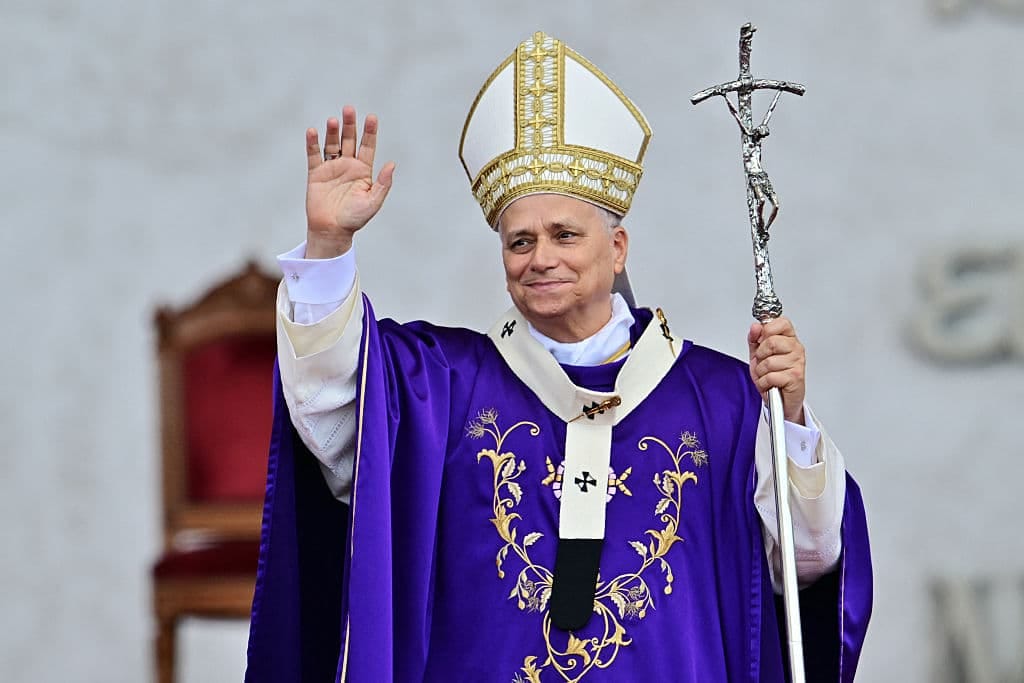
The Vatican has officially announced that Pope Leo XIV will embark on an 11-day apostolic journey to Africa from April 13 to April 23, 2026, marking one of the most significant diplomatic and pastoral tours of his pontificate so far.
The trip will take the pontiff to four African nations — Algeria, Cameroon, Angola, and Equatorial Guinea — with the Algeria leg standing out as a historic first. It will be the first time in history that a sitting pope travels to the North African Muslim-majority country.
The journey underscores the Catholic Church’s increasing focus on Africa, a continent now home to one of the fastest-growing Catholic populations in the world.
Historic First: Algeria Welcomes a Pope
Pope Leo XIV will begin his African tour in Algeria from April 13 to April 15. The visit follows a formal invitation extended by Algerian President Abdelmadjid Tebboune, who described the upcoming trip as an opportunity to strengthen “friendship, mutual respect, and dialogue” between Algeria and the Holy See.
Algeria is overwhelmingly Sunni Muslim, with Christians representing a very small minority among its more than 45 million citizens. The Catholic community there numbers only a few thousand. Despite its size, the Church in Algeria has maintained a presence rooted in history, scholarship, and interreligious engagement.
During his stay, the pope is expected to visit the Basilica of Notre Dame d’Afrique in Algiers — a symbol of Christian presence in North Africa — as well as Annaba, home to the ancient See of Hippo. Hippo was once the episcopal seat of Saint Augustine of Hippo, one of Christianity’s most influential theologians.
The connection is particularly symbolic because Pope Leo XIV belongs to the Augustinian tradition, spiritually tracing its roots to Saint Augustine. Church officials say this dimension adds profound historical and spiritual weight to the visit.
Observers say the Algeria stop will emphasize interfaith dialogue, peaceful coexistence, and cooperation between Christians and Muslims in a region often viewed through geopolitical lenses.
Cameroon: Focus on Peace and Reconciliation
From April 15 to 18, the pope will travel to Cameroon, where he is scheduled to visit Yaoundé, Bamenda, and Douala.
Cameroon’s Anglophone northwest region has experienced prolonged separatist unrest that has resulted in thousands of deaths and mass displacement. Bamenda, one of the cities on the itinerary, has been at the heart of the crisis.
Church leaders expect Pope Leo XIV to address themes of peace, national reconciliation, humanitarian solidarity, and the Church’s pastoral role in conflict-affected communities. Cameroon has a large Christian population, and the visit is anticipated to draw massive crowds for liturgical celebrations and public addresses.
Angola: Emphasis on Social Renewal
The pontiff will then proceed to Angola from April 18 to 21, with stops in Luanda, Muxima, and Saurimo.
Angola, while rich in natural resources, continues to face socio-economic challenges, including poverty and post-conflict recovery efforts. The Catholic Church plays a significant role in education, healthcare, and social services across the country.
Vatican officials indicate that Pope Leo XIV’s engagements in Angola will focus on poverty alleviation, youth empowerment, faith renewal, and strengthening ecclesial institutions.
Equatorial Guinea: Closing the African Tour
The final leg of the journey will take place in Equatorial Guinea from April 21 to 23, with visits to Malabo, Mongomo, and Bata.
Equatorial Guinea has previously hosted a papal visit — by Pope John Paul II in 1982 — but Pope Leo XIV’s visit will be the first in decades. Church leaders say the stop aims to reinforce pastoral unity and encourage faith communities in the Central African nation.
Why This Africa Tour Matters
The April journey is widely seen as a strategic and symbolic move by the Vatican.
Africa accounts for roughly one-fifth of the global Catholic population, and demographic projections suggest the continent will shape the future direction of the Church in the coming decades. By prioritizing African nations — including one with a Muslim majority and a tiny Catholic minority — Pope Leo XIV signals a papacy attentive to dialogue, peacebuilding, and the Church’s growth in emerging regions.
The Algeria visit, in particular, stands as a diplomatic milestone. It not only marks a first in papal history but also strengthens Catholic-Muslim relations in North Africa at a time when interreligious cooperation is increasingly vital on the global stage.