Nigeria’s aviation sector received a fresh boost as the Universal School of Aviation reaffirmed its commitment to professionalism, safety, and excellence during the graduation of over 650 students, urging them to become worthy ambassadors of global best practices in the highly sensitive industry.
A Landmark Convocation for Future Aviation Professionals
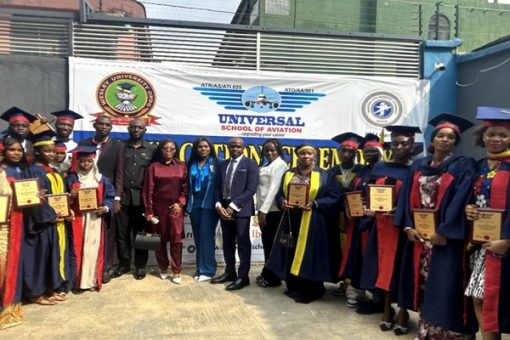
The Universal School of Aviation recently held its 14th convocation and awards ceremony at its Ikotun campus in Lagos, marking another major milestone in its journey of manpower development for the aviation and travel industry. The colourful ceremony brought together parents, industry stakeholders, educators, government representatives, and aviation enthusiasts to celebrate the successful completion of professional training by hundreds of students.
The graduating cohort cut across a wide range of aviation-related disciplines, reflecting the school’s broad curriculum and its strategic role in meeting the manpower needs of Nigeria’s growing aviation ecosystem. From entry-level professionals to those seeking career transitions, the graduates represented the next generation of aviation service providers.
Aviation Is Not Just a Job, It Is a Responsibility
Speaking at the event, the Director of Studies of the institution, Eedris Onifade, delivered a strong message to the graduates, reminding them that aviation is an industry built on discipline, precision, and strict adherence to standards. He stressed that safety, professionalism, and integrity are non-negotiable values that must guide their conduct at all times.
According to him, aviation differs from many other sectors because mistakes can have far-reaching consequences. As a result, every professional within the system must operate with a deep sense of responsibility, respect for rules, and commitment to continuous improvement. He urged the graduates to carry these values wherever their careers take them, both within Nigeria and beyond.
Diverse Training for a Dynamic Industry
The graduating students completed intensive professional courses in areas such as cabin crew operations, flight dispatch, airline ticketing and reservation, travel and tourism management, aviation security, and other related fields. These programmes are designed to equip students with both theoretical knowledge and practical skills that align with industry expectations.
Over the years, the school has expanded beyond basic management training into licensed and specialised aviation programmes, positioning itself as a key contributor to workforce development in the sector. This evolution reflects the changing demands of the aviation industry and the need for institutions that can produce job-ready professionals.
Alumni Making Their Mark Locally and Internationally
One of the highlights of the convocation was the emphasis on the school’s growing alumni network. Many past graduates of the institution are currently employed across airlines, airports, travel agencies, and aviation service companies within Nigeria and in other parts of the world.
This track record, according to school officials, underscores the relevance of the training provided and the importance of maintaining high standards. Graduates were reminded that their actions in the workplace do not only reflect on them as individuals but also on the reputation of the institution that trained them.
Industry Voices Reinforce the Call for Excellence
Guest speakers at the ceremony echoed similar sentiments, urging the new graduates to uphold discipline, ethical conduct, and professionalism as they step into the industry. They cautioned that the aviation sector is highly competitive and reputation-driven, making personal conduct and work ethics critical factors for long-term success.
The speakers encouraged the graduates to embrace resilience, adaptability, and lifelong learning, noting that aviation is constantly evolving due to technological advancements, regulatory changes, and global trends. Staying relevant, they said, requires a willingness to learn, unlearn, and relearn.
Government Support and Youth Empowerment
The event also highlighted the role of government and institutional partnerships in promoting youth empowerment through skills acquisition. Representatives of a local government area in Enugu State disclosed that dozens of young people had been sponsored for aviation training as part of efforts to tackle unemployment and equip youths with globally relevant skills.
This intervention was praised as a practical approach to addressing joblessness, particularly in specialised sectors like aviation where skilled manpower is always in demand.