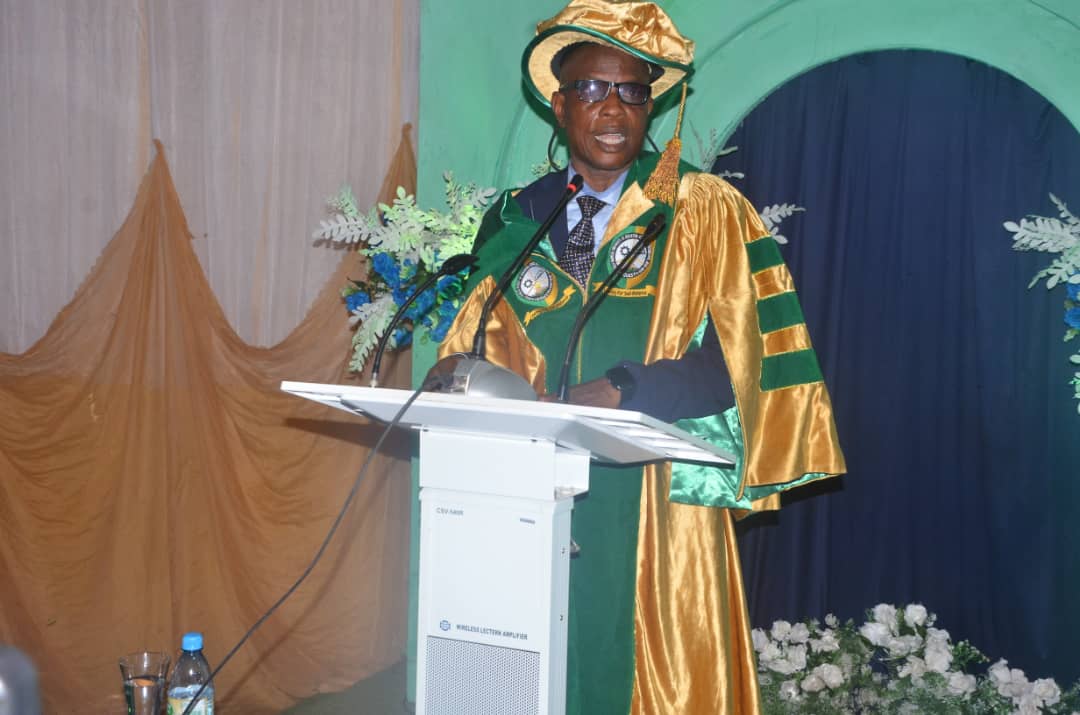
In a compelling address at a major academic event in Ekiti State, Professor Adebisi Awodun, a distinguished scholar in Physics Education from the Bamidele Olumilua University of Education, Science and Technology, emphasized the urgent need to simplify the teaching of science and technology subjects to boost student interest, understanding, and performance across Nigerian schools. His remarks have sparked renewed conversation around how best to reshape science education for today’s learners.
Why Simplifying Science and Technology Matters
Professor Awodun delivered his address during an inaugural lecture titled “Refocusing Physics pedagogies: Blueprint to potent corollaries.” He argued that science and technology now underpin contemporary society, and that a nation’s development is closely tied to how well its citizens understand these fields. According to Awodun, subjects such as physics are foundational to a wide range of professions — spanning health, agriculture, energy, information technology, and engineering — making strong science education essential for individual empowerment and national progress.
Challenges in Current Teaching Methods
Despite the critical role of science, Professor Awodun highlighted persistent challenges in Nigerian classrooms. He noted that subjects like physics are often perceived as abstract and overly theoretical, with mathematics adding levels of complexity that many students struggle to grasp using traditional classroom methods. This has contributed to disappointing performance trends in national examinations like the West African Senior School Certificate Examination (WASSCE) and the National Examinations Council tests.
A Shift Toward Activity-Based and Outdoor Learning
To address these challenges, the professor proposed a fundamental shift in teaching methodology. He recommended that physics and other science subjects incorporate activity-based, experiential, and outdoor learning approaches — strategies that have been shown to enhance retention and foster a deeper understanding of scientific concepts. According to research and educational practice, students engage more effectively when learning is tied to real-world experiences rather than confined to lecture-style instruction.
Recommendations for Policy and Practice
Professor Awodun’s proposals extend beyond classroom techniques:
- Curriculum Reform: He urged education stakeholders to modify existing teaching methods to make science subjects less abstract and more student-friendly.
- Government Support: The professor called on federal and state education authorities to institutionalize supportive policies that enable outdoor and practical science instruction, similar to what is practiced in some international contexts.
- Infrastructure Requirements: He insisted that both public and private schools should allocate adequate space and resources for outdoor learning activities to ensure these methods can be implemented effectively.
Expert Voices on Practical Teaching in Nigeria
Professor Awodun’s call aligns with broader educational discussions across Nigeria. For instance, state governments have also emphasized practical teaching of science subjects as a way to improve student engagement and performance. In Abia State, authorities introduced initiatives to reward outstanding science teachers and students and promote hands-on learning through competitions, with the aim of enhancing performance in subjects like physics, chemistry, and biology.