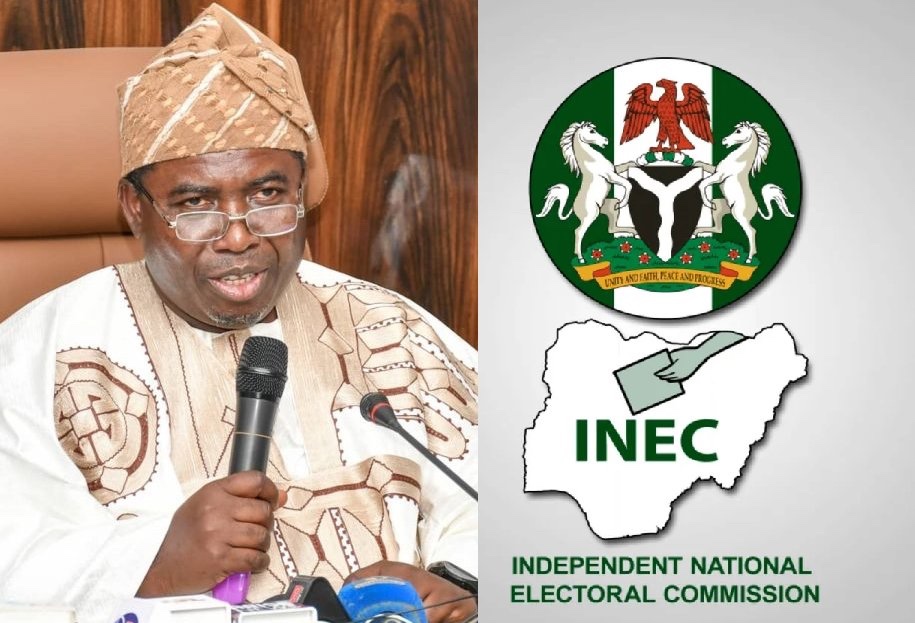
The Senate Committee on Electoral Matters has recommended an additional ₦30 billion allocation to the Independent National Electoral Commission (INEC) as part of intensified preparations for Nigeria’s 2027 general elections.
The recommendation, presented during budget deliberations at the National Assembly, seeks to strengthen the electoral body’s operational readiness, logistics, and technological infrastructure ahead of what is expected to be one of the most complex and expensive elections in the country’s history.
If approved by the full Senate and harmonised with the House of Representatives, the additional ₦30 billion will raise INEC’s proposed election budget from ₦873.78 billion to approximately ₦903.78 billion.
INEC’s ₦873.78 Billion Election Proposal
Prior to the Senate committee’s intervention, INEC had submitted a ₦873.78 billion estimate strictly for the conduct of the 2027 general elections. The figure forms part of a broader funding request of about ₦1.04 trillion, which also covers the commission’s operational expenses for 2026 and early preparatory activities.
According to budget documents presented to lawmakers, the ₦873.78 billion election proposal is structured across key expenditure components:
Operational costs account for roughly ₦380 billion, covering printing of ballot papers, transportation of sensitive and non-sensitive materials, deployment of personnel, and nationwide logistics across 36 states and the Federal Capital Territory.
Administrative expenses stand at about ₦92 billion, including internal coordination, staff remuneration, and related overheads.
Technology-related expenditure is projected at approximately ₦209 billion. This includes enhancements to voter accreditation systems, upgrades to result management platforms, and broader ICT infrastructure intended to improve transparency and efficiency.
Capital expenditure is estimated at ₦155 billion, largely for procurement of vehicles, equipment, and infrastructure upgrades to support large-scale electoral operations.
An additional ₦43 billion is earmarked for miscellaneous election-related contingencies.
Why the Senate Wants More Funding
Members of the Senate Committee on Electoral Matters argued that the scale and sensitivity of the 2027 elections necessitate stronger financial backing to avoid operational bottlenecks.
Nigeria’s elections involve over 176,000 polling units, millions of registered voters, and extensive security coordination across diverse terrains — from densely populated urban centres to hard-to-reach rural communities. Lawmakers noted that inflation, rising logistics costs, and exchange rate pressures have significantly increased the cost of electoral materials and technology.
The committee emphasised that early and adequate funding would allow INEC to plan procurement cycles, train ad hoc staff, test equipment, and coordinate effectively with security agencies well ahead of the polls.
Technology remains a particularly sensitive area. Following debates surrounding result transmission and technological performance in the 2023 elections, legislators appear keen to ensure that funding constraints do not undermine system upgrades or public confidence in 2027.
Comparison With Previous Elections
The projected 2027 budget far exceeds the estimated ₦313 billion spent on the 2023 general elections. Analysts attribute the sharp increase to inflationary pressures, expanded technological components, and the need for more robust logistics management in a country of over 200 million people.
The proposed budget would make the 2027 elections the most expensive in Nigeria’s democratic history.