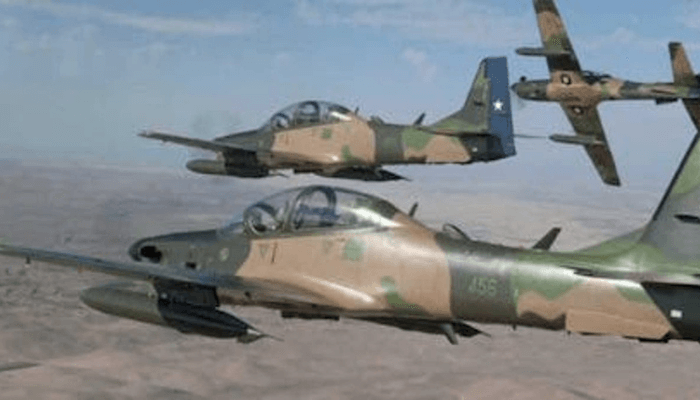
On December 8, 2025, a transport aircraft belonging to the Nigerian Air Force — a C-130 — landed at the airport in Bobo-Dioulasso, Burkina Faso under circumstances that have ignited a regional storm. According to the AES and Burkinabè authorities, the aircraft entered Burkina Faso’s airspace without prior authorization and was subsequently grounded. On board were 11 Nigerian military personnel: two crew members and nine other soldiers. The AES described the landing as a violation of its airspace and sovereignty.
The aircraft and its occupants have been detained pending investigation, and the plane has been impounded by Burkinabè authorities.
In reaction, the AES has placed its air and anti-air defences on maximum alert — declaring that any future unauthorised aircraft incursions may be “neutralised.”
Conflicting Narratives — Who Says What
On its part, the Nigerian Air Force has pushed back against claims that the landing was forced by Burkina Faso. In an official statement, it explained that the landing was precautionary — prompted by a technical issue observed after take-off during a ferry mission to Portugal. The crew reportedly diverted to the nearest suitable airfield in Burkina Faso for safety under international aviation protocols. The NAF insists the crew is safe and has been treated well by host authorities.
In short: AES calls it a breach of sovereignty and a hostile act; NAF says it was an emergency diversion, not a premeditated intrusion. The dispute over intent — and over whether prior clearance was obtained — lies at the heart of this mounting crisis.
Why This Incident Matters — A Deepening Rift in the Sahel
This episode signals more than a simple diplomatic standoff — it shows a deepening mistrust and rising tension between Nigeria and the Sahel states that make up the AES. The alliance’s decision to ground the aircraft, detain personnel, and impound the plane marks a hardline stance on what it considers violations of its airspace.
By authorising its air-defence forces to “neutralise” future unauthorised aircraft, AES is effectively warning that they will treat any transgressor — even fellow regional militaries — as a potential threat.
Given recent turbulent events in the region — including coups, shifting alliances, and cross-border military interventions — this incident could mark a turning point: it may create new barriers to military mobility, strain diplomatic relations, and raise the risk of unintended escalation if flights are misinterpreted.
The Broader Context: Regional Alliances, Military Politics and Fallout
The AES — made up of Burkina Faso, Mali, and Niger — broke away from the traditional West African regional coalition led by Nigeria. The breakup reflects a larger reshaping of alliances across the Sahel, with shifting loyalties and increasing suspicion among neighbour states.
Against that backdrop, any military movement — even a ferry flight — becomes politically loaded. The AES’ zero-tolerance approach to unauthorised flights is part of a broader assertion of sovereignty and rejection of perceived external interference.
For Nigeria, this incident underscores new constraints: military logistics, humanitarian missions, and even peacekeeping deployments may need to recalibrate planning, coordination, and diplomatic clearance to avoid being caught up in regional red lines.
What Happens Next — What to Watch Closely
- Diplomatic pressure and negotiations: Nigeria is likely to launch diplomatic efforts for the swift release of its personnel and the return of the impounded aircraft. Whether Burkina Faso and AES agree — and under what conditions — remains uncertain.
- Tighter airspace protocols: AES may formalise stricter over-flight procedures for foreign military aircraft, requiring pre-notification, explicit clearance, and possibly escorts. This could limit mobility of foreign militaries in the region — for better or worse.
- Risk of escalation: With the AES threatening to neutralise unauthorised aircraft, accidental or emergency landings elsewhere could be met with force — raising risk of military confrontation.
- Increased mistrust and realignment: This incident may deepen the political divide between Nigeria and the AES, pushing both sides to strengthen alliances, possibly with external powers, and to re-evaluate regional cooperation frameworks.
- Impact on regional security cooperation: Joint operations, intelligence sharing, or peace-keeping missions could be compromised if trust erodes — destabilising efforts to combat insurgency, terrorism, or cross-border crime across the Sahel.