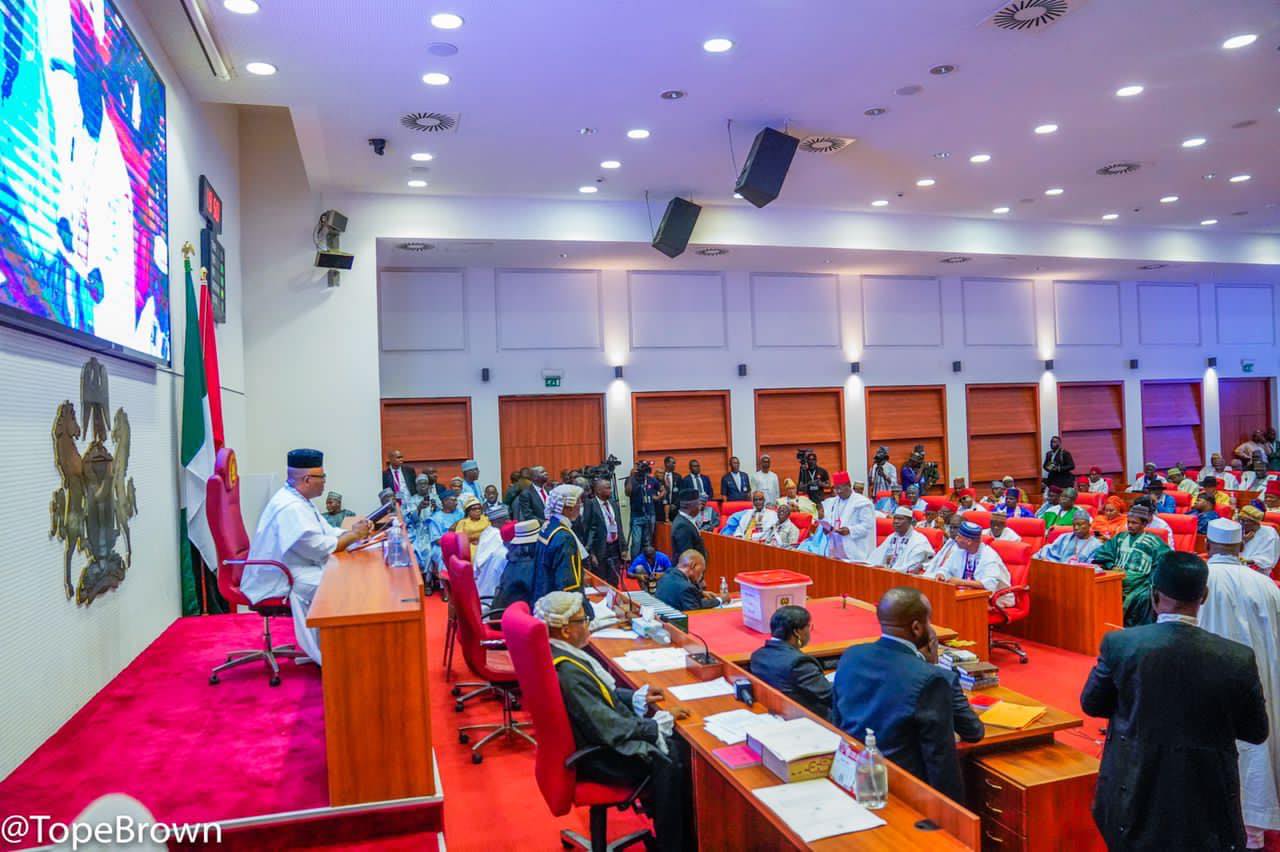
In a decisive move aimed at confronting the mounting wave of violence, kidnappings, banditry and unrest across Nigeria, the National Assembly’s upper chamber — the Nigerian Senate — has officially begun a three-day National Security Summit in Abuja. The summit, convened under the auspices of the newly constituted ad-hoc security committee, seeks to bring together voices from all corners of the country to chart a renewed path toward peace and stability.
As Nigeria grapples with an expanding catalogue of security threats — from rural kidnappings and banditry to urban violence and insurgent activity — the summit represents perhaps the most comprehensive attempt yet by lawmakers, traditional institutions, state and local actors, and community stakeholders to address insecurity at both grassroots and strategic levels.
Why the Summit Matters Now
Recent months have witnessed a worrying escalation in violent incidents across multiple regions. The trend, marked by kidnappings, repeated attacks on communities, and the spread of insecurity into previously stable zones, has underscored the urgent need for a coordinated national response.
In recognition of this urgency, the Senate resolved to establish a 20-member ad-hoc committee to organise the summit — a decision backed by the upper chamber following a motion highlighting pervasive insecurity and its far-reaching implications for national development, social cohesion, and citizen safety.
The summit is designed not as a mere formality, but as a robust platform for national dialogue: to dissect the root causes of insecurity, evaluate failures of previous measures, and propose actionable, grassroots-driven solutions attentive to regional realities across Nigeria’s geopolitical zones.
Who’s Involved — A Broad Spectrum of Stakeholders
The security summit draws upon a wide network of participants, reflecting the complexity of the challenges at hand. Among those expected to take part are:
- Representatives from all levels of government — federal, state, and local.
- Traditional rulers and community leaders, to ensure local insights and legitimacy.
- Security and intelligence agencies, to provide expert analysis and operational perspectives.
- Civil society actors, media, youth groups, and victims or communities affected by insecurity.
- Legislative leaders and lawmakers tasked with transforming summit outcomes into law and policy reforms.
It is an inclusive design: the Senate leadership believes that meaningful change requires the involvement not just of elites, but of ordinary Nigerians who live under the shadow of insecurity daily.
The Goals: What the Summit Hopes to Achieve
The summit’s agenda is ambitious yet grounded in urgent reality. Key goals being pursued include:
- Identifying Root Causes: Examining not only criminal activity, but underlying drivers — from poverty, unemployment, political marginalization, to communal conflicts and breakdown of local governance.
- Regional-Specific Solutions: Recognizing that what works in one zone may not work in another — the summit will factor in the distinct security landscapes across Nigeria’s geopolitical zones.
- Grassroots Engagement: Giving voice to victims, survivors, and local communities to inform realistic, people-centered security policies.
- Legislative and Policy Reforms: Proposing amendments, new laws, and structural reforms to strengthen Nigeria’s security architecture, intelligence framework, and community policing.
- Coordination and Oversight: Improving cooperation among federal, state, local, and traditional authorities; reinforcing early-warning mechanisms; and clarifying roles for sustainable peace.
The Senate hopes that through this comprehensive, evidence-based approach, Nigeria can begin to reverse the tide of insecurity and restore confidence among citizens — investors, communities and families.
Challenges and Skepticism — What Critics Say
While the summit has been welcomed by many, not everyone is convinced another gathering will yield results. Some analysts and former lawmakers have warned that Nigeria has held multiple security summits in past years — with limited implementation of recommendations.
Critics argue that what the country needs now is action, not more talk: accelerated deployment of security resources, better intelligence, immediate reforms, and consistent follow-through rather than white-paper proposals that linger on shelves.
These voices remind the Senate and broader government that public patience is wearing thin, and failure to convert summit outcomes into tangible security improvements would deepen disillusionment and distrust.
What This Means for Ordinary Nigerians
For many Nigerians — families in vulnerable communities, travellers on dangerous roads, farmers, traders, students, religious congregations — the summit holds the promise of real change.
If successful, expected outcomes may include:
- Improved safety in rural and urban areas.
- Enhanced community policing and trust between citizens and security agencies.
- Faster response to emergencies and attacks through better coordination.
- New support systems for victims of violence, and proactive prevention of future crises.
- Legislative backing for reforms that address root causes — such as youth unemployment, land disputes, communal tensions, and social neglect.
In effect, this summit could redefine Nigeria’s approach to security — turning reactive measures into preventive, inclusive policies that protect lives and livelihoods.