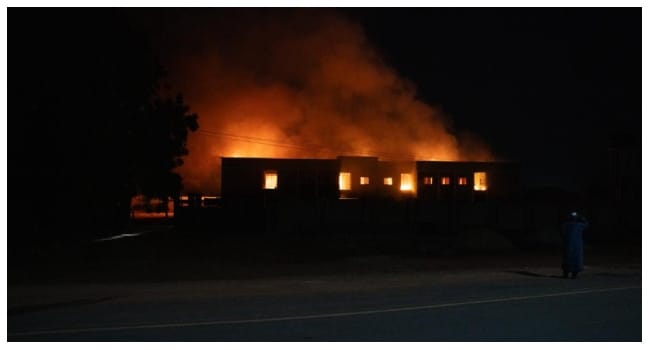
Tension gripped the campus of University of Calabar (UNICAL) this week as nursing students staged a protest following the sudden closure of their academic portal and directives from university authorities allegedly requiring affected students to regularise their admissions through the Joint Admissions and Matriculation Board.
The protest, which drew large crowds within the Faculty of Allied Medical Sciences axis of the campus, was triggered by mounting concerns over what students described as “overcrowding and admission irregularities” within the Department of Nursing Science. Eyewitness accounts indicate that the situation escalated after several students discovered they could no longer access the university’s portal to register courses, check results, or complete academic documentation.
Students who participated in the protest claimed that the portal restriction disproportionately affected nursing undergraduates, raising fears that their academic progression and professional training could be jeopardised. Nursing education in Nigeria operates under strict regulatory guidelines, with enrolment quotas closely monitored by professional and accreditation bodies. Any deviation from approved admission limits can trigger institutional sanctions.
According to multiple accounts from students, university authorities attributed the portal shutdown to issues relating to excess admissions beyond approved capacity. Nursing remains one of the most competitive and regulated programmes in Nigerian universities, largely due to clinical training requirements, limited hospital placement slots, and oversight by the Nursing and Midwifery Council of Nigeria. Sources within the student body allege that the number of admitted candidates exceeded the quota approved for the institution.
The most contentious aspect of the crisis revolves around reports that some affected students were instructed to undergo fresh regularisation processes through Joint Admissions and Matriculation Board (JAMB). In some instances, students claim they were advised to re-engage with JAMB’s Central Admissions Processing System (CAPS) to correct or validate their admission status. This development has fueled speculation online that certain students may be required to rewrite entrance examinations, although no official statement has explicitly confirmed a full JAMB rewrite requirement.
Students insist that many of them followed due process during admission, met the required Unified Tertiary Matriculation Examination (UTME) cut-off marks, and successfully completed departmental screenings. They argue that any administrative oversight should not be transferred to them mid-programme, especially after they have invested time and financial resources into their studies.
The Vice-Chancellor’s office has not yet issued a comprehensive public statement detailing the scope of the overcrowding issue or clarifying the exact number of students affected. However, internal sources suggest that management is under pressure to align enrolment figures with regulatory approvals to avoid potential accreditation complications.
Overcrowding in nursing programmes carries serious implications. Beyond classroom capacity, it affects laboratory access, clinical postings, and compliance with national training standards. Regulatory bodies typically enforce strict student-to-instructor and student-to-clinical-facility ratios. Failure to comply can threaten programme accreditation, which in turn affects graduates’ eligibility for professional licensing examinations.
Observers note that admission irregularities linked to bypassing JAMB’s CAPS system have become a recurring issue across some Nigerian tertiary institutions in recent years. CAPS was introduced to centralise and sanitise admission processes nationwide, ensuring transparency and eliminating undocumented or backdoor admissions. Where discrepancies arise between institutional admission lists and JAMB records, students often face delays in mobilisation for the National Youth Service Corps (NYSC) and other post-graduation processes.
On campus, the protest remained largely peaceful but emotionally charged. Students called on the university management to provide clear communication, protect their academic future, and avoid measures that could invalidate years of study. Some protesters carried placards demanding fairness and immediate restoration of portal access.
As of the time of filing this report, lectures within the department have reportedly continued under close administrative monitoring, though uncertainty remains among affected cohorts. There is growing anticipation for an official press briefing from university management to clarify whether the directive involves complete re-admission processes, CAPS regularisation, or merely documentation updates.