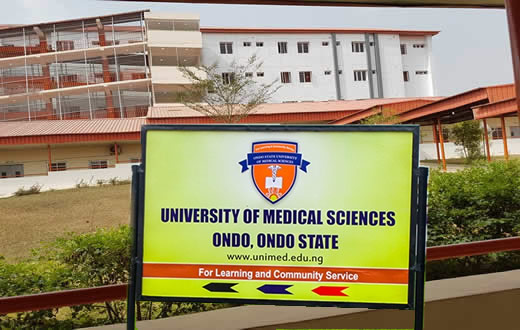
In a groundbreaking move towards digital transformation in Nigeria’s higher education sector, the University of Medical Sciences (UNIMED), Ondo State, has officially commenced the installation of a full-scale, 24-hour campus-wide internet facility. The initiative, which marks a significant technological leap for the university, is designed to revolutionize communication, learning, and research activities across the institution.
A Giant Step Toward a Fully Digital University Environment
The University of Medical Sciences (UNIMED) is taking bold steps to enhance its digital infrastructure by introducing an uninterrupted, high-speed internet service that will run round the clock. The ongoing installation aims to cover every part of the university environment — including classrooms, laboratories, administrative buildings, student hostels, and faculty offices.
According to reports, the initiative will ensure that both staff and students enjoy seamless connectivity, enabling easy access to e-learning materials, online research databases, and real-time academic communication tools. With this development, UNIMED becomes one of the few specialized universities in Nigeria to establish a reliable, campus-wide 24-hour internet network.
Strategic Collaboration for Technological Advancement
To deliver this ambitious project, UNIMED has partnered with Sam Smith Global Company Limited, a reputable ICT and engineering firm with expertise in large-scale network infrastructure deployment. The collaboration is geared towards ensuring the installation of a robust and sustainable system capable of handling the university’s academic and administrative data demands.
The partnership will also provide real-time network engineering support, continuous bandwidth management, and long-term technical maintenance. By connecting the university directly to the international internet backbone, the system promises faster data transmission, improved online accessibility, and stable connectivity even during peak hours.
24-Hour Internet Access for All: Bridging the Digital Divide
The Vice-Chancellor of UNIMED, Professor Ebunoluwa Adejuyigbe, explained that the university’s vision goes beyond simply providing internet access. She emphasized that the goal is to make the university’s digital ecosystem inclusive, efficient, and globally competitive.
She noted that with the 24-hour facility, students can now carry out academic research, upload assignments, participate in virtual classes, and connect with scholars and researchers worldwide at any time of the day. The introduction of the service will also drastically reduce the cost of data usage for students and staff, thereby easing the financial burden of connectivity on the university community.
Benefits of the New Internet Facility
The UNIMED 24-hour internet project is expected to deliver multiple benefits to the institution’s academic environment, including:
| Benefit | Impact |
|---|---|
| Enhanced Teaching and Learning | Lecturers and students can engage in online classes, digital tutorials, and virtual collaborations without interruption. |
| Improved Research Output | Researchers can access global journals, databases, and collaborative platforms in real-time, fostering innovation. |
| Lower Cost of Communication | Internet expenses for both staff and students will be significantly reduced, promoting affordability and accessibility. |
| Real-Time Network Monitoring | Continuous supervision ensures that the system remains stable, secure, and responsive to user needs. |
| Centralized Administrative Control | The university will manage all users and data flows from a unified system, improving security and performance. |
| Global Academic Integration | Direct linkage with international internet networks enhances UNIMED’s presence in global academic and medical communities. |
A Vision for the Future of Digital Learning in Nigeria
Professor Adejuyigbe reaffirmed the university’s commitment to creating an enabling digital environment for students and staff. She described the installation of the 24-hour internet facility as part of a larger strategy to position UNIMED among the world’s leading medical universities.
According to her, the administration is determined to integrate technology into every aspect of academic life — from lecture delivery and student records management to online examinations and research collaborations. She further revealed that UNIMED will soon launch other ICT-driven initiatives to complement the internet project, including the establishment of virtual laboratories and an upgraded e-learning management system.
UNIMED’s Leadership in Technological Innovation
UNIMED has consistently demonstrated a progressive approach to academic excellence and innovation. The introduction of a reliable internet infrastructure adds to its growing list of achievements in modernizing Nigeria’s medical education sector. Over the years, the university has maintained high standards in teaching, research, and community service, earning a reputation as one of the country’s fastest-growing specialized institutions.
With this latest development, UNIMED continues to set an example for other universities by showing that investment in digital technology is essential for achieving sustainable academic growth and competitiveness in the 21st century.
Students and Staff React Positively to the Development
Members of the university community have welcomed the initiative with excitement, describing it as a timely intervention that will ease academic challenges associated with poor connectivity. Many students expressed optimism that the new internet service will make research, online registration, and access to lecture materials more convenient.
Lecturers also commended the university management for prioritizing digital transformation, noting that the project would greatly enhance teaching effectiveness and collaboration with colleagues within and outside the country.
Conclusion
The commencement of the 24-hour internet facility installation at the University of Medical Sciences (UNIMED) is a milestone that redefines what is possible in Nigeria’s tertiary education system. Beyond being a mere technological upgrade, it represents a vision of academic excellence, digital inclusion, and global competitiveness.
As the project nears completion, UNIMED is poised to become a model for how Nigerian universities can leverage technology to bridge learning gaps, improve research outcomes, and connect with the rest of the world. The initiative is not just about internet access — it’s about empowering a generation of students and scholars to thrive in the digital age.