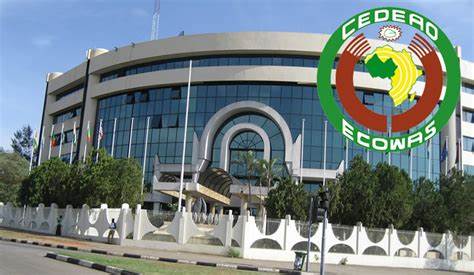
At the conclusion of the 55th session of the Mediation and Security Council (ministerial level) in Abuja, the foreign ministers of the region, under the leadership of Timothy Kabba — Minister of Foreign Affairs of Sierra Leone and Chair of the ECOWAS Council of Ministers — issued a stark warning about increasing geopolitical tensions and the new dangers posed by technological advances, including artificial intelligence (AI).
Kabba emphasized that West Africa is not immune to the “vibrations” of a multipolar world — where old powers, established powers, and rising powers are all jostling for influence over Africa. He noted that such global power contestations inevitably place pressure on the region.
He pointed out that while Africa has a long history of bearing the brunt of global transformations — from the era of the slave trade to colonial gun-powder conquests — the current technological age, with AI and other advancements, presents new, insidious risks.
What ECOWAS Sees as Threats: AI, Geopolitics, Climate & Instability
• Global Powers Eyeing Africa
ECOWAS sees a pattern: aging but still powerful states, longstanding global actors, and emerging powers are all seeking stronger footholds in Africa. These efforts, according to ECOWAS, risk compromising regional autonomy and may lead to interventions or exploitative influence.
• AI: A New Frontier of Risk
With AI advancing globally, ECOWAS warns that the continent — particularly West Africa — could become disproportionately vulnerable. “In today’s technological age, Africa is still at the tail end of technology,” Kabba cautioned, noting that as AI becomes more powerful, it could exert “pressure” on African societies in new ways.
While AI offers many potential benefits, ECOWAS’s warning reflects concerns over misuse: whether via data exploitation, disinformation, surveillance, or other forms of technological domination.
• Climate Change, Instability and Traditional Threats Remain
Beyond geopolitical and technological threats, ECOWAS also pointed out that climate change and climate-induced crises — such as instability in farming, environmental pressure, and displacement — are increasingly exacerbating insecurity across the sub-region.
Additionally, recent political instability in member states — including coups, unconstitutional takeovers, and threats to democratic governance — underline the fragility of regional stability. ECOWAS reiterated its commitment to resisting undemocratic changes.
According to Kabba, peace, security, and constitutional rule remain the foundation for development — without which, efforts to grow, develop, or stabilise the region will likely falter.
Why This Matters — Implications for West Africa
- Loss of agency & influence: As global powers vie for influence in Africa, smaller states risk being treated as pawns — potentially undermining their sovereignty, domestic priorities, or long-term development strategies.
- AI-driven vulnerability: Without robust regulation, governance, data protections, and local capacity, West African countries could suffer from misuse of AI — including disinformation campaigns, economic control, data exploitation, or even digital colonialism.
- Exacerbated instability: Combined pressures — geopolitical rivalry, climate-induced crises, political instability — could deepen economic hardship, trigger displacement, conflict, or weaken democratic institutions.
- Need for regional unity & strong institutions: The warning from ECOWAS underscores that only a united, coordinated, and proactive regional approach — involving governments, civil society, and international partners — can safeguard West Africa’s interests.
- Urgent call for regulation, preparedness & resilience: As AI and global contestations advance, the region must invest in regulatory frameworks, digital infrastructure, climate resilience, and democratic governance — or face long-term risks.
What ECOWAS Is Doing — And What Should Be Next
- During the ministerial session in Abuja, member-states affirmed their commitment to democratic governance, regional stability, and collective action against destabilising forces — including foreign power meddling and authoritarian takeovers.
- ECOWAS is calling for renewed cooperation among member states, shared security frameworks, and vigilance against both physical and digital threats (including AI risks).
- Observers recommend that this call should be backed by concrete policies: regional AI governance frameworks, investment in digital literacy and infrastructure, climate-resilient development plans, and strengthening democratic institutions. The idea is not to reject technology or outside interest — but to manage engagement in a way that protects West Africa’s autonomy and public interest.