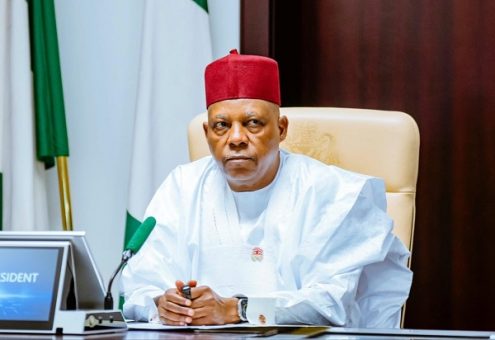
In a timely call to action during the opening of Nigeria Education Forum 2025 (NEF 2025), Vice-President Shettima and the leadership of Nigeria Governors’ Forum (NGF) argued that Nigeria’s education-funding model needs a fundamental overhaul. Relying solely on government allocations can no longer meet the demands of a growing, rapidly changing education sector.
What’s Changed — Bigger Needs, Bigger Budget, Bigger Gaps
Under the current administration, public spending on education has seen a notable increase. The national allocation rose from ₦1.54 trillion in 2023 to ₦3.52 trillion in 2025.
Also, key agencies have seen their budgets swell — for example, TETFund’s allocation reportedly jumped substantially under the “Renewed Hope” plan.
These increases reflect renewed commitment — but they also highlight a bigger problem: the scale and complexity of Nigeria’s educational needs are rapidly outpacing what even a boosted government budget can sustainably support.
Across Nigeria, expanding population, rising out-of-school rates, inadequate infrastructure, poorly equipped schools, and growing demand for modern, industry-aligned skills have made the traditional funding model inadequate.
The Case for Diversified Funding — What Shettima Proposes
Shettima insists that sustainable education financing should rest not only on federal or state budgets, but on a shared, multi-stakeholder model.
Key components of this diversification include:
- Private sector, industry, and corporate investment: Businesses and industries should co-invest in education infrastructure like laboratories, innovation hubs, research centres, vocational and technical training facilities, to help align education with labour-market needs.
- Alumni networks, philanthropists and communities: Universities and schools should build endowment cultures, encouraging graduates and community stakeholders to contribute to school development, maintenance, and key programs.
- State and local government involvement, and local institutions: Education financing and management should be decentralised — local governments, communities, traditional institutions should take greater responsibility over school infrastructure, security, teacher welfare and maintenance.
- Industry-school collaboration for skills and relevance: By engaging with vocational, technical and tertiary institutions, industry can help shape curricula, improving employability and ensuring training meets practical labour-market demands.
The overarching idea is clear: move from a “government-alone funds education” model to a resilient, collaborative, multi-source financing ecosystem — one robust enough to meet contemporary educational demands.