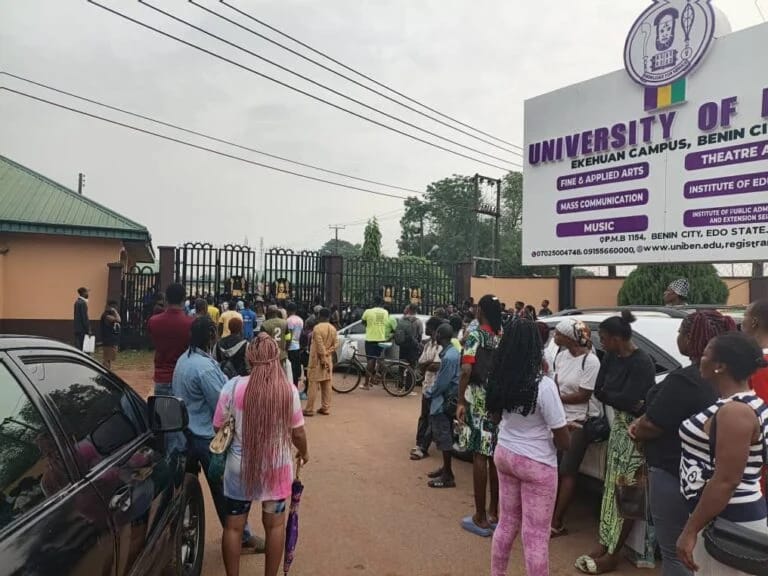
Tension escalated at the Ekheuan Campus of the University of Benin on Saturday as students staged a protest over a prolonged blackout and water shortage that left academic and social activities severely disrupted. The demonstration, which saw students barricade the main entrance to the campus, effectively halted movement in and out of the school premises for several hours.
The protest followed three consecutive days without electricity and running water in the hostels and other campus facilities. Students described the situation as unbearable, noting that despite paying school fees and other charges at the start of the academic session, they were being subjected to basic living conditions that fell far below acceptable standards.
Speaking during the protest, a student identified as Prosper expressed deep frustration over the deteriorating state of affairs. He said, “We have been in this situation for the past three days — no light, no water — yet we have paid our fees, including several other charges that have been increased since the beginning of the new session. The hostels are messed up because there is no water. For you to have your bath is like getting gold on this campus.”
His remarks captured the prevailing mood among students who argued that access to water and electricity is fundamental to safe and dignified campus living. Many complained that the absence of these utilities had disrupted their studies, affected their hygiene, and heightened security concerns within the hostels.
According to reports monitored by Punch Newspapers, another student recounted a disturbing incident allegedly linked to the blackout. The student claimed that during the period of darkness, an unidentified individual armed with a cutlass attempted to enter the female hostel and injured a student while fleeing. Although no further official details were immediately provided on the incident, the allegation intensified fears about student safety under prolonged power outages.
As the protest unfolded, university authorities moved swiftly to engage the demonstrators. The Deputy Vice-Chancellor in charge of the Ekheuan Campus, Adesina Ayinde, addressed the students directly at the protest ground in an effort to de-escalate tensions. Offering assurances, he stated that “plans had been concluded to provide water for the students today, while the issue of light was being sorted out.”
Despite this pledge, many of the protesting students reportedly insisted that they would not reopen the campus gate until water supply was physically restored. Their stance underscored a growing distrust in verbal assurances and a demand for immediate, tangible action.
Investigations revealed that the crisis may have been worsened by mechanical failures affecting the campus power infrastructure. The Ekheuan Campus was said to be relying on a single functioning generator, which had broken down, while a backup generator previously procured under a former administration had reportedly been relocated to the university’s main campus. This left the Ekheuan site with limited alternative power sources.
The protest caused significant disruption to daily operations, with academic staff, non-teaching personnel, traders, and visitors reportedly stranded at the campus entrance. Businesses operating within the school community were also affected, as vehicular and pedestrian access was restricted.
The latest unrest adds to a history of infrastructure-related grievances in Nigerian tertiary institutions, where students frequently raise concerns over utility management, hostel conditions, and campus security. For many observers, the situation at the Ekheuan Campus raises broader questions about maintenance culture, contingency planning, and whether public universities are adequately equipped to sustain growing student populations.
As negotiations continued between students and management, attention turned to whether the promised restoration of water would be sufficient to calm tensions or whether deeper infrastructural reforms would be required to prevent future disruptions. The coming days are expected to determine whether the university leadership can translate assurances into visible improvements and restore confidence among the student body in Benin City.

