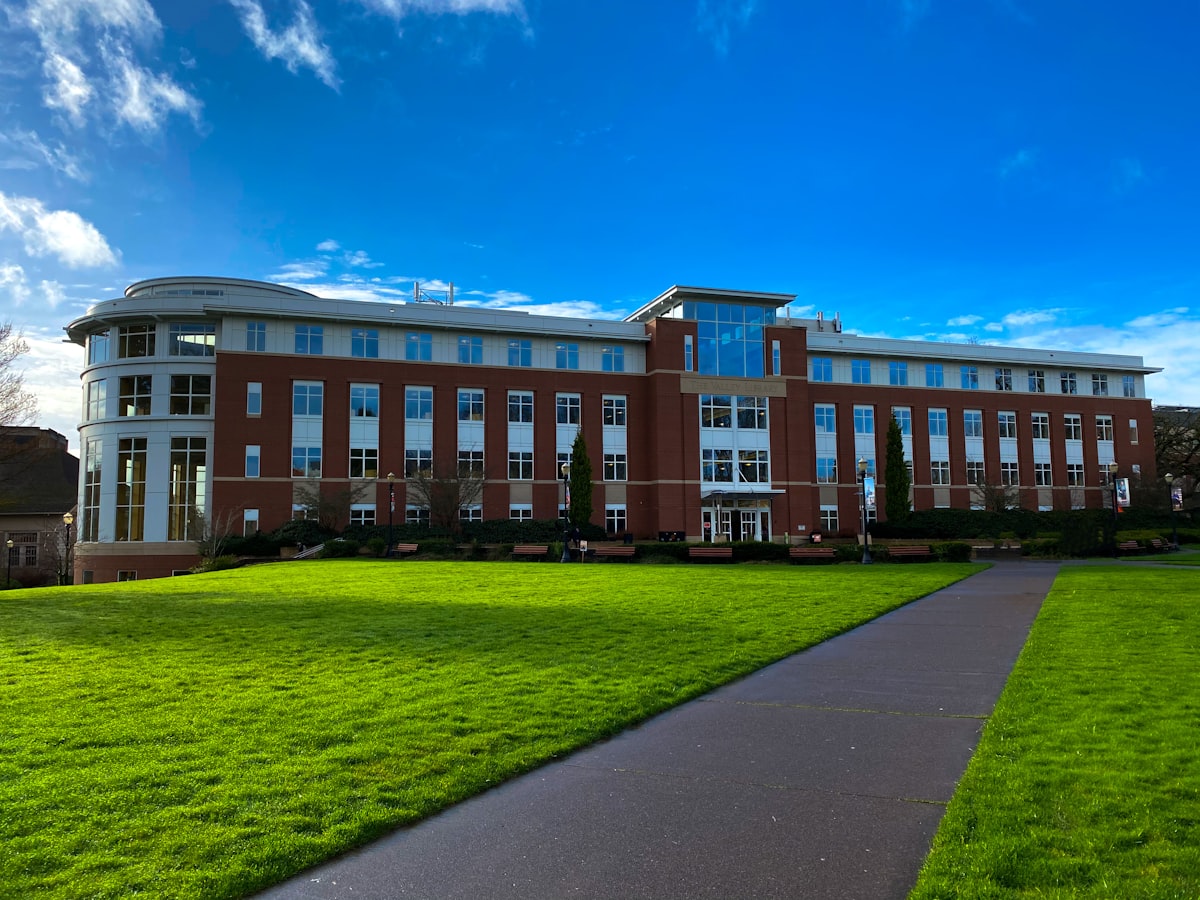
Babcock University is one of Nigeria’s most prestigious private universities, consistently ranked among the top three institutions in the country by the Times Higher Education Impact Rankings and the National Universities Commission (NUC). Located in Ilishan-Remo, Ogun State, Babcock is a Seventh-day Adventist institution founded in 1999 that has built a powerful reputation for academic excellence, strong graduate outcomes, and a values-based education model. If you are considering applying for Babcock University admission 2026, this comprehensive guide covers everything you need to know — the cut-off marks by department, school fees by college, the step-by-step application process, Post-UTME requirements, accommodation, and important tips to strengthen your application.
Why Choose Babcock University in 2026?
Babcock University has earned its top-tier reputation through consistent investment in academic quality, faculty development, and student support systems. Here are the key reasons prospective students choose Babcock over other Nigerian universities:
- Top national rankings: Babcock regularly ranks in the top 3 among all Nigerian universities — federal, state, and private — in independent national and international ranking systems.
- Strong employability record: Babcock graduates are consistently recruited by top employers in banking, law, medicine, technology, and the public sector. The university’s career services office maintains active links with leading employers.
- NUC-accredited programmes: All Babcock programmes hold full NUC accreditation, ensuring that degrees are recognised for employment and postgraduate study in Nigeria and internationally.
- Structured, disciplined environment: Like Covenant University, Babcock operates a compulsory residential model with a structured campus lifestyle. This appeals to parents and students who value a focused, distraction-free academic environment.
- Christian values-based education: As a Seventh-day Adventist institution, Babcock integrates character formation and community service into its academic model — producing graduates who are not just academically capable but ethically grounded.
Babcock University JAMB Cut-Off Mark 2026
The minimum JAMB UTME cut-off mark for Babcock University in 2026 is 160 for most programmes. However, the university’s own departmental admission thresholds are significantly higher than this minimum. Here is a breakdown of the effective JAMB score requirements by programme area:
| Programme / College | Minimum JAMB Score (2026) | O’Level Requirements |
|---|---|---|
| Medicine and Surgery (MBBS) | 240+ | Credits in Biology, Chemistry, Physics, Maths, English (one sitting) |
| Pharmacy (B.Pharm) | 220+ | Credits in Biology, Chemistry, Physics/Maths, English |
| Law (LLB) | 200+ | Credits in English, Literature/Government/Economics, plus 2 others |
| Accounting / Finance / Business Admin | 180+ | Credits in English, Mathematics, Economics, and 2 others |
| Computer Science / IT | 180+ | Credits in Mathematics, Physics, English, and 2 others |
| Mass Communication | 180+ | Credits in English, Literature or Government, and 3 others |
| Psychology / Sociology | 170+ | Credits in English, Biology or Government, and 3 others |
| Nursing Science (BNSc) | 200+ | Credits in Biology, Chemistry, Physics/Maths, English (one sitting) |
| Public Health / Environmental Health | 170+ | Credits in Biology, Chemistry, English, and 2 others |
| Theology / Religious Studies | 160+ | Credits in English and 4 other subjects |
Note that these figures represent competitive effective thresholds based on historical admission patterns — not the university’s official published minimums. Students with lower JAMB scores are rarely offered admission to competitive programmes even if they technically meet the minimum. Always aim for the highest score possible to maximise your admission chances. For context on how JAMB scores compare across all Nigerian universities, see our guide on JAMB cut-off marks 2026 for all universities in Nigeria.
Babcock University School Fees 2026: College-by-College Breakdown
Babcock University fees are among the highest in Nigeria, reflecting the university’s private ownership, mandatory residential model, and high-quality infrastructure. Below is an estimated fee breakdown by college for the 2026 academic year. Note that fees at Babcock typically increase by 10–20% annually — always confirm exact figures on the official Babcock University portal at babcock.edu.ng before making any payments.
College of Health and Human Development (CHHD)
| Programme | Fresh Student Fee (₦) | Returning Student Fee (₦) |
|---|---|---|
| Medicine and Surgery (MBBS) | 5,000,000 – 6,500,000 | 4,500,000 – 6,000,000 |
| Pharmacy (B.Pharm) | 3,500,000 – 4,500,000 | 3,000,000 – 4,000,000 |
| Nursing Science (BNSc) | 3,000,000 – 4,000,000 | 2,700,000 – 3,500,000 |
| Public Health | 2,500,000 – 3,500,000 | 2,200,000 – 3,000,000 |
| Nutrition and Dietetics | 2,500,000 – 3,500,000 | 2,200,000 – 3,000,000 |
College of Science and Technology (CST)
| Programme | Fresh Student Fee (₦) | Returning Student Fee (₦) |
|---|---|---|
| Computer Science | 2,800,000 – 3,500,000 | 2,500,000 – 3,200,000 |
| Information Technology | 2,800,000 – 3,500,000 | 2,500,000 – 3,200,000 |
| Biochemistry | 2,500,000 – 3,200,000 | 2,200,000 – 2,900,000 |
| Microbiology | 2,500,000 – 3,200,000 | 2,200,000 – 2,900,000 |
| Mathematics / Statistics | 2,200,000 – 3,000,000 | 2,000,000 – 2,700,000 |
College of Management and Social Sciences (CMSS)
| Programme | Fresh Student Fee (₦) | Returning Student Fee (₦) |
|---|---|---|
| Accounting | 2,500,000 – 3,200,000 | 2,200,000 – 2,900,000 |
| Business Administration | 2,500,000 – 3,200,000 | 2,200,000 – 2,900,000 |
| Economics | 2,300,000 – 3,000,000 | 2,000,000 – 2,700,000 |
| Mass Communication | 2,500,000 – 3,200,000 | 2,200,000 – 2,900,000 |
| Law | 2,800,000 – 3,500,000 | 2,500,000 – 3,200,000 |
| International Relations | 2,300,000 – 3,000,000 | 2,000,000 – 2,700,000 |
All fee figures are estimates based on Babcock University’s known fee structure and historical trends. Fees include tuition, accommodation, feeding, and core levies under the university’s mandatory residential model. Confirm exact current fees with the Bursary Department or via the official Babcock University admissions portal before making payment decisions.
Babcock University Post-UTME 2026: Screening Process and How to Apply
After meeting the JAMB UTME requirements, successful applicants must sit Babcock University’s Post-UTME screening examination. Here is the full process for 2026:
Step 1: JAMB UTME and Institutional Choice
In your JAMB UTME registration, you must select Babcock University as your first or second institution choice. While Babcock does admit second-choice candidates, first-choice applicants with competitive scores receive priority consideration. After your UTME results are released and you meet the cut-off threshold, Babcock will include you in its Post-UTME shortlist.
Step 2: Purchase and Complete the Post-UTME Form
Visit the official Babcock University admissions portal at admissions.babcock.edu.ng to purchase the Post-UTME screening form. The form fee has historically ranged from ₦3,000 to ₦5,000. Complete the online form with your JAMB registration number, personal details, programme choice, and O’Level results. Upload a clear, recent passport photograph and submit before the closing deadline.
Step 3: Sit the Post-UTME Screening Examination
The Babcock Post-UTME examination is conducted on campus and is computer-based. It covers Use of English and subjects relevant to your chosen programme (e.g., Biology and Chemistry for health sciences; Mathematics and Physics for computing). The examination typically lasts 60–90 minutes. Bring your Post-UTME admission slip, JAMB result slip, and a valid means of identification to the examination hall.
Step 4: Admission Offer and CAPS Acceptance
Successful candidates receive an offer of admission through the Babcock admissions portal and through the JAMB CAPS system. You must log in to JAMB CAPS and formally accept your admission before proceeding with fee payment and registration. Failing to accept on CAPS within the stipulated deadline can result in your admission offer being withdrawn. Our guide on how to use JAMB CAPS to accept your admission offer walks through this process step by step.
Babcock University Hostel and Accommodation 2026
Like Covenant University, Babcock University operates a compulsory residential policy — all students must live on campus throughout their academic programme. Off-campus accommodation is strictly prohibited and students found living off-campus face serious disciplinary consequences. Babcock’s hostels are gender-separated and offer a relatively comfortable living environment compared to many government university hostels.
Hostel accommodation at Babcock includes a bed in a shared room (typically 2–4 students per room), access to shared bathroom facilities, and meals from the campus cafeteria. The accommodation and feeding component of Babcock’s total fees typically adds ₦800,000 to ₦1,400,000 to the annual bill, depending on the hostel type and meal plan selected. Babcock has invested significantly in its residential infrastructure and most hostel blocks are well-maintained with stable electricity, running water, and good security.
Babcock University Programmes and Colleges
Babcock University offers a wide range of undergraduate and postgraduate programmes across several colleges. Here is a summary of the colleges and key programmes available in 2026:
- College of Health and Human Development (CHHD): Medicine and Surgery (MBBS), Pharmacy, Nursing Science, Public Health, Physiotherapy, Nutrition and Dietetics, Medical Laboratory Science, Human Anatomy.
- College of Science and Technology (CST): Computer Science, Information Technology, Software Engineering, Biochemistry, Microbiology, Industrial Chemistry, Mathematics, Statistics, Physics.
- College of Management and Social Sciences (CMSS): Accounting, Banking and Finance, Business Administration, Economics, International Relations, Political Science, Sociology, Mass Communication, Law.
- College of Arts and Social Sciences: English and Literary Studies, History and International Studies, Philosophy, Religious Studies, Music.
- School of Education and Humanities: Education and Economics, Education and English, Guidance and Counselling, Library and Information Science.
- School of Computing and Engineering Sciences: Computer Engineering, Electrical Engineering, Information Systems.
Babcock University vs Covenant University: Which Should You Choose?
Both Babcock and Covenant are top-ranked Nigerian private universities with compulsory residential policies and high fees. Choosing between them often comes down to specific programme availability, denominational background, campus culture, and family financial capacity. Here is a direct comparison:
| Factor | Babcock University | Covenant University |
|---|---|---|
| Location | Ilishan-Remo, Ogun State | Ota, Ogun State |
| Ownership | Seventh-day Adventist Church | Living Faith Church (Winners Chapel) |
| Founded | 1999 | 2002 |
| Average Annual Fee (tuition) | ₦2,200,000 – ₦6,500,000 | ₦2,600,000 – ₦3,800,000 |
| Residential Policy | Compulsory for all years | Compulsory for all years |
| Strongest Programmes | Medicine, Pharmacy, Law, Computing | Engineering, Computer Science, Accounting |
| QS/Times Nigeria Ranking | Top 3–5 | Top 1–3 |
| Postgraduate Programmes | Yes (MBA, MSc, PhD) | Yes (MSc, PhD) |
Both universities produce outstanding graduates and offer a fundamentally similar experience: structured residential campus life, strong academics, and a values-driven environment. Your choice should be guided primarily by which university offers your specific programme of interest and which you can afford. If you are considering multiple private universities, our guide on Federal vs State vs Private Universities in Nigeria 2026 provides a broader framework for making this important decision.
Scholarships and Financial Aid at Babcock University
Despite its high fees, Babcock University offers a limited number of merit-based scholarships each year to exceptional students. The Vice Chancellor’s Scholarship and the Dean’s Award recognize students with outstanding WAEC/NECO and JAMB results, covering between 10% and 50% of tuition costs. Students who maintain a CGPA of 4.5 and above may also qualify for partial tuition waivers in subsequent years.
Outside the university’s internal schemes, Babcock students can apply for external scholarships from corporate bodies, state governments, and international foundations. The PTDF overseas scholarship, various state government bursaries, and foundation scholarships from organisations like the Dangote Foundation and the TETFund staff development programme (for those in academic employment) are all options worth researching. For a comprehensive list of scholarships available to Nigerian students, our guide on top scholarships for Nigerian students 2026 is the best starting point.
Frequently Asked Questions: Babcock University Admission 2026
What is the JAMB cut-off mark for Babcock University?
The official minimum JAMB cut-off for Babcock University is 160, but in practice, candidates need scores of 180–240+ depending on their programme. Medicine requires 240 or above; most other programmes see competitive admission at 180–200. A strong Post-UTME performance can compensate to some extent for a JAMB score that is at the lower end of the competitive range for your programme.
How much are Babcock University fees for Medicine?
Medicine (MBBS) at Babcock University is among the most expensive programmes at the institution. Fresh students in the MBBS programme can expect to pay between ₦5,000,000 and ₦6,500,000 per year in 2026, including tuition, accommodation, and essential levies. Over a six-year MBBS programme, the total cost can exceed ₦30–40 million. Families considering this path should begin financial planning very early and explore scholarship options aggressively.
Does Babcock University accept Post-UTME results from other years?
No. Babcock University Post-UTME scores are valid only for the specific admission year in which they were obtained. If you sat the 2025 Post-UTME and were not offered admission, you must re-apply and re-sit the Post-UTME in 2026 to be considered for the 2026/2027 academic session. Your JAMB UTME score must also be from the current year or within the period JAMB specifies as valid.
Can I live off campus at Babcock University?
No. Babcock University, like Covenant University, operates a strict compulsory residential policy. All students — from fresh students to final-year undergraduates — must live in university-provided campus accommodation throughout their academic programme. This policy is fundamental to Babcock’s character formation mission and is non-negotiable. Students found living off-campus face serious disciplinary consequences including potential expulsion.
Does Babcock University have a medical school?
Yes. Babcock University has a fully accredited College of Medicine (now part of the College of Health and Human Development) offering the MBBS degree. The college is affiliated with the Babcock University Teaching Hospital (BUTH) located in Ilishan-Remo, where clinical training takes place. BUTH is a federal tertiary health institution, ensuring that clinical exposure for Babcock medical students meets national standards.
Is Babcock University accredited in Nigeria?
Yes. Babcock University is fully licensed and accredited by the National Universities Commission (NUC) of Nigeria. All its programmes have received full or interim NUC accreditation. The university is also a member of the Association of African Universities (AAU) and the International Association of Seventh-day Adventist Universities and Schools. Babcock degrees are recognised for employment by all major Nigerian employers and for postgraduate admission at universities worldwide.
Babcock University Admission Tips: How to Maximise Your Chances in 2026
Competition for Babcock University admission — especially in high-demand programmes like Medicine, Law, Computer Science, and Accounting — is fierce. Here are practical tips to put yourself in the strongest possible position:
- Score as high as possible in JAMB: Aim for at least 220–250 for competitive programmes. While the official minimum is 160, the realistic minimum for admission in sought-after departments is much higher. Every extra point in JAMB improves your chances at the Post-UTME shortlisting stage.
- Get five credits in one sitting: While some programmes accept two-sitting O’Level results, Medicine and Pharmacy require all compulsory subjects in one sitting. If your results are in two sittings and you want to study medicine, you may need to resit the relevant papers before applying.
- Prepare intensively for the Post-UTME: The Babcock Post-UTME is computer-based and competitive. Practise with CBT software, past Babcock Post-UTME questions where available, and general WAEC past questions in your subject areas.
- Apply early: Babcock often opens and closes its Post-UTME application within a short window. Monitor the admissions portal regularly and submit your application as soon as it opens.
- Have your documents ready: Gather certified copies of your O’Level results, JAMB result slip, birth certificate, and passport photographs before you begin the application. Having these ready prevents delays at critical stages.
Apply to Babcock University 2026 — Start Your Application Today
Babcock University 2026 admission represents an extraordinary opportunity for Nigerian students who want a top-quality education in a structured, values-driven environment. The investment is significant, but for families who plan ahead and students who excel academically, Babcock delivers on its promise of producing graduates who are genuinely competitive in Nigeria’s job market and on the international stage.
Start by checking your JAMB score against the departmental thresholds in this guide, confirm your O’Level result meets the specific requirements for your programme, and begin monitoring the Babcock University admissions portal for the 2026 Post-UTME application opening date. Good luck — and remember that the effort you invest in getting into a top university pays dividends throughout your entire career.
For more on navigating admission into private and federal universities, read our guides on Post-UTME 2026: Complete Guide and JAMB CAPS 2026 to ensure every stage of your admission process runs smoothly.
Have questions about Babcock University admission, fees, or scholarships? Leave them in the comments and our team will respond. If this guide helped you, share it — there are thousands of Nigerian students making this same decision who could benefit from clear, accurate information.